


Norden Leacox Accident & Injury Law | September 22, 2026 | Truck Accidents
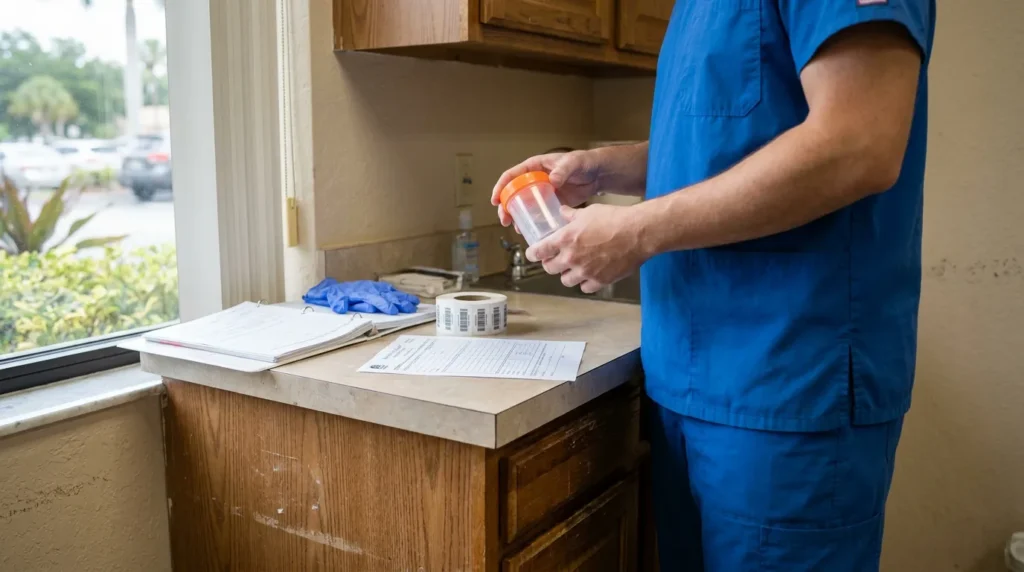
Why Federal Drug and Alcohol Testing Rules Matter After a Lakeland Truck Wreck
Key Takeaways: Post-accident drug and alcohol testing is federally mandated under 49 CFR §382.303, with collection procedures governed by 49 CFR Part 40. Testing is required when a crash involves a fatality, but for injury or tow-away crashes it’s generally required only if the commercial driver received a moving traffic citation, which is why many serious injury victims never obtain this evidence. Florida adopts these federal rules through Fla. Stat. § 316.302 for interstate and most intrastate carriers. A CDL holder convicted of driving a commercial vehicle at.04 or higher, or refusing a test, may face disqualification of at least one year under Fla. Stat. § 322.61. Because Florida uses modified comparative negligence, a positive result could affect fault allocation and may support negligent hiring, retention, or supervision claims. Testing records may become unavailable quickly, so early preservation demands are important.
Post-accident drug testing is a federally mandated process requiring motor carriers to send drivers for screening after certain qualifying crashes. The rules live in 49 CFR §382.303 and Part 40, and whether a test happens often depends on crash severity and whether law enforcement cited the driver. For injured people in Lakeland, that test result, or its absence, can become critical evidence.
If you were hurt in a collision with a tractor-trailer, delivery van, or fleet vehicle in Polk County, the team at Norden Leacox can help you preserve testing records before they disappear. Call 407-801-3000 or contact us now to discuss your case.
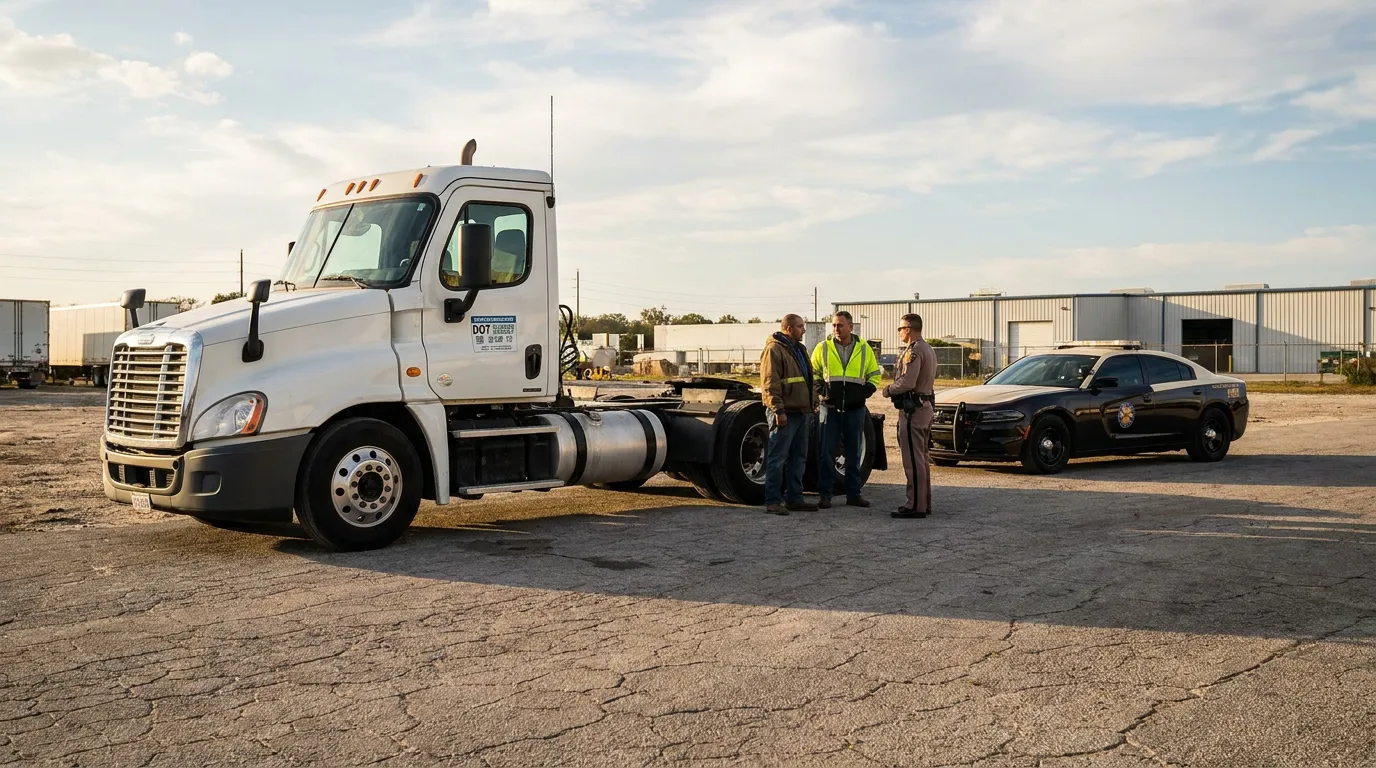
What Post Accident Drug Testing Truck Driver Rules Actually Require
Federal regulations set a chart of crash scenarios that trigger mandatory testing. FMCSA guidance explains that post-accident drug and alcohol tests may be required after crashes according to a scenario chart at §382.303. The carrier, not police, is generally responsible for ensuring the test occurs, though §382.303 allows employers to use law enforcement test results where applicable conditions are met.
The triggering conditions fall into three categories. A human fatality creates the strongest obligation. Injury and tow-away crashes generally create a conditional obligation depending on whether the commercial driver was cited for a moving violation arising from the crash.
| Crash Scenario | Citation Issued to CMV Driver | Employer Must Test |
|---|---|---|
| Human fatality | Yes or No | Yes |
| Bodily injury requiring immediate treatment away from the scene | Yes | Yes |
| Bodily injury requiring immediate treatment away from the scene | No | No |
| Disabling damage requiring tow-away | Yes | Yes |
| Disabling damage requiring tow-away | No | No |
The fatality rule is broader. When a crash involves a human fatality, the test is generally required whether or not a citation was issued. For families pursuing wrongful death claims after fatal Lakeland truck crashes, this means a test should exist, and its absence could be significant.
The Citation Gap That Costs Injury Victims Evidence
Many serious injury crashes never generate a drug test. For crashes involving bodily injury requiring immediate treatment or disabling damage requiring a tow, testing is generally required only if the commercial driver received a citation for a moving violation arising from the crash. If the responding officer doesn’t cite the trucker, the carrier generally has no federal obligation to test.
This creates a practical problem for injured people. A driver may be impaired, cause a catastrophic crash, and avoid screening because the officer wrote up the other motorist or issued no citation. In those situations, proving impairment requires circumstantial evidence: witness statements, dashcam video, ELD data, cell phone records, and the driver’s testimony. Building that record takes time and formal preservation demands, which is why many people consult a lawyer promptly after a truck collision.
💡 Pro Tip: Ask whether a citation was issued to the truck driver as early as possible. That single fact often determines whether a mandatory test existed.
How DOT Testing Procedures Are Standardized Nationwide
A carrier cannot substitute its own protocol for the federal process. The Department of Transportation explains that 49 CFR Part 40 describes required procedures for conducting workplace drug and alcohol testing for the federally regulated transportation industry. Those procedures cover collection, testing, and reporting steps that apply to motor carriers operating in Florida and elsewhere.
Coverage and Employer Duties
Part 40 defines who is covered and what employers must do. Subpart A sets administrative provisions, including §40.1 addressing coverage and §40.3 defining terms. Subpart B sets employer responsibilities under §§40.11, 40.15, including information employers must give collectors. When carriers deviate from these steps, the deviation may become an issue, though Part 40 treats some deviations as correctable.
Verifying the Exact Rule in Effect
Regulations change, so the text in effect on the crash date controls. ODAPC links to current Part 40 text through the eCFR, allowing counsel to confirm precise procedural language. ODAPC also issues authoritative interpretations under §40.5 and publishes question-and-answer guidance, enabling attorneys to point to official federal readings rather than accepting a carrier’s characterization.
Why Florida Law Pulls the Federal Rules Into State Court
Florida has expressly adopted federal motor carrier safety regulations, including drug and alcohol testing. Under Fla. Stat. § 316.302(1)(a), owners and drivers of commercial motor vehicles operated on Florida highways while engaged in interstate commerce are subject to rules in specified 49 C.F.R. parts, including parts 382-386 and 390-397. That statutory adoption is why FMCSA drug testing rules apply to trucks on I-4, US-98, and the Polk Parkway.
Intrastate carriers are generally not exempt. Fla. Stat. § 316.302(1)(b) subjects intrastate commercial motor vehicle owners and drivers to those same federal parts as they existed on the effective date stated in the statute. A Lakeland-based carrier that never crosses state lines may still fall within 49 CFR Part 382 testing requirements, subject to statutory exemptions and vehicle-weight thresholds.
Test Results, Refusals, and the Driver’s License Consequences
A commercial driver who tests over the limit or refuses may face one-year disqualification. Under Fla. Stat. § 322.61, a CDL holder convicted of driving a commercial motor vehicle with an alcohol concentration of.04 percent or higher, or refusing to submit to a lawful test, may be disqualified from operating a commercial vehicle for at least one year, with longer periods for repeat or hazardous-materials-related offenses. That.04 threshold is half the.08 standard for ordinary motorists, reflecting the heightened duty commercial drivers owe the public.
Administrative disqualification review is separate from your civil injury claim. Fla. Stat. § 322.64(7) directs the hearing officer to determine by preponderance whether sufficient cause exists to sustain, amend, or invalidate the disqualification, limited to issues such as probable cause and whether the driver had an unlawful alcohol level or refused testing. A licensing outcome doesn’t decide fault in a negligence lawsuit, but records from that process may be useful evidence.
How a Positive Result Reshapes Fault and Recovery
Florida applies modified comparative negligence, and a drug test may affect fault percentages. Under Fla. Stat. § 768.81(6), any party found greater than 50 percent at fault for their own harm may not recover damages, and a plaintiff at or below that threshold has recovery reduced proportionally. When an insurer argues the injured motorist caused the wreck, a positive commercial driver drug screen may shift allocation in ways that affect claim viability.
Testing records may also support claims against the carrier. DOT rules mandate pre-employment testing under §382.301, random testing under §382.305, and reasonable suspicion testing under §382.307. Drivers who test positive or refuse are generally prohibited from safety-sensitive functions until completing return-to-duty processes with a DOT-qualified substance abuse professional under §382.309 and Part 40 Subpart O, followed by follow-up testing.
Those records may support negligent hiring, retention, or supervision theories when they show:
- Prior positive results or refusals in the driver’s history
- Missed or skipped random selections
- Failure to act on reasonable suspicion
- Incomplete return-to-duty or follow-up testing
- Gaps in supervisor impairment-detection training
Whether this evidence exists depends on discovery, and an experienced Lakeland truck accident attorney can pursue it through formal channels.
💡 Pro Tip: Send a written evidence preservation letter to the carrier early. It should specifically request post-accident test results, the driver’s testing history, and the carrier’s DOT compliance file.
Frequently Asked Questions
1. How soon must a truck driver be tested after a crash?
Federal rules impose tight windows, with alcohol testing generally expected within a few hours and drug testing within roughly a day and a half. The carrier must document why any required test wasn’t completed in time. The controlling text of 49 CFR §382.303 in effect on the crash date should be reviewed.
2. What happens if the trucking company never tested its driver?
If a test was required and didn’t occur, that failure may become an issue. It doesn’t automatically establish impairment or liability, but may support requests for other evidence and could affect how a jury views the carrier’s safety practices.
3. Can I get the test results myself?
Generally, no. Post-accident testing records are held by the carrier and service agents and are subject to federal confidentiality limits, so obtaining them generally requires formal legal process such as preservation demands followed by discovery.
4. Does a negative drug test end my claim?
Not necessarily. Impairment is only one possible theory of negligence, and standard panels don’t detect every impairing substance. Fatigue, hours-of-service violations, distraction, improper loading, inadequate maintenance, and poor training may remain independent grounds for a truck accident claim.
5. Do these rules apply to a local delivery truck that never leaves Florida?
In many cases, they may. Florida’s adoption statute extends federal parts to intrastate commercial motor vehicle operations, subject to statutory exceptions, vehicle-weight thresholds, and effective-date language, so smaller vehicles outside the commercial motor vehicle definition may fall outside these testing rules.
Turning a Testing Requirement Into Usable Evidence
Post-accident drug testing sits at the intersection of federal regulation and Florida negligence law. The federal chart decides whether a test must happen, Part 40 addresses how it’s performed, Florida statutes pull those obligations into state law, and comparative fault principles may determine what a positive result is worth to recovery. Testing records and carrier compliance files are subject to federal retention periods and may not stay accessible indefinitely.
If a commercial vehicle crash in Lakeland left you or a family member seriously injured, the attorneys at Norden Leacox are ready to review your situation and act on preservation issues right away. Call 407-801-3000 or schedule your consultation to get started.
Disclaimer: This content is for informational purposes only and is not legal advice. Every case is unique, and results may vary. Consult an attorney about your specific circumstances.