


Norden Leacox Accident & Injury Law | October 11, 2026 | Personal Injury

Understanding a Pelvic Ring Injury After a Motorcycle Wreck
Key Takeaways: An open book pelvic fracture is a severe break in the pelvic ring where the front of the pelvis spreads apart like a book opening along its spine, often caused by the high-energy impact of an Orlando motorcycle crash. It can cause life-threatening internal bleeding, organ and nerve damage, and usually requires emergency stabilization, surgery, and months of rehabilitation. Injured riders generally must prove duty, breach, causation, and damages to hold a negligent driver liable, and thorough medical evidence is key to showing the full value of the claim. Under Florida’s modified comparative fault rule in Fla. Stat. § 768.81, a rider’s damages are generally reduced by their share of fault and may be barred entirely if they are found more than 50 percent at fault. Because motorcycle riders generally are not covered by Florida’s PIP system, they often rely on the at-fault driver’s liability coverage, their own UM/UIM coverage if they bought it, or other optional coverage such as medical payments coverage. Most negligence claims that accrued after March 24, 2023, generally must be filed within two years of the crash, so acting promptly protects both evidence and legal rights.
An open book pelvic fracture is a severe break in the pelvic ring. The front of the pelvis spreads apart, opening the way a book opens along its spine. This injury often results from the high-energy impact common in an Orlando motorcycle crash, where a rider may be thrown from the bike or pinned between the motorcycle and another vehicle. Because the pelvis protects major blood vessels, nerves, and organs, the fracture can cause life-threatening internal bleeding. It often requires emergency stabilization, surgery, and months of rehabilitation. If another driver’s carelessness caused your crash, Florida law may allow you to seek compensation, subject to strict deadlines and fault rules.
If you or a loved one is recovering from this injury, the team at Norden Leacox can help you understand your options. Call 407-801-3000 or contact us now to schedule a free consultation about your claim.
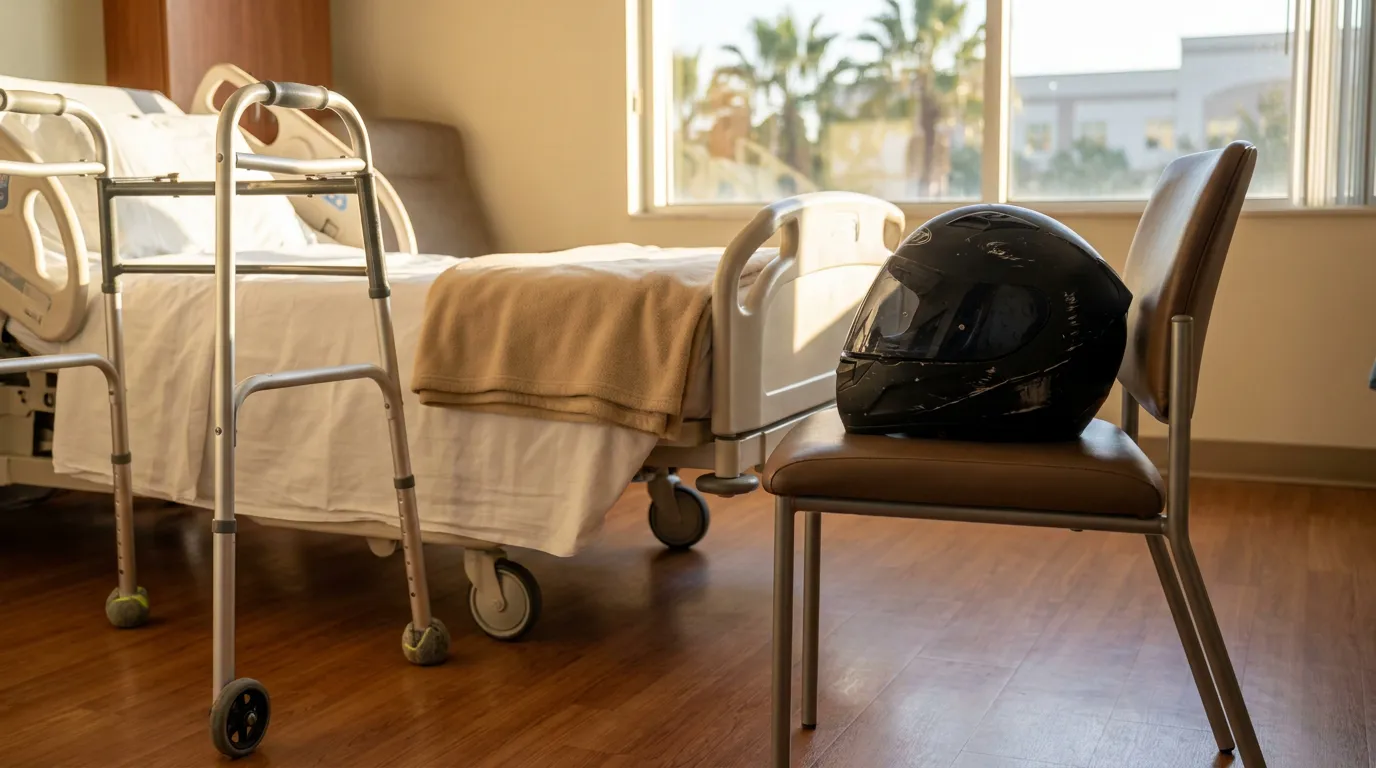
How an Open Book Pelvic Fracture Happens and Why It Is So Serious
The pelvis is a ring of bone, and a break in one spot often means a break or disruption in another. In an open book injury, the pubic symphysis at the front of the pelvis widens, and the ligaments at the back near the sacroiliac joints may tear. Riders often suffer this injury when their legs are forced outward at impact or when the pelvis takes a direct blow from a car, the pavement, or the motorcycle’s gas tank.
Common Medical Complications
The American Academy of Orthopaedic Surgeons explains that high-energy pelvic fractures can involve heavy bleeding and damage to nearby organs. Complications a rider may face include:
- Internal hemorrhage requiring transfusion or emergency procedures
- Bladder, urethra, or bowel injuries
- Nerve damage affecting the legs, bladder, or sexual function
- Chronic pain, limited mobility, or a permanent limp
- Blood clots during long periods of immobility
Typical Treatment and Recovery
Treatment often begins with a pelvic binder or external fixator to close the ring and control bleeding. Many patients then undergo surgery with plates and screws, followed by weeks of limited weight-bearing and extensive physical therapy. Recovery can take many months, and some riders never return to their prior work.
Proving Liability in a Pelvic Fracture Motorcycle Accident Claim
Most injury claims arising from an Orlando motorcycle crash rest on the legal theory of negligence. According to Cornell Law School’s Legal Information Institute, negligence generally means failing to use the care a reasonably prudent person would use in the same circumstances.
The Four Elements You Generally Must Prove
A negligence claim generally requires proof of duty, breach, causation, and damages. Each element plays a distinct role in a pelvic fracture case:
| Element | What It Means | Example in a Motorcycle Case |
|---|---|---|
| Duty | The driver owed others a duty of reasonable care | Every motorist generally must drive safely around motorcycles |
| Breach | The driver failed to meet that standard | Turning left across a rider’s path without yielding |
| Causation | The breach caused the injury | The impact threw the rider and fractured the pelvis |
| Damages | The rider suffered real losses | Surgery bills, lost wages, pain and suffering |
Negligence can involve an action or a failure to act. A driver may be liable for something they did, like an unsafe lane change, or something they failed to do, like keeping a proper lookout. Crash reports, witness statements, video footage, and accident reconstruction can help connect the driver’s conduct to the crash.
Why Medical Evidence Matters So Much
Your medical records often form the backbone of the damages element. Imaging, surgical reports, and treating physicians’ opinions can document the severity of a pelvic ring injury and its long-term effects. Opinions about future care, permanent impairment, and lost earning capacity can significantly affect a claim’s value.
💡 Pro Tip: Keep a simple daily journal of your pain levels, mobility limits, and missed activities during recovery. These notes can help show the non-economic impact of your injury in ways medical charts may not capture.
How Florida’s Comparative Fault Rule Can Affect Your Recovery
Florida applies a modified comparative fault rule that can reduce or even eliminate your damages. Under Fla. Stat. § 768.81, any fault chargeable to the claimant generally reduces the claimant’s damages proportionately. The statute defines "negligence action" broadly, so it generally covers personal injury claims from vehicle collisions.
Under Fla. Stat. § 768.81(6), a claimant found more than 50 percent at fault for his or her own harm generally may not recover any damages. This bar does not apply to medical negligence claims under Chapter 766. For example, if a jury finds a rider 20 percent at fault, a $500,000 award would generally be reduced to $400,000. If the rider is found 51 percent at fault, recovery may be barred entirely.
Insurers frequently try to shift blame onto motorcyclists. They may argue a rider was speeding, lane splitting, or not visible enough. Because a small shift in fault percentages can have a large financial impact, careful investigation and evidence preservation are often critical.
When Multiple Parties Share Fault
Florida generally apportions damages by each party’s percentage of fault rather than through joint and several liability. Under Fla. Stat. § 768.81(3), courts generally enter judgment against each liable party based on its own share of fault, though limited exceptions apply. If several drivers or entities contributed to your crash, identifying every responsible party can matter.
Insurance Sources for Injured Motorcyclists in Florida
Many Florida riders are surprised to learn that personal injury protection may not cover them. Florida requires owners of most four-wheeled motor vehicles to carry PIP coverage under Chapter 627, Florida Statutes. However, motorcycles are not "motor vehicles" for PIP purposes, so PIP generally does not cover injuries a rider suffers while operating a motorcycle. As a result, injured riders often must pursue a bodily injury liability claim against the at-fault driver.
Certain drivers face higher mandatory liability limits. Under Fla. Stat. § 324.023, drivers convicted of DUI generally must maintain the ability to respond in damages of $100,000 for bodily injury to or death of one person in any one crash, typically for three years after license reinstatement. Your own uninsured or underinsured motorist coverage may also apply if you bought it, since UM/UIM coverage is optional in Florida and depends on your policy terms.
Florida Deadlines That Can Affect Your Claim
Florida’s statute of limitations for negligence actions is generally two years for causes of action accruing after March 24, 2023, when the state’s tort reform took effect. Fla. Stat. § 95.11 lists "an action founded on negligence" among actions that must be commenced within two years. A wrongful death action is also generally subject to a two-year limit, which usually runs from the date of death rather than the date of the crash.
The clock generally starts when the cause of action accrues, not when treatment ends. Under Fla. Stat. § 95.031, the period generally runs from accrual, which in most crash cases is the date of the collision.
Exceptions to these deadlines exist but are limited. Tolling may apply only in the narrow circumstances listed in Fla. Stat. § 95.051. Claims against government entities are subject to Fla. Stat. § 768.28, which requires pre-suit written notice and imposes its own deadlines and damage caps.
💡 Pro Tip: Do not wait until you finish treatment to speak with a lawyer. Evidence like vehicle data, surveillance footage, and witness memories can disappear quickly after a crash.
Frequently Asked Questions
1. Is an open book pelvic fracture considered a catastrophic injury?
In many cases, yes, in a medical sense. The injury often involves major bleeding, surgery, and long recovery, and it may cause permanent impairment. How it affects your recoverable damages depends on the medical evidence in your case.
2. Can I still recover if I was partly at fault for my Orlando motorcycle crash?
Generally, yes, as long as you are not found more than 50 percent at fault under Fla. Stat. § 768.81(6). Your recovery would generally be reduced by your percentage of fault.
3. What damages might be available after a pelvic fracture?
Depending on the facts, you may seek medical expenses, lost wages, lost earning capacity, and pain and suffering. You can learn more about the damages crash victims can recover in Florida.
4. Will my PIP policy pay my medical bills after a pelvic fracture motorcycle accident?
Usually not. PIP generally does not cover injuries suffered while operating a motorcycle, so riders often rely on the at-fault driver’s liability coverage, their own UM/UIM coverage, or optional medical payments coverage if purchased.
5. How long do I have to file a lawsuit?
For most negligence claims accruing after March 24, 2023, Fla. Stat. § 95.11 generally sets a two-year deadline. Limited exceptions may apply, and claims against government entities have separate notice requirements, so prompt action is important.
Protecting Your Recovery After a Serious Pelvic Injury
An open book pelvic fracture can change your life overnight, and the legal process that follows can feel just as overwhelming. A successful claim often depends on proving negligence, documenting your medical care thoroughly, pushing back against unfair blame, and filing before Florida’s two-year deadline. Speaking with an experienced motorcycle accident lawyer Orlando riders trust can help you understand where you stand.
The attorneys at Norden Leacox have extensive experience helping injured riders across Central Florida pursue the compensation they may be owed. Call 407-801-3000 or schedule your free consultation today to discuss your case.
Disclaimer: This content is for informational purposes only and is not legal advice. Every case is unique, and results may vary. Consult an attorney about your specific circumstances.