


Norden Leacox Accident & Injury Law | October 4, 2026 | Personal Injury
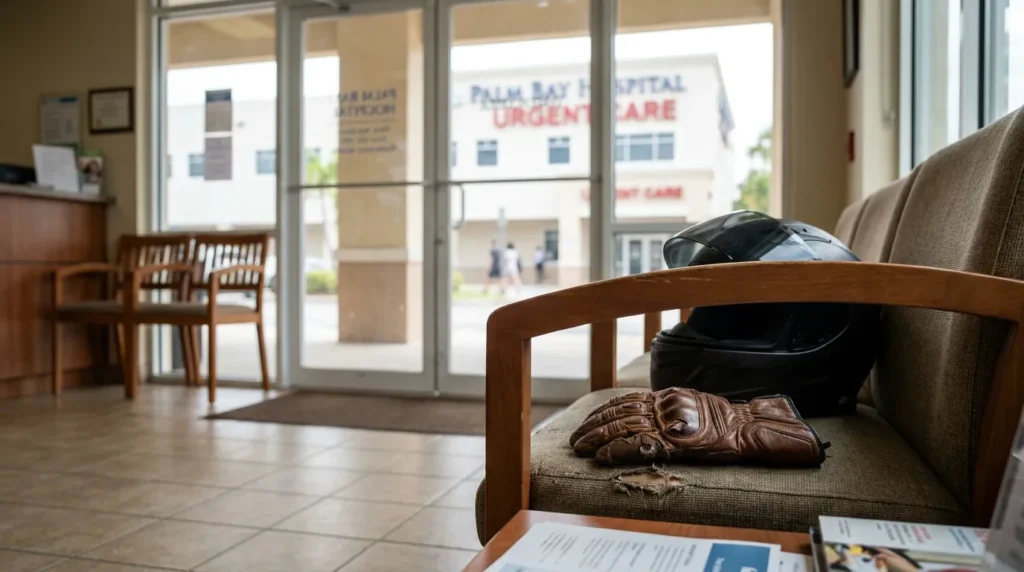
Understanding One of the Most Devastating Motorcycle Crash Injuries in Brevard County
Key Takeaways: A degloving injury occurs when skin and soft tissue are violently torn from muscle or bone, typically from shear force during a slide or entrapment. These injuries may be open or closed (Morel-Lavallée lesions), requiring debridement, grafts, and extensive rehabilitation, often leaving permanent scarring and reduced function. Claims require establishing duty, breach, causation, and damages through crash reports, medical records, and witness accounts. Florida’s modified comparative negligence rule under § 768.81(6) bars recovery for riders more than 50 percent at fault and reduces damages proportionally below that threshold, while § 95.11(5)(a) generally allows two years to file suit for causes accruing on or after March 24, 2023. Government claims carry separate notice requirements.
A degloving injury occurs when skin and underlying soft tissue are forcibly torn from muscle, connective tissue, or bone. While riders may call it "road rash," true traumatic degloving is far more serious. When a motorcycle crashes and a rider slides across pavement, or when a limb catches between vehicles, shearing force can strip tissue in seconds. These avulsion injuries frequently require multiple surgeries, skin grafts, infection control, and long-term rehabilitation, leaving permanent scarring and loss of function.
If you or a loved one suffered a degloving injury motorcycle accident in Palm Bay, you do not have to sort through the medical bills and insurance calls alone. The team at Norden Leacox helps injured Central Florida riders understand their options and pursue compensation. Call 407-801-3000 or contact us now to discuss your situation.

How a Degloving Injury Happens in a Palm Bay Motorcycle Accident
Degloving injuries result from shear force, not simple impact. Motorcyclists have no protective cage and often only a jacket and gloves between skin and asphalt. On roads like Malabar Road, Babcock Street, or I-95 interchanges near Palm Bay, a left-turning driver or lane-change collision can send a rider sliding at highway speed, peeling tissue away in sheets.
Medical providers classify these injuries by whether skin remains attached. In open degloving, tissue is visibly torn away. In closed degloving (Morel-Lavallée lesion), skin stays intact while the layer beneath separates, potentially causing delayed diagnosis, tissue death, and infection.
Common crash scenarios include:
- Low-side or high-side slides with limb-pavement contact
- Leg pinned between motorcycle and another vehicle or guardrail
- Hand or foot caught in machinery, wheels, or debris
- Ejection followed by long slide across pavement
💡 Pro Tip: Photograph your gear, not just your injuries. Shredded leathers and torn gloves may demonstrate slide direction and force, supporting both causation and severity claims.
The Medical Reality Behind a Degloving or Avulsion Injury
Treatment rarely ends with one hospital visit. Surgeons typically begin with debridement to remove dead tissue, then reconstruct using split-thickness or full-thickness grafts, and sometimes free flap procedures transplanting tissue with its own blood supply. Infection risk remains elevated for weeks, and revision surgeries are common. Many cases involve months of wound care, physical therapy, and scar management.
Functional consequences often outlast the wound. Nerve damage may cause chronic pain or numbness. Grafted skin can be less durable, more sensitive, and cosmetically different. For workers who use their hands or stand all day, these limitations can permanently change earning capacity, making early documentation of future medical needs and vocational impact critical.
Proving Fault in a Degloving Injury Motorcycle Accident Claim
Every Florida negligence claim rests on four elements: duty, breach, causation, and damages. The question is whether the other driver owed a duty to operate reasonably, breached that duty through conduct such as an unsafe turn or distracted driving, and whether that breach caused the injuries and losses. Proving each element requires crash scene photographs, traffic reports, witness statements, vehicle damage analysis, and medical records tying the injury to the collision.
Evidence That Carries Weight
Physical and medical evidence generally persuades more than a rider’s account alone. Surveillance footage, event data, roadway measurements, and treating physician records create an objective record. In degloving cases, operative reports and photographs taken throughout treatment show the true scope of harm.
Government Liability Claims
When claims involve government vehicles or hazardous road conditions, sovereign immunity is waived only per Fla. Stat. § 768.28, including statutory damage caps. Section 768.28(14) generally bars actions not commenced within four years after accrual, and § 768.28(6) requires written pre-suit notice to the agency, and typically to the Department of Financial Services, within three years, followed by a waiting period before suit. Courts interpret these requirements strictly, making early evaluation advisable.
Florida’s Comparative Negligence Rules and Your Recovery
Fault allocation can decide whether a severely injured rider recovers anything. Under Fla. Stat. § 768.81(6), any party more than 50 percent at fault for their own harm may not recover damages. If at or below that threshold, § 768.81(2) provides that contributory fault diminishes damages proportionately. This modified framework applies to causes of action accruing on or after March 24, 2023; prior claims are governed by Florida’s former pure comparative negligence rule.
Insurers often push fault onto riders. As explained in this overview of comparative negligence rules, a plaintiff found 40 percent at fault generally recovers 60 percent of proven damages. That change makes accurate fault documentation more consequential than for older crashes.
| Rider’s Share of Fault | General Effect on Florida Damages Award |
|---|---|
| 0% | No reduction |
| 25% | Award reduced by 25% |
| 50% | Award reduced by half; recovery still possible |
| Greater than 50% | Recovery generally barred under § 768.81(6) |
💡 Pro Tip: Avoid speculating about speed or lane position in recorded statements. Hospital-bed estimates are often inaccurate and may be used to argue higher fault against you.
Damages Available After a Traumatic Degloving
Florida law defines recoverable financial losses. Fla. Stat. § 768.81(1)(b) defines "economic damages" to include past and future lost income, medical expenses, lost support and services, and other economic loss resulting from injury. For degloving victims, this encompasses reconstructive surgeries, graft procedures, wound care, home health assistance, and lost earning capacity. Noneconomic damages such as pain, disfigurement, and loss of enjoyment may also be recoverable depending on facts, coverage, and statutory limits.
Insurance structure shapes what may be collectible. Florida’s no-fault framework generally excludes motorcycle operators, making liability coverage, uninsured/underinsured motorist coverage, and health insurance coordination central. The firm’s motorcycle injury resources address related questions for Central Florida riders.
Filing Deadlines Every Injured Rider Should Track
Florida generally gives injured motorcyclists two years to file suit. Fla. Stat. § 95.11(5)(a) provides that negligence actions must be brought within two years for causes accruing on or after March 24, 2023; prior claims were generally subject to four years. Missing the deadline generally means losing the right to pursue compensation.
Other Deadlines from the Same Crash
Related claims carry different limitations periods. Under § 95.11(2)(b), contract actions fall within five years, relevant for insurance disputes. If degloving involves alleged medical negligence during reconstruction, medical malpractice statutes generally set a two-year period from occurrence or discovery, subject to a four-year repose with limited exceptions, plus chapter 766 pre-suit requirements. Review the full schedule in Florida’s statute of limitations provisions.
Tolling and discovery exceptions are limited. Courts interpret these narrowly. Government claims, lawsuits, and insurance requirements operate on separate tracks with separate timing. Acting well before any deadline is safest.
Frequently Asked Questions
1. Is a degloving injury the same thing as severe road rash?
No. Road rash involves surface abrasion, while degloving involves tissue separation from underlying structures, typically requiring surgical reconstruction.
2. Can I still recover damages if I was not wearing protective gear?
Possibly. Gear choices may be raised in comparative fault arguments. Under § 768.81, recovery is reduced proportionally unless a rider is found more than 50 percent at fault. Outcomes vary case by case.
3. What if my degloving injury was not diagnosed right away?
Closed degloving injuries are sometimes identified days or weeks later. Delayed diagnosis can complicate causation arguments, so consistent medical follow-up helps connect the injury to the collision.
4. How long do these claims typically take to resolve?
Timelines vary widely. Because degloving cases often involve staged surgeries, resolving before treatment stabilizes may risk undervaluing future care. Many claims resolve through negotiation; others require litigation.
5. Should I talk to the other driver’s insurer myself?
You are generally not obligated to give a recorded statement to another party’s insurer. Statements made while medicated can later be used to dispute fault or severity, so speaking with counsel first is common practice.
Protecting Your Claim After a Serious Palm Bay Rider Injury
A degloving injury motorcycle accident can produce complex damages claims, potentially combining staged surgical care, permanent disfigurement, and long-term functional loss. Florida’s two-year negligence deadline, modified comparative negligence bar, and separate government notice rules all shape what a rider can recover. Every outcome depends on specific facts, available coverage, and documentation quality.
Norden Leacox represents injured riders across Brevard and Orange counties. Our degloving injury motorcycle accident lawyer team handles claims on a contingency-fee basis and offers a free consultation. Reach Norden Leacox by calling 407-801-3000 or request your free case review today.
Disclaimer: This content is for informational purposes only and is not legal advice. Every case is unique, and results may vary. Consult an attorney about your specific circumstances.