


Norden Leacox Accident & Injury Law | September 26, 2026 | Truck Accidents
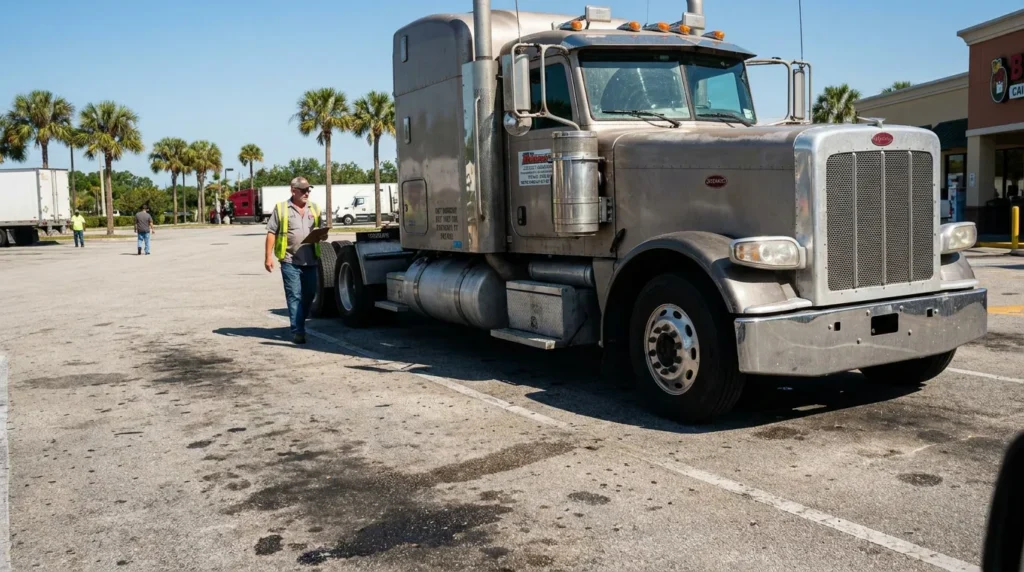
The Trucking Paperwork That Can Decide Your Palm Bay Injury Claim
Key Takeaways: A driver qualification file (DQ file) is the federally required personnel record a motor carrier must keep for every commercial driver under 49 C.F.R. part 391, containing employment applications, motor vehicle records, prior employer verifications, road test certificates, medical certificates, and annual driving reviews. In Palm Bay truck accident cases, this file can support negligent hiring, retention, and supervision claims against the carrier beyond vicarious liability. Gaps or expired documents may become significant evidence. Florida’s no-fault PIP benefits cap at $10,000 with a 14-day care deadline, so serious cases often pursue liability claims where DQ files become central. Florida’s two-year negligence deadline for claims accruing on or after March 24, 2023, the modified comparative negligence bar at greater than 50 percent fault, and federal retention periods run simultaneously. Early preservation letters and prompt legal consultation can help protect these records.
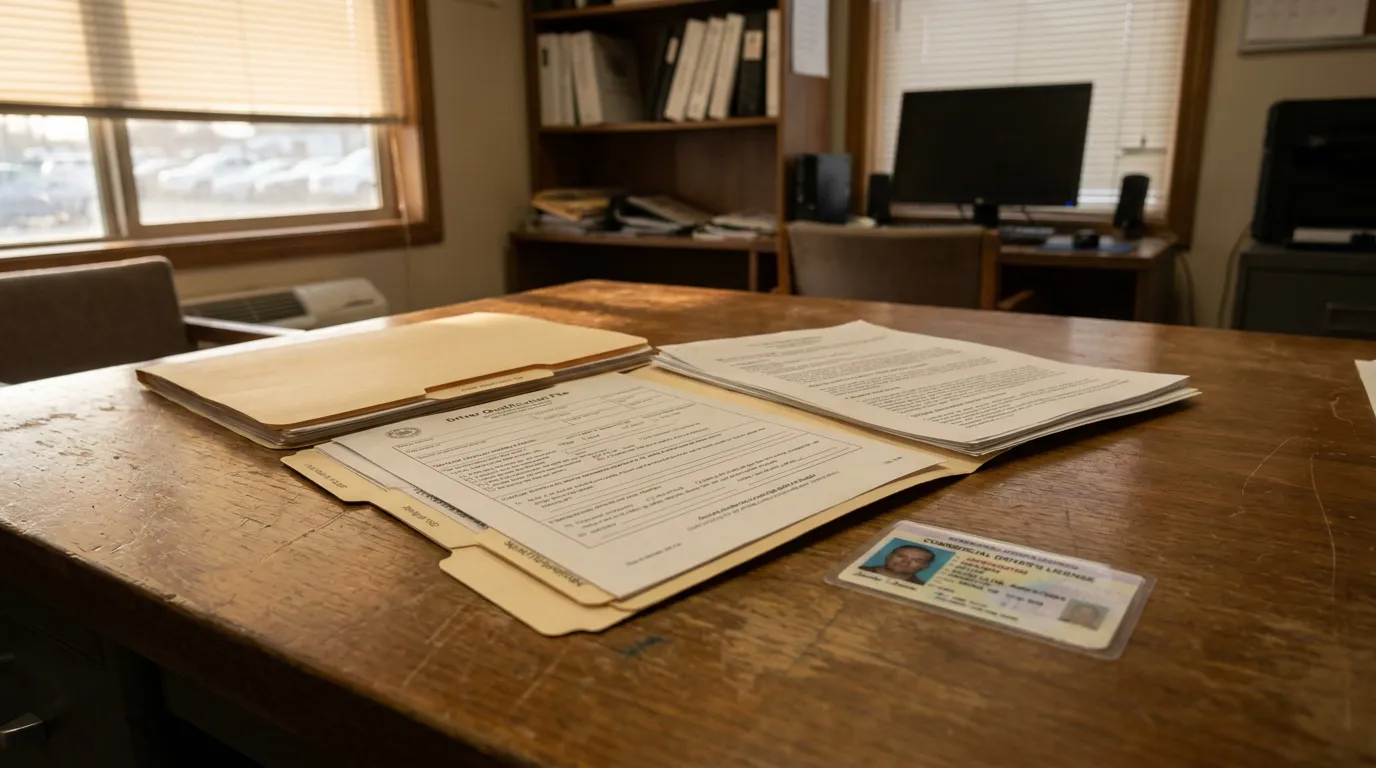
A driver qualification file (DQ file) is the personnel record federal law requires motor carriers to maintain for every commercial driver under 49 C.F.R. part 391. It includes the driver’s employment application, motor vehicle records, prior employer safety inquiries, road test certificates, medical certificates, and annual driving reviews. In Palm Bay truck accident cases, these documents may reveal whether the carrier hired or retained an unfit driver, supporting negligence claims beyond the driver alone.
If a commercial truck injured you or your family, Norden Leacox can move quickly to preserve carrier records before retention periods lapse. Call 407-801-3000 or request a free consultation to discuss your options.
Why a DQ File Matters More Than Most Truck Accident Evidence
A driver qualification file speaks directly to the carrier’s own conduct rather than the driver’s split-second mistake. Crash reports and dashcam video show what happened before impact, but a DQ file shows what the trucking company knew months or years earlier. This distinction matters because negligent hiring, retention, and supervision are separate theories of direct liability against the company itself, distinct from vicarious liability for the driver’s conduct.
Florida law may support pursuing both the driver and the company. The state’s financial responsibility statute defines an "operator" as any person in actual physical control of a motor vehicle and includes firms and corporations under Fla. Stat. § 324.021(3)-(4) (2025). Combined with Florida’s dangerous instrumentality doctrine and agency principles, injured claimants may name both the driver and motor carrier as defendants.
What Driver File Contents Typically Include
Most DQ files follow federal requirements, making gaps meaningful. When a part 391 document is missing, altered, or dated after the crash, that absence may become truck accident evidence. Attorneys reviewing motor carrier records look for:
- Employment application, including three-year employment and accident history
- Motor vehicle record inquiries from every state where the driver held a license in the preceding three years
- Written verifications from previous employers about safety performance and drug/alcohol testing history
- Road test certificate or accepted equivalent under 49 C.F.R. § 391.33
- Medical examiner’s certificate confirming physical qualification
- Annual driving record review
Medical Certification and Physical Qualification
Medical fitness is where DQ file problems frequently surface. Florida incorporates federal driver qualification standards for many intrastate operations. Under Fla. Stat. § 316.302(2)(i), drivers with no traffic convictions during the two years before applying for a CDL, operating only in intrastate commerce, may be exempt from vision requirements at 49 C.F.R. § 391.41(b)(10). However, that driver must possess a physical examination form dated within 24 months and remains subject to Fla. Stat. §§ 322.12 and 322.121.
This exemption is narrow and doesn’t excuse documentation. A truck running Palm Bay to Melbourne routes may fall under Florida’s intrastate rules, while interstate rigs are governed by full federal rules. Courts examine actual operations rather than carrier-assigned labels.
Licensing and Disqualification Status
Federal prohibited or disqualified status is tracked in official records comparable against carrier files. Florida’s CDL framework in Chapter 322 of the Florida Statutes on driver licenses coordinates with FMCSA. Under Fla. Stat. § 322.591(3)(h), after downgrading a CDL, the department must reinstate upon notification under 49 C.F.R. § 382.503(a) that the person is no longer prohibited.
Carriers may struggle claiming ignorance of driver status. Required Clearinghouse queries and annual record reviews mean official disqualifications the DQ file never reflected may support failure-to-check arguments.
💡 Pro Tip: Send a written evidence preservation letter to the carrier and its insurer as early as possible. Federal retention periods for qualification documents are limited, and a spoliation letter creates a record the company was on notice.
How a Driver Qualification File Truck Accident Claim Fits Florida’s No-Fault System
Florida’s no-fault structure means your insurance pays first, but may not cover truck crash costs. Under Fla. Stat. § 627.736(1)(a) (2024), PIP pays 80% of reasonable medical expenses and 60% of lost wages, subject to a $10,000 aggregate limit, regardless of fault.
PIP carries a strict 14-day deadline. Benefits require initial services within 14 days of the accident, and medical benefits are limited to $2,500 unless a qualifying provider determines an emergency medical condition existed, per Fla. Stat. § 627.736(1)(a)1. and (1)(a)3.-4. These caps often fall short of catastrophic injury costs, moving serious cases to liability claims where DQ files become central. Noneconomic damages generally require meeting the permanent injury threshold in Fla. Stat. § 627.737(2).
Commercial policies often provide meaningful recovery. Florida’s baseline financial responsibility is $10,000/$20,000/$10,000 under Fla. Stat. § 324.021(7)(a)-(c) (2025). Commercial vehicles face higher minimums under Fla. Stat. § 324.021(7)(d), and interstate carriers face substantially higher federal minimums under 49 C.F.R. part 387. Building coverage and liability theories often overlaps with the broader truck accident evidence checklist.
Deadlines That Quietly Close the Door on Carrier Records
Florida negligence claims accruing on or after March 24, 2023 must be filed within two years. Fla. Stat. § 95.11(4) (2024) includes "an action founded on negligence." This two-year clock typically governs negligent hiring, retention, and qualification theories that DQ files support. Wrongful death claims have their own two-year period.
The shortened period applies prospectively based on crash date. The reduction from four years under HB 837 applies to causes accruing after March 24, 2023. Tolling exists in limited circumstances, but Florida courts interpret exceptions narrowly.
| Claim or Benefit | General Deadline | Statutory Source |
|---|---|---|
| PIP initial care | 14 days from crash | Fla. Stat. § 627.736(1)(a)1. |
| Negligence lawsuit | 2 years from accrual (claims accruing on or after March 24, 2023) | Fla. Stat. § 95.11(4) (2024) |
| Written contract claim | 5 years | Fla. Stat. § 95.11(2)(b) |
Contract claims carry longer windows. Fla. Stat. § 95.11(2)(b) (2024) sets five years for written contracts, but this doesn’t extend negligence deadlines.
How Fault Percentages Interact With Qualification Evidence
Florida applies modified comparative negligence with an unforgiving threshold. Under Fla. Stat. § 768.81(6) (2024), parties greater than 50 percent at fault "may not recover any damages," except in medical negligence cases. Insurers work to push blame onto injured persons.
Qualification evidence may shift jury responsibility allocation. Proof that carriers hired drivers with violation histories, skipped safety checks, or ignored expired medical certificates reframes cases as company failures rather than isolated errors. Outcomes depend on facts, record admissibility, and presentation.
Practical Steps After a Palm Bay Truck Crash
Early action protects evidence supporting your case. Seek prompt medical care to satisfy PIP requirements and document injuries. Photograph the scene, truck’s DOT number, and trailer. Avoid recorded statements to carrier insurers before consulting counsel. A Palm Bay truck accident lawyer can issue preservation demands and pursue DQ files through discovery.
Frequently Asked Questions
1. Can I request a DQ file directly from the trucking company?
Carriers rarely release qualification files voluntarily. Files are typically obtained through litigation discovery after suit filing, though preservation letters may help ensure documents survive.
2. What if the driver was an owner-operator rather than an employee?
Carriers generally must maintain qualification files for drivers they use, including many independent contractors operating under their authority. Analysis depends on operating agreements and control exercised.
3. Does an incomplete DQ file automatically prove negligence?
No. Regulatory violations may be evidence of negligence, sometimes treated as negligence per se, but claimants must establish duty, breach, causation, and damages.
4. How does a DQ file differ from logbooks and ELD data?
Logbooks and electronic logging devices show hours worked around the crash. DQ files address whether the driver should have been qualified to drive at all, complementary rather than duplicative evidence.
5. My crash happened before March 2023. Which deadline applies?
The four-year period may govern claims accruing before HB 837’s effective date, but analysis turns on accrual timing. Confirm the correct deadline with an attorney promptly.
Protecting Your Claim Before the File Disappears
A driver qualification file may transform a Palm Bay truck accident case from a traffic dispute into a claim about corporate safety failures. Florida’s two-year negligence deadline for post-March 2023 claims, the 14-day PIP care requirement, and federal retention periods run simultaneously, each narrowing your options. Careful review of the crash, carrier, and available records determines whether a driver qualification file truck accident claim is worth pursuing.
If you’re weighing your next step, the attorneys at Norden Leacox can help you evaluate carrier records and applicable Florida deadlines. Call 407-801-3000 or contact us now to get started.
Disclaimer: This content is for informational purposes only and is not legal advice. Every case is unique, and results may vary. Consult an attorney about your specific circumstances.