


Norden Leacox Accident & Injury Law | October 13, 2026 | Truck Accidents
When Drowsy Driving Becomes a Legal Problem for Truckers
Key Takeaways: A truck driver’s sleep apnea can make them liable for a Melbourne crash, but only if the driver or carrier handled the condition unreasonably and the fatigue actually helped cause the collision. The diagnosis alone generally does not create liability. Ignoring CPAP therapy, hiding a diagnosis, or driving while clearly exhausted may breach the duty of care. Federal regulators have treated untreated obstructive sleep apnea as a known safety risk for years, which can help show the danger was foreseeable. However, there is no specific federal sleep apnea testing mandate for truckers, and a 2016 rulemaking notice on the issue was withdrawn in 2017. Liability may reach trucking companies, vehicle owners, and other parties, and evidence like ELD data, CPAP records, and medical certification files is often key. Under Florida’s modified comparative negligence rule, you generally cannot recover if you are more than 50 percent at fault, and your damages are generally reduced by your share of fault. Most negligence claims that accrued after March 24, 2023, generally must be filed within two years, so preserving evidence early and acting quickly can be critical.
Yes, under certain circumstances, a truck driver’s sleep apnea can support a negligence claim after a Melbourne crash. The diagnosis alone generally does not create liability. What often matters most is how the driver and the trucking company handled the condition. A driver who knew, or should have known, about untreated sleep apnea and kept driving may have breached the duty to operate safely. A carrier that ignored warning signs may share responsibility.
If you or a loved one was hurt in a crash with a commercial truck, you do not have to sort out these questions alone. The team at Norden Leacox can review what happened and explain your options. Call 407-801-3000 or contact us now to schedule a free consultation.

How Obstructive Sleep Apnea Affects a Trucker’s Ability to Drive
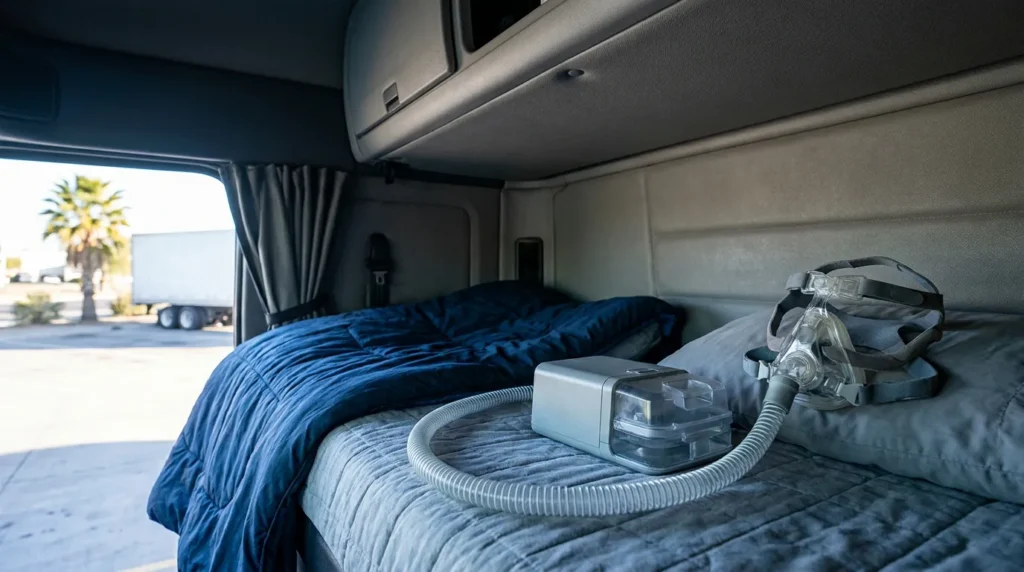
Obstructive sleep apnea (OSA) is a sleep disorder that repeatedly interrupts breathing during sleep. It disrupts rest and can cause excessive daytime sleepiness. A tired driver may react slowly, drift out of the lane, or briefly fall asleep. At highway speed in a rig that can weigh up to 80,000 pounds, a few seconds can be catastrophic.
Fatigued driving is one of the most serious hazards on Brevard County roads. Long stretches of I-95 and US-192 can be monotonous, which makes drowsiness worse. For a broader view of local crash risks, see this overview of what causes most Melbourne truck accidents.
Federal Regulators Have Long Recognized the Risk
Federal agencies have treated untreated moderate-to-severe OSA as a transportation safety concern for years. In March 2016, the Federal Motor Carrier Safety Administration (FMCSA) and the Federal Railroad Administration jointly published an advance notice on sleep apnea screening in the Federal Register (Doc. 2016-05396). It built on earlier advisory committee recommendations and National Transportation Safety Board concerns.
The notice matters because it may help show the danger was known and foreseeable. Foreseeability is often central to proving negligence. When a hazard is well documented, a court may find that a reasonable driver or carrier should have addressed it.
What the Federal Notice Did Not Do
The 2016 document was an Advance Notice of Proposed Rulemaking, not a final rule, and the agencies withdrew it in 2017. It did not create a specific federal OSA testing mandate for truckers. Driver qualification still generally depends on federal medical standards and the certified medical examiner’s judgment. Even without a mandatory screening rule, a driver or carrier who ignored obvious symptoms or a known diagnosis may still be found negligent.
Building a Truck Driver Sleep Apnea Accident Claim in Florida
To recover compensation, an injured person generally must prove the four elements of negligence: duty, breach, causation, and damages. Every driver generally owes others a duty of reasonable care. The key questions usually involve breach and causation.
Proving Breach and Causation
Breach may exist when a driver kept driving despite knowing about untreated sleep apnea. Examples include skipping prescribed CPAP therapy, hiding a diagnosis from a medical examiner, or driving while noticeably exhausted. Causation generally requires showing that fatigue actually contributed to the crash. A defense may argue that the driver was alert or that another factor caused the collision, so strong evidence is often essential.
Evidence that may help establish a sleep apnea connection includes:
- Driver medical certification records and DOT physical history
- Sleep study results and CPAP compliance data
- Electronic logging device (ELD) data and hours-of-service records
- Event data recorder (EDR) information showing speed, braking, and lane drift
- Dashcam, traffic camera, and nearby business video
- Witness statements describing weaving or a lack of braking
- Carrier hiring, training, and medical monitoring files
💡 Pro Tip: CPAP machines often record usage data. If sleep apnea may be involved, a prompt preservation letter can ask the carrier and driver to retain this information before it is lost.
Who May Be Liable
More than one party may be responsible for a Melbourne FL truck crash. The driver may be directly liable for negligent operation. The trucking company may be vicariously liable for an employee acting within the scope of employment, and may face direct claims for negligent hiring, retention, or supervision if it overlooked a known medical issue. Florida’s dangerous instrumentality doctrine may also make a vehicle owner responsible for a permissive driver’s negligence, though exceptions apply, including the federal Graves Amendment. In some cases, a cargo loader or parts manufacturer may share fault.
How Florida’s Comparative Fault Rules Shape Your Recovery
Florida now uses a modified comparative negligence system. Under Fla. Stat. § 768.81(6), adopted in 2023 through HB 837, a party found more than 50 percent at fault for their own harm may not recover damages. This rule generally applies to negligence claims filed after March 24, 2023, and does not apply to medical negligence claims. If you are 50 percent or less at fault, your recovery is generally reduced by your share of fault.
Fault allocation has long shaped how much a defendant pays. In Walt Disney World Co. v. Wood, 515 So. 2d 198 (Fla. 1987), a jury divided fault among the plaintiff, a third party, and Disney, which was found 1 percent at fault. Under the joint and several liability rule then in place, Disney remained responsible for a much larger share of the damages. Florida later largely replaced joint and several liability through amendments to Fla. Stat. § 768.81(3), so each defendant today is generally liable only for its own percentage of fault, subject to limited exceptions.
This is why insurers often try to shift blame onto the injured person. An adjuster may claim you were speeding or distracted. Careful evidence of the truck driver’s fatigue can help keep the fault analysis focused where it belongs.
| Rule | Current Florida Law | Why It Matters |
|---|---|---|
| Comparative fault | Fla. Stat. § 768.81(6): no recovery if more than 50% at fault | Your share of fault can reduce or bar recovery |
| Allocation among defendants | Fla. Stat. § 768.81(3): generally based on each party’s percentage | Naming all responsible parties matters |
| General negligence deadline | Fla. Stat. § 95.11(5)(a): generally 2 years for claims accruing after March 24, 2023 | Late filing may bar your claim |
| Claims against government | Fla. Stat. § 768.28(6), (14): pre-suit notice and a 4-year filing period, with exceptions | Separate procedures apply |
Deadlines and Other Consequences Drivers Face
Florida’s civil deadlines are strict, and exceptions are narrow. Most negligence claims that accrued after March 24, 2023, generally must be filed within two years under Fla. Stat. § 95.11(5)(a) (formerly numbered § 95.11(4)(a) in the 2023 statutes). Wrongful death claims have their own deadline, which is generally two years from the date of death.
Claims involving a government-operated truck follow different rules. Under Fla. Stat. § 768.28(14), negligence actions against the state or its agencies or subdivisions generally must be filed within four years after the claim accrues, with certain exceptions. Fla. Stat. § 768.28(6) also generally requires written notice to the agency within three years after the claim accrues and before suit is filed. Damages against government entities are also subject to statutory caps.
Commercial drivers may face licensing penalties separate from any civil case. Fla. Stat. § 322.61 lists causing a fatality through the negligent operation of a commercial motor vehicle among the offenses that can lead to disqualification from commercial driving, generally for one year for a first violation. That consequence does not compensate victims, but it shows Florida treats negligent truck operation seriously.
💡 Pro Tip: A driver’s citation or license action can be useful context, but it does not decide civil liability. Your injury claim must still be proven on its own evidence.
Frequently Asked Questions
1. Does a sleep apnea diagnosis automatically make a truck driver liable?
No. Liability generally depends on whether the driver or carrier acted unreasonably, such as ignoring treatment, and whether fatigue caused the crash.
2. Can I sue the trucking company, not just the driver?
In many cases, yes. A carrier may be vicariously liable for its employee’s negligence and may face direct claims if it failed to screen or monitor a driver with known health risks.
3. What if I was partly at fault for the crash?
Under Fla. Stat. § 768.81(6), you may still recover if you were 50 percent or less at fault, though your damages would generally be reduced. More than 50 percent generally bars recovery.
4. What compensation may be available in a Florida truck accident claim?
Depending on the facts, recoverable damages may include medical bills, lost income, reduced earning capacity, pain and suffering, and, in fatal cases, wrongful death damages.
5. How quickly should evidence be preserved?
As soon as possible. ELD data, video footage, and CPAP records may be lost or overwritten, so early preservation requests can make a meaningful difference.
Protecting Your Rights After a Fatigue-Related Truck Crash
A truck driver’s untreated sleep apnea can be a powerful piece of a negligence case, but generally only when the evidence connects it to the crash. Florida’s comparative fault rules, filing deadlines, and multiple-party liability can all shape what you recover. Acting early may give you the best chance to preserve key records.
If a fatigued trucker injured you or took a loved one from you, an experienced truck driver sleep apnea accident lawyer can help you understand your next steps. Reach out to Norden Leacox today by calling 407-801-3000, or schedule your free case review to talk about your Melbourne truck accident.
Disclaimer: This content is for informational purposes only and is not legal advice. Every case is unique, and results may vary. Consult an attorney about your specific circumstances.