


Norden Leacox Accident & Injury Law | October 15, 2026 | Car Accidents
How a Crash Can Tear Your Shoulder and What Florida Law Allows
Key Takeaways: In a Melbourne crash, a seat belt can tear your rotator cuff by pinning one shoulder while your body twists forward, and a steering wheel can do it by driving force up your braced arms into the shoulder joint. A tear can be acute, meaning new from the crash, or degenerative, meaning it built up over time, and a crash that makes an existing shoulder condition worse may still support a claim. Shoulder injuries are often diagnosed weeks later, so getting imaging quickly, seeing an orthopedic doctor, and keeping a dated record of your symptoms can help protect your claim. Florida generally gives you two years to bring a negligence claim that accrued after March 24, 2023. The clock usually starts when the claim accrues, which in a car crash is often the date of the crash, not the date an MRI confirms the tear. Florida’s no-fault PIP rules and its modified comparative fault rule can also affect your recovery. Being found more than 50 percent at fault generally bars recovery entirely, though there are limited exceptions, such as some medical negligence claims. A licensed attorney can review how these deadlines and rules apply to your case.
A seat belt and a steering wheel can both tear a rotator cuff in a Melbourne crash. They stop your body with great force in a fraction of a second. A shoulder belt keeps you in your seat, but it also puts sudden pressure on one shoulder. The steering wheel can push your arm back toward the joint. Either way, the tendons that hold the shoulder in place can stretch too far or tear. A rotator cuff tear car accident claim often turns on proving how that force caused the injury, and on acting within Florida’s legal deadlines.
If you hurt your shoulder in a crash on I-95, US-192, or anywhere in Brevard County, you may have options under Florida law. Norden Leacox can review what happened and explain those options. Call 407-801-3000 or contact us now to talk about your case.

What a Rotator Cuff Tear Is and Why It Matters
A rotator cuff tear is a tear in one or more of the tendons that stabilize the shoulder joint. These tendons keep the top of the arm bone seated in the shoulder socket. When one tears, lifting, reaching, and sleeping can hurt, and some people lose strength in the arm. The WK Health Library overview gives a plain-language explanation of the condition.
Acute Tears Versus Degenerative Tears
Rotator cuff tears are generally either acute or degenerative. An acute tear comes from a sudden injury, such as a fall or other forceful trauma. A degenerative tear develops slowly from wear over time. A crash can cause a new tear, and it can also worsen an existing weakened shoulder.
Insurers may argue that your tear is "just age-related." That argument does not necessarily end a claim. Under Florida law, an at-fault driver may be responsible for the worsening of a pre-existing condition, but generally not for the condition as it existed before the crash. Your medical records, imaging, and treating doctors’ opinions often decide the question.
Crash Mechanics: How Seat Belts and Steering Wheels Injure the Shoulder
Crash mechanics explain why the shoulder is so exposed in a collision. When a car stops suddenly, your body keeps moving forward until something stops it. Seat belts and steering wheels do that job, and in doing so they can put damaging force on the shoulder. Florida’s Safety Belt Law, Fla. Stat. § 316.614, requires front-seat occupants and all occupants under 18 to wear seat belts.
Seat Belt Shoulder Injury
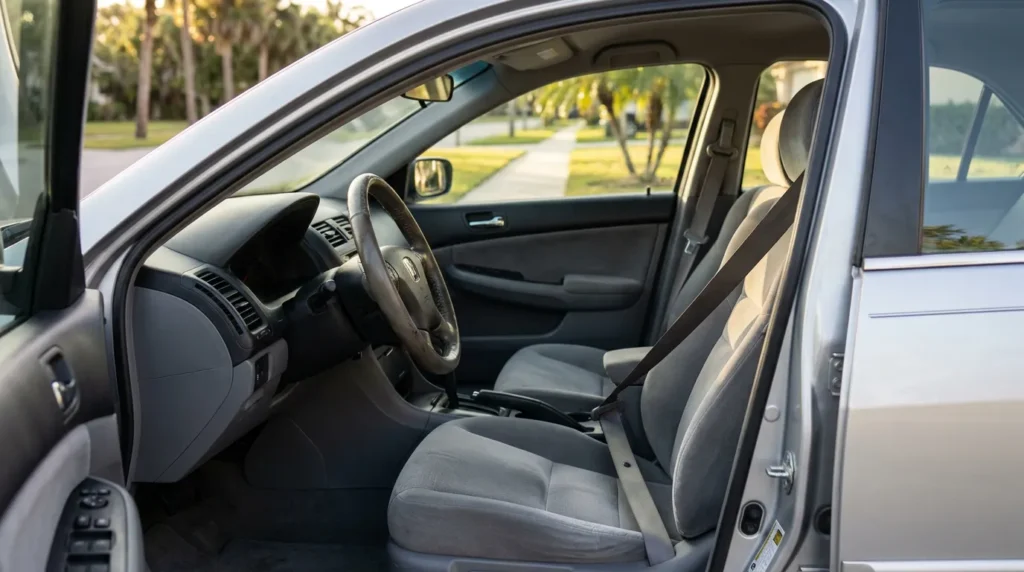
A seat belt shoulder injury usually happens where the diagonal strap crosses the collarbone and shoulder. In a frontal or rear-end crash, the belt locks and holds that shoulder while the rest of your body moves forward and twists. That twisting and compression can strain or tear the rotator cuff tendons. Wearing a seat belt is still the right choice, because belts save lives. In Florida, however, not wearing one can be raised as comparative fault and may reduce your recovery.
Steering Wheel Shoulder Injury
A steering wheel shoulder injury often happens because drivers brace for impact. Many people grip the wheel hard and lock their arms just before a collision. The impact then drives force up the arms and into the shoulder joints. An arm that hits the wheel or dashboard can also be pushed into positions that overload the tendons.
Common signs of car accident shoulder trauma may include:
- Pain when lifting your arm overhead or reaching behind your back
- Weakness when raising or rotating the arm
- A clicking or popping feeling when you move the shoulder
- Pain at night, especially when lying on the injured side
- Pain or stiffness that gets worse in the days or weeks after the crash
Why Shoulder Injuries Are Often Diagnosed Late
Rotator cuff injuries from crashes sometimes are not diagnosed until weeks later. Right after a collision, neck pain, bruising, or adrenaline can hide shoulder symptoms. Once other pain fades, the shoulder problem may become obvious, and an MRI may then confirm a tear. Our guide on delayed pain after an accident explains practical next steps.
Getting imaging and an orthopedic evaluation promptly can protect both your health and your claim. Florida’s PIP law generally requires initial medical treatment within 14 days of the crash to qualify for PIP benefits. Keep a dated record of your symptoms, doctor visits, and treatment.
💡 Pro Tip: When you see any provider after a crash, mention every area that hurts, including a shoulder that feels only "a little sore." Leaving it out of early records can create gaps an insurer may try to use later.
Florida’s Deadline for a Rotator Cuff Tear Car Accident Claim
Florida generally sets a two-year limit on negligence actions, and that covers most car-crash injury claims. Under Fla. Stat. § 95.11(5)(a) (previously numbered § 95.11(4)(a) when enacted in 2023), "an action founded on negligence" falls into the two-year category. The 2023 tort reform law (HB 837, Ch. 2023-15, Laws of Fla.) made this change. Before then, most negligence claims had a four-year period. The two-year rule applies to causes of action that accrued after the law took effect on March 24, 2023. You can read the current text of Florida’s limitations statute on the Legislature’s website.
When the Clock Starts
Under Fla. Stat. § 95.031, the limitations period generally runs from when the cause of action accrues. In most car crash cases, that is the date of the crash, even if the tear isn’t diagnosed until later. Talk with a licensed attorney about your specific timeline.
Different Claims, Different Deadlines
Other types of claims can have their own deadlines under Fla. Stat. § 95.11. Wrongful death generally has a two-year period. Medical malpractice, such as a claim over a poorly performed shoulder surgery, generally has a two-year period that runs from when the incident is or should have been discovered, subject to outer limits and pre-suit requirements.
| Claim Type | General Rule | Key Caveat |
|---|---|---|
| Negligence (accrued after March 24, 2023) | Two years, Fla. Stat. § 95.11(5)(a) | Accrual depends on the facts |
| Negligence (accrued on or before March 24, 2023) | Generally four years | Borderline dates need review |
| Medical malpractice, wrongful death | Separate periods in Fla. Stat. § 95.11 | Special rules may apply |
Tolling Is Narrow
Fla. Stat. § 95.051 lists limited grounds that can pause, or "toll," the limitations period. Courts generally treat that list as exclusive and read it strictly. Do not count on tolling to save a late claim. Civil lawsuit deadlines are also separate from insurance claim reporting requirements and government notice rules, such as the pre-suit notice required under Fla. Stat. § 768.28 when a public entity is involved.
Other Florida Rules That Can Affect Your Injury Claim
Several other Florida laws may shape how a Melbourne car crash claim moves forward. Florida’s Motor Vehicle No-Fault Law, Fla. Stat. §§ 627.730 through 627.7405, generally requires you to turn to your own personal injury protection (PIP) coverage first. PIP typically pays up to $10,000 in benefits, subject to limits. Under Fla. Stat. § 627.737, you can generally sue the at-fault driver for pain and suffering only if your injury meets a threshold, such as a permanent injury within a reasonable degree of medical probability. Whether a torn rotator cuff meets that threshold depends on the medical evidence.
Comparative Fault
Florida’s modified comparative fault rule can bar recovery completely. Under Fla. Stat. § 768.81(6), a party found more than 50 percent at fault for his or her own harm may not recover any damages. This rule does not apply to medical negligence claims. If you are found 50 percent at fault or less, your damages are generally reduced by your share of fault.
Shared and Rented Vehicles
If the crash involved a peer-to-peer shared vehicle, useful records may exist. Fla. Stat. § 627.7483 requires a peer-to-peer car-sharing program to keep records about a shared vehicle’s use for at least as long as the personal injury statute of limitations.
💡 Pro Tip: Save photos of how your seat and belt were positioned, the vehicle’s interior damage, and any bruising from the belt across your chest or shoulder. This evidence can help connect the crash mechanics to your injury.
Frequently Asked Questions
1. Can a seat belt really tear a rotator cuff?
Yes, under certain circumstances. The shoulder strap can hold one shoulder in place while the body twists forward, and that can strain or tear the tendons. Your medical providers can assess whether that is what happened in your case.
2. What if I had shoulder problems before the crash?
A pre-existing condition does not automatically end a claim. If the crash made a degenerative shoulder worse, you may be able to seek compensation for that worsening, though generally not for the pre-existing condition.
3. Does my deadline start when my MRI confirms the tear?
Generally, no. Under Fla. Stat. § 95.031, time generally runs from when the cause of action accrues, which is usually the crash date. Ask a licensed attorney how that rule applies to your dates.
4. What if my crash happened before March 24, 2023?
A negligence claim that accrued on or before March 24, 2023 generally falls under the previous four-year period. Anyone with an older or borderline date should have their timeline checked.
5. Can I still recover if the insurer says I was partly at fault?
Possibly. Under Fla. Stat. § 768.81(6), you generally may not recover if you are found more than 50 percent at fault for your own harm. Otherwise, your damages may be reduced by your share of fault.
Protecting Your Shoulder and Your Rights After a Melbourne FL Crash
A torn rotator cuff can affect your work, your sleep, and your everyday life for months. Getting prompt medical care, documenting your symptoms, and paying attention to Florida’s two-year negligence deadline can all protect a rotator cuff tear car accident claim. Speaking with a rotator cuff tear car accident lawyer can help you understand how fault, no-fault coverage, and deadlines apply to you.
If your shoulder is still hurting after a crash, you do not have to deal with the insurance companies by yourself. Reach out to the team at Norden Leacox Law Firm today. You can call 407-801-3000 or schedule your consultation to discuss your next steps.
Disclaimer: This content is for informational purposes only and is not legal advice. Every case is unique, and results may vary. Consult an attorney about your specific circumstances.