


Norden Leacox Accident & Injury Law | September 24, 2026 | Truck Accidents
A New Door Opens for Brevard County Families After a Brokered-Load Crash
Key Takeaways: On May 14, 2026, the U.S. Supreme Court unanimously held in Montgomery v. Caribe Transport II, LLC that state-law negligent hiring claims against freight brokers are not preempted by the FAAAA because they fall within the statute’s safety exception. For Melbourne truck crash victims, this removes a threshold defense that previously blocked such claims in the Eleventh Circuit, potentially opening an additional source of recovery when a carrier’s insurance cannot cover catastrophic harm. The ruling does not create automatic broker liability; plaintiffs must prove duty, breach, causation, and damages through broker-carrier agreements, FMCSA safety data, and driver qualification files that can disappear quickly. Because Florida PIP generally pays only 80% of covered medical costs within a $10,000 limit and requires care within 14 days, third-party claims against the driver, carrier, and potentially the broker may carry the real value. Under Florida’s comparative fault statute, claimants found more than 50% at fault generally cannot recover. Most negligence claims must be filed within two years.
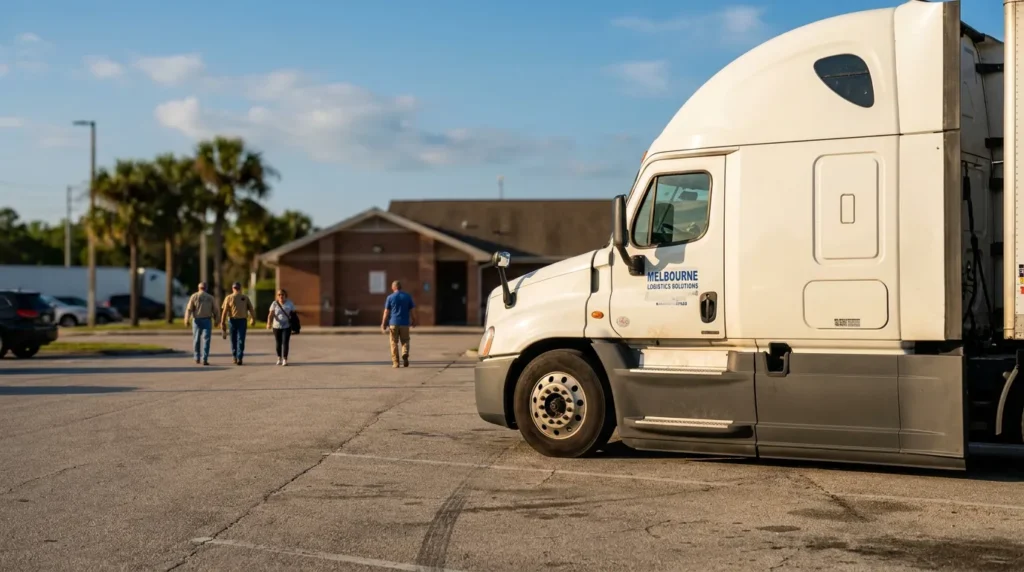
If a tractor-trailer hauling a brokered load injured you in Melbourne, the company that arranged the shipment may now be answerable in court alongside the trucking company. On May 14, 2026, the United States Supreme Court unanimously held in Montgomery v. Caribe Transport II, LLC that a state-law negligent hiring claim against a freight broker is not preempted by the Federal Aviation Administration Authorization Act of 1994 (FAAAA) because such a claim falls within the statute’s safety exception. For injured Floridians, that ruling potentially opens an additional avenue of recovery when a carrier’s insurance falls short.
If you were hurt in a Brevard County commercial truck collision, the team at Norden Leacox can evaluate whether a broker belongs in your case. Call 407-801-3000 or schedule a free consultation to discuss your options before critical evidence disappears.
What the Supreme Court Broker Ruling Actually Decided
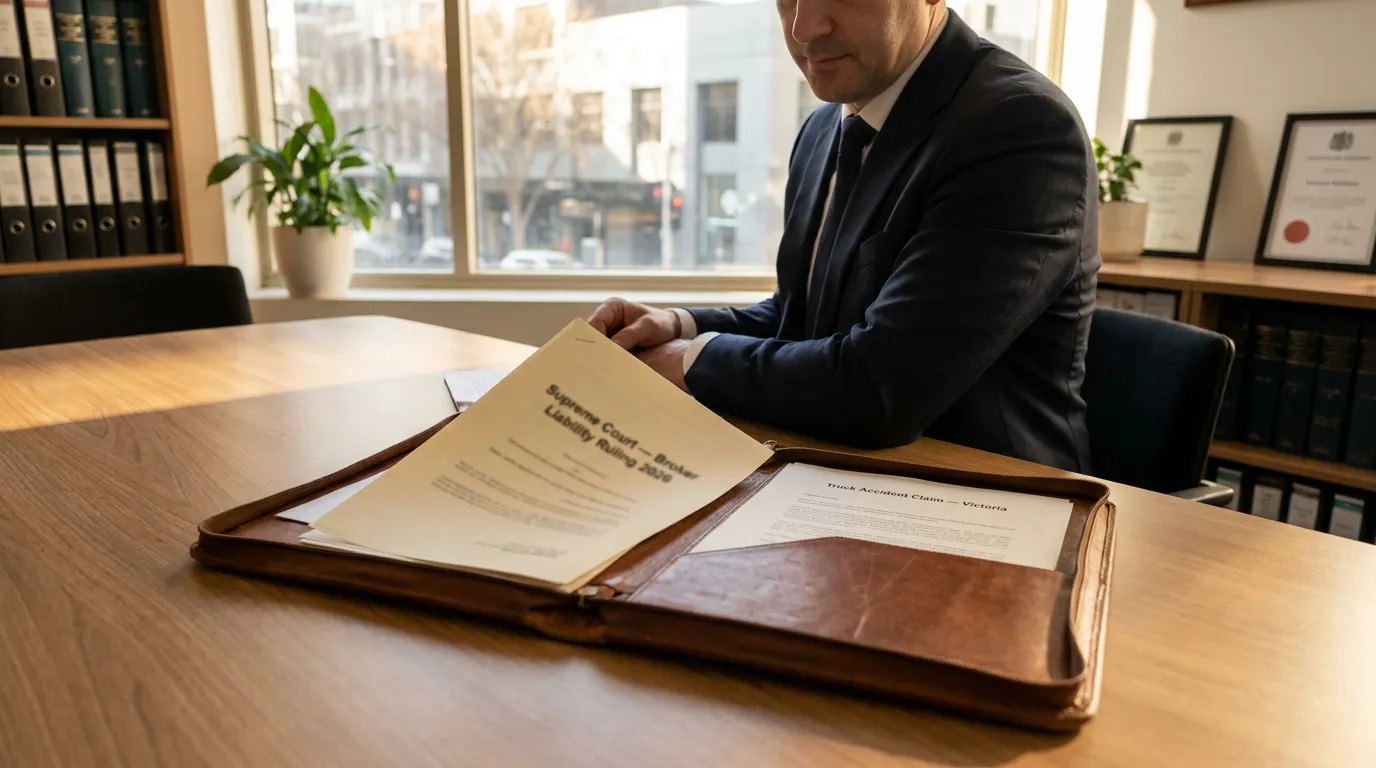
The Court answered a narrow but consequential preemption question, not a liability question. The Court held that a negligent-hiring claim against a freight broker is not preempted by the FAAAA because the act’s safety exception, 49 U.S.C. § 14501(c)(2)(A), preserves state authority to regulate safety "with respect to motor vehicles." Justice Barrett wrote for a unanimous Court, with Justice Kavanaugh, joined by Justice Alito, filing a concurrence. The decision addressed interstate preemption; intrastate loads governed by a separate subsection containing no safety exception may still be preempted.
Before this decision, outcomes depended on geography. The Seventh and Eleventh Circuits had held that negligent hiring claims against brokers were preempted, while the Sixth and Ninth Circuits allowed such claims under the FAAAA’s safety exception. Because Florida sits within the Eleventh Circuit, Melbourne plaintiffs previously faced an uphill battle when suing freight brokers in federal court. That threshold obstacle has been removed for interstate brokered shipments.
The ruling does not impose automatic liability on brokers. It means brokers must defend these claims on the merits, with attention focused on carrier vetting, safety information, and causation.
The Facts That Shaped the Ruling
Shawn Montgomery was struck and seriously injured by a Mack truck while pulled over on an Illinois roadside. He sued freight broker C.H. Robinson Worldwide, Inc., along with motor carrier Caribe Transport II, LLC, and its driver. Montgomery alleged the broker negligently hired the carrier because it had only a "conditional" FMCSA safety rating with documented deficiencies in driver qualification, hours of service, vehicle maintenance, and crash rates. The case returns to the lower courts for further proceedings.
Proving Freight Broker Liability in Florida Truck Accident Claims
A freight broker liability claim requires proof of traditional negligence elements: duty, breach, causation, and damages. Under Florida law, brokers may be expected to exercise reasonable care in selecting motor carriers, including checking publicly available safety data, documenting the selection process, and declining to place loads with carriers showing red flags.
Evidence in these cases lives in electronic and contractual records that can be overwritten quickly. Meaningful proof may include:
- Broker-carrier agreements and load confirmations
- The carrier’s FMCSA safety rating and inspection history at dispatch
- Electronic logging device and event data recorder downloads
- Driver qualification files and hours-of-service logs
- Dashcam, dispatch messaging, and surveillance footage
Preservation letters should go out early to every entity in the chain. Because carriers, brokers, and shippers each may hold different pieces, a coordinated approach matters.
💡 Pro Tip: Save the bill of lading, load number, and any placard or door lettering you photographed at the scene. Those identifiers often reveal the broker’s involvement long before the carrier’s insurer discloses it.
Why Broker Exposure Matters When Insurance Runs Out
Florida’s minimum financial responsibility figures are frequently inadequate for catastrophic truck crash injuries. Under Fla. Stat. § 324.023, requirements after certain serious offenses include $100,000 for bodily injury to one person, $300,000 for two or more persons, and $50,000 for property damage. Interstate motor carriers face federal minimum limits, commonly starting at $750,000. When damages exceed those numbers, an additional solvent defendant can matter enormously.
Exposure scales sharply upward for higher-risk freight. Florida’s financial responsibility requirements contemplate that operators transporting hazardous materials requiring placards carry insurance with limits of at least $5,000,000 under Fla. Stat. § 324.021(9)(c)2.
Where PIP Ends and Third-Party Claims Begin
Florida truck crash victims generally start with no-fault benefits, which run out fast. Fla. Stat. § 627.736(1) requires personal injury protection to a combined limit of $10,000 in medical and disability benefits and $5,000 in death benefits. A single surgery after a tractor-trailer collision can exhaust that ceiling.
PIP generally pays only a portion of covered bills. Under Fla. Stat. § 627.736(1)(a), medical benefits are eighty percent of reasonable expenses for medically necessary services. The remaining twenty percent, plus lost income beyond PIP’s disability benefit and pain and suffering, must be pursued from at-fault parties.
Timing rules can quietly eliminate benefits. The Florida PIP statute provides that benefits are generally available only if the individual receives initial services and care within 14 days after the motor vehicle accident, from qualifying providers such as a physician, dentist, chiropractor, advanced practice registered nurse, hospital, or licensed emergency transport personnel.
| Recovery Source | What It Typically Covers | Common Limitation |
|---|---|---|
| PIP benefits | 80% of medically necessary care within a $10,000 medical and disability limit; $5,000 death benefit | 14-day initial care requirement |
| Motor carrier liability policy | Bodily injury and property damage | May be exhausted by catastrophic injuries |
| Broker negligent-selection claim | Damages tied to the broker’s own fault share | Requires proof of unreasonable carrier vetting and causation |
How Comparative Fault Divides Responsibility Among Defendants
Adding a broker may change how a jury allocates responsibility. Florida applies a comparative fault regime in which a negligent tortfeasor’s degree of liability is generally limited to his or her own degree of fault. That framework is codified in Fla. Stat. § 768.81(3), under which a court shall enter judgment against each party liable on the basis of that party’s percentage of fault. Since 2023, § 768.81(6) also bars recovery in most negligence actions by a claimant found to be more than 50 percent at fault.
Defendants may point fingers at one another. Florida law permits a defendant to plead and prove that a codefendant or identified nonparty caused the injury, which may reduce that defendant’s own liability. Understanding vicarious liability in a truck crash case helps explain why identifying every potentially responsible entity early protects claim value.
💡 Pro Tip: Do not assume the company name on the trailer is the responsible party. Brokered freight often moves under a carrier that has no relationship to the brand advertised on the equipment.
Florida Deadlines That Control a Melbourne FL Truck Crash Claim
The clock is short and generally unforgiving. Under Fla. Stat. § 95.11(4)(a), an action founded on negligence must be brought within two years, and a negligent-selection claim against a freight broker generally falls within that category. Claims that accrued before March 24, 2023, may still be governed by the prior four-year period.
Fatal crash claims follow the same two-year window. Fla. Stat. § 95.11(5)(e) requires that an action for wrongful death be commenced within two years. When a governmental entity is involved, Fla. Stat. § 768.28(14) ties wrongful death deadlines to the limitations periods in § 95.11.
Courts generally interpret tolling and delayed-accrual doctrines narrowly. Extensions are not automatic and generally apply only in limited circumstances. A Melbourne truck accident lawyer can assess which deadlines may apply to your circumstances.
Frequently Asked Questions
1. Does the ruling mean freight brokers are automatically liable now?
No. The decision resolved only preemption. A plaintiff must still prove negligence and causation.
2. How do I know whether a broker was involved in my crash?
Broker involvement often surfaces through the bill of lading, load confirmation, or dispatch records rather than anything visible at the scene. These documents are typically obtained through preservation demands and discovery.
3. What does the FAAAA safety exception have to do with my case?
The Supreme Court determined that state negligent-hiring standards applied to brokers who select motor carriers are not preempted. The defense may no longer end the claim at the threshold.
4. Can I still recover if I was partially at fault?
Possibly. Florida’s comparative fault statute allocates damages by percentage of responsibility, but a claimant found more than 50 percent at fault is generally barred from recovering.
5. What if the trucking company’s insurance is not enough?
A viable brokered load liability theory may add a defendant with separate coverage. Whether that theory applies depends on what the broker knew or should have known about the carrier, and whether that knowledge is tied to the crash.
Turning a Landmark Ruling Into Real Recovery
By holding that state-law negligent hiring claims against brokers survive FAAAA preemption in the interstate transportation context, the Court removed what had been a frequently used avenue for early case resolution. For Melbourne victims facing catastrophic injuries, exhausted PIP benefits, and a carrier with limited coverage, that shift can be significant. Outcomes depend on the facts, the evidence preserved, and compliance with Florida’s filing deadline.
Time-sensitive records rarely survive without a prompt demand. Reach out to Norden Leacox law firm at 407-801-3000 or request a case review today to have your brokered-load crash evaluated.
Disclaimer: This content is for informational purposes only and is not legal advice. Every case is unique, and results may vary. Consult an attorney about your specific circumstances.