


Norden Leacox Accident & Injury Law | August 25, 2026 | Personal Injury
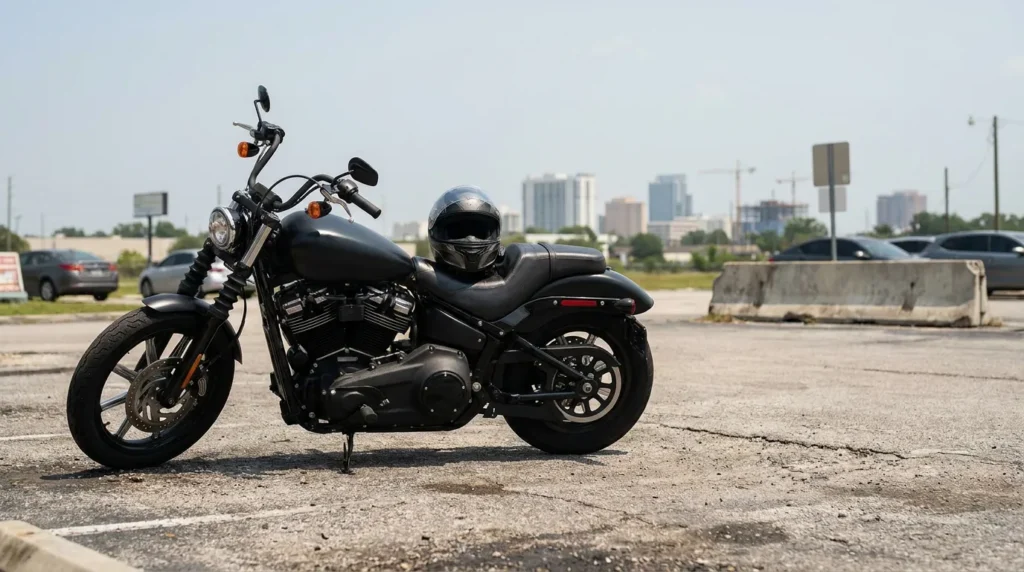
Understanding Why Two Wheels Change Everything for Orlando Riders
Key Takeaways: Florida’s no-fault PIP system covers only vehicles with four or more wheels, excluding Orlando motorcyclists from automatic no-fault medical benefits. This exemption leaves many riders uncovered, requiring them to recover through fault-based negligence claims instead. To succeed, injured riders must prove duty, breach, causation, and damages with strong documentation including medical records, crash reports, and witness statements. Beyond the at-fault driver’s liability insurance, riders can access uninsured/underinsured motorist coverage and vehicle owner vicarious liability, subject to statutory caps. Two rules can sharply limit recovery: a shortened two-year statute of limitations for claims accruing on or after March 24, 2023, and Florida’s modified comparative negligence standard, which bars recovery for parties more than 50 percent at fault. Despite the demanding path, prompt action and careful documentation allow injured Orlando riders to pursue meaningful compensation.
Florida’s no-fault insurance system was not designed with motorcyclists in mind, and that gap leaves many Orlando riders exposed after a serious crash. The short answer to whether the PIP exemption leaves riders uncovered is often yes. Because motorcycles fall outside Florida’s Personal Injury Protection framework, injured riders generally cannot tap the same automatic medical coverage available to drivers of four-wheeled vehicles. That reality shapes how you pursue compensation, who you hold accountable, and how quickly you must act.
Understanding this exemption is the first step toward protecting your recovery. If you were hurt in a motorcycle accident Orlando FL riders face unique legal hurdles, and knowing them early can preserve your options.
If you have questions about your specific situation, the team at Norden Leacox is ready to help. You can call our office at 407-801-3000 or reach out through our online case review form to discuss your rights.
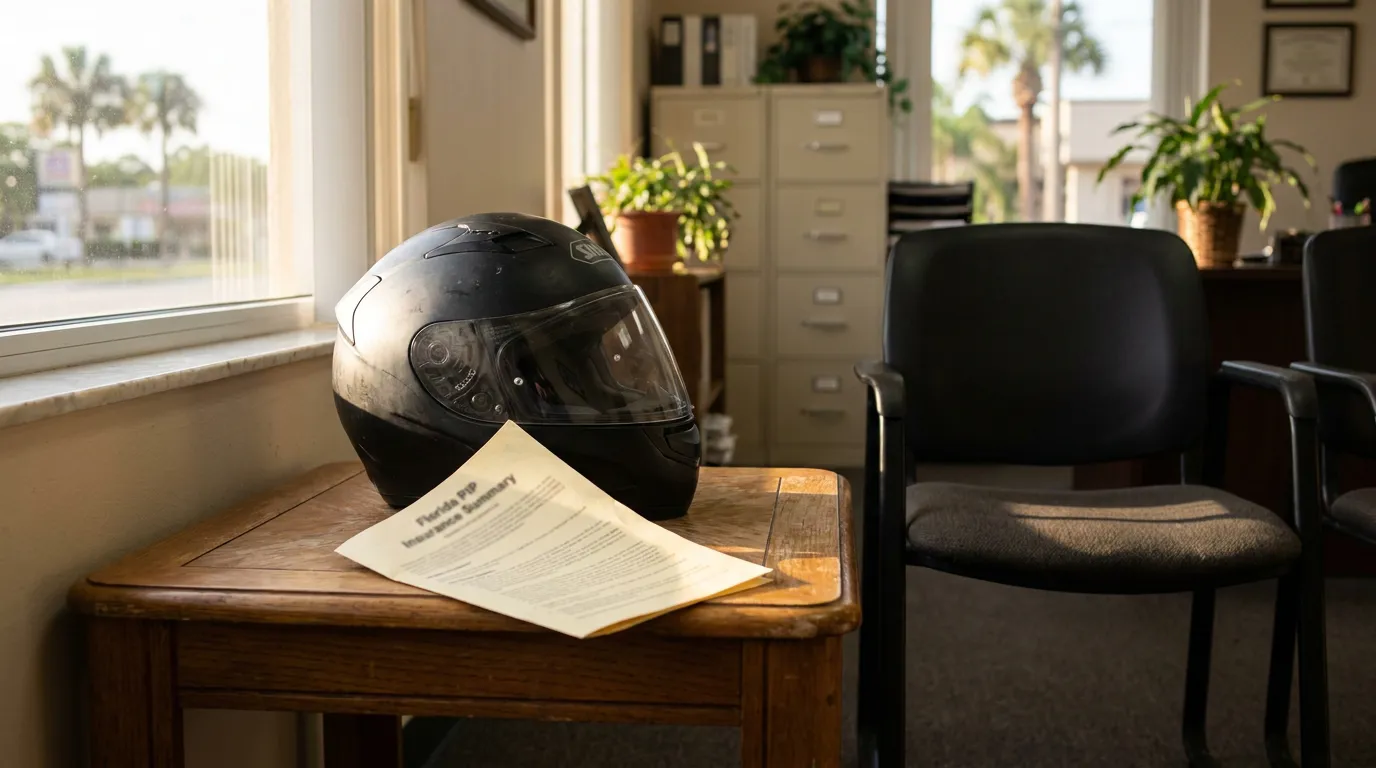
What the Florida Motorcycle PIP Exemption Actually Means
The Florida motorcycle PIP exemption exists because state law ties no-fault benefits to a narrow definition of "motor vehicle." Under Florida’s No-Fault Law, drivers of covered vehicles must carry Personal Injury Protection that pays a portion of their medical expenses regardless of fault. However, that requirement applies only to self-propelled vehicles with four or more wheels, placing two-wheeled motorcycles outside the system entirely. According to the Florida Department of Highway Safety and Motor Vehicles, proof of PIP and Property Damage Liability is required only before registering a vehicle with at least four wheels, as explained on the state’s auto insurance requirements page.
PIP provides quick, fault-neutral coverage for medical bills. This benefit generally covers 80 percent of necessary and reasonable medical expenses up to $10,000 after a covered crash, regardless of fault, under Fla. Stat. §627.736, though coverage is limited to $2,500 when a licensed provider determines there is no emergency medical condition. Because motorcycles are not classified as "motor vehicles" for these purposes, Orlando riders typically cannot rely on PIP for their own injuries.
This distinction changes the entire path to compensation. A driver rear-ended at an Orlando intersection may have immediate PIP coverage, while a rider injured in the same collision generally must recover through a fault-based liability claim. That difference makes proving negligence central to a motorcyclist’s case.
How Riders Recover Without No-Fault Benefits
Because motorcyclists are excluded from PIP, injured riders generally must recover through a negligence claim against the at-fault party. This shifts the burden onto the rider to prove that another person’s carelessness caused the crash and resulting harm. Unlike a PIP claim, which pays without regard to fault, a negligence claim requires evidence, documentation, and legal analysis.
The Four Elements of a Negligence Claim
Every negligence case in Florida rests on four connected elements. Establishing each one is essential to holding an at-fault driver accountable and pursuing full compensation:
- Duty: The other driver owed a legal obligation to operate their vehicle with reasonable care.
- Breach: The driver violated that duty, such as by texting, speeding, or failing to yield to a motorcycle.
- Causation: The breach directly caused the collision and the rider’s injuries.
- Damages: The rider suffered actual harm, including medical costs, lost wages, or pain and suffering.
Documentation often makes or breaks these claims. Medical records, crash reports, photographs, and witness statements help connect a driver’s conduct to your injuries. Treating physicians and reconstruction professionals often provide opinions that strengthen the causation link. The stronger your evidence, the better positioned you are to pursue motorcycle medical bills Orlando riders frequently face after a serious wreck.
Coverage Options That Can Fill the Gap
Even without PIP, several coverage sources may help injured Orlando riders recover. Because no-fault benefits are off the table, riders often depend on the at-fault driver’s liability insurance and their own optional coverage, such as medical payments (MedPay) coverage or health insurance.
Uninsured Motorist Coverage as a Safety Net
Uninsured motorist coverage frequently becomes the most important protection an Orlando rider can carry. Florida requires that bodily injury liability policies also provide uninsured motorist coverage for insureds legally entitled to recover from owners or operators of uninsured vehicles, unless the insured signs a written rejection, under Fla. Stat. §627.727(1). You can review the broader insurance framework in Chapter 627 of the Florida Statutes. This coverage supplements other benefits, covering the difference between available benefits and damages actually sustained.
Vicarious Liability of Vehicle Owners
When a permissive driver borrows someone else’s car and causes a crash, the owner’s financial responsibility under Florida’s dangerous instrumentality doctrine may add a recovery source. Florida caps this exposure. A natural-person owner who loans a vehicle is generally liable only up to $100,000 per person and $300,000 per incident for bodily injury, plus up to $50,000 for property damage, under Fla. Stat. §324.021(9)(b)(3), with additional economic-damage exposure if the driver is uninsured or underinsured.
| Coverage Source | Typical Role for Riders |
|---|---|
| At-fault driver liability | Primary recovery for negligence-based damages |
| Uninsured/underinsured motorist | Fills the gap when the other driver lacks coverage |
| Owner vicarious liability | Additional source, subject to statutory caps |
💡 Pro Tip: Review your own policy before you ever need it. Confirming that you carry uninsured motorist coverage, and understanding its limits, can make a significant difference when the at-fault driver is uninsured.
Deadlines and Fault Rules That Can Limit Your Recovery
Two legal rules deserve close attention because they can quietly reduce or eliminate a rider’s recovery. Both the statute of limitations and Florida’s comparative fault framework apply directly to motorcycle negligence claims.
The Shortened Filing Deadline
Florida shortened its negligence filing deadline, giving injured riders less time to act. For causes of action accruing on or after March 24, 2023, the general negligence statute of limitations was reduced from four years to two years through HB 837, reflected in the statutory history of Fla. Stat. §95.11. This civil deadline is separate from administrative or insurance claim timelines. Courts generally interpret tolling and discovery exceptions narrowly, so you should not assume any extension automatically applies. Because the facts control whether an exception is available, acting promptly is usually the safest approach.
Florida’s Modified Comparative Negligence Standard
Florida now follows a modified comparative negligence rule that can bar recovery for heavily at-fault parties. Under Fla. Stat. §768.81(3), courts apportion damages according to each party’s percentage of fault, so a rider’s own share reduces recovery. As of March 24, 2023, subsection (6) bars recovery for any party found greater than 50 percent at fault for their own harm in most negligence actions, though claims arising out of medical negligence remain under pure comparative negligence. This threshold matters because insurers often try to shift blame onto motorcyclists. Careful documentation and professional fault analysis can help protect your position.
Helmet decisions and coverage choices can also intersect with these fault questions. Riders weighing their options may find it useful to read about whether Orlando riders over 21 can skip helmets with $10,000 coverage, because such choices can influence how damages and comparative fault are argued.
Frequently Asked Questions
1. Can an Orlando motorcyclist ever use PIP after a crash?
Generally, no. Because Florida’s PIP requirement applies only to vehicles with four or more wheels, motorcycles fall outside the no-fault system. Even a rider who carries PIP on a separate four-wheeled vehicle generally cannot use it for injuries suffered while operating a motorcycle, because the PIP statute excludes those injuries; optional MedPay on a motorcycle policy or personal health insurance is more likely to help.
2. What happens if the driver who hit me had no insurance?
Uninsured motorist coverage may become your primary source of recovery. Florida law requires bodily injury liability policies to include this coverage unless rejected in writing, under Fla. Stat. §627.727(1). This protection covers the difference between other available benefits and your actual damages.
3. How long do I have to file a motorcycle injury lawsuit?
For most crashes on or after March 24, 2023, the deadline is two years. This shortened negligence limitation appears in Fla. Stat. §95.11. Exceptions may apply in limited circumstances, but courts construe them narrowly, so timely action is important.
4. Will my own fault reduce what I can recover?
It can, and in some cases it can bar recovery entirely. Under Fla. Stat. §768.81, your damages are reduced by your percentage of fault, and being more than 50 percent at fault may prevent recovery altogether in a typical motorcycle negligence case.
Moving Forward After a Serious Orlando Motorcycle Crash
The Florida motorcycle PIP exemption leaves many riders without automatic no-fault benefits, but it does not leave them without options. By pursuing a negligence claim, tapping uninsured motorist coverage, and understanding the state’s comparative fault and statute of limitations rules, injured riders can still pursue meaningful compensation. The path is more demanding than a standard PIP claim, which is why careful documentation and prompt action matter. Every case turns on its own facts, so general information is not a substitute for advice tailored to your situation. Working with an Orlando FL motorcycle lawyer can help you evaluate coverage sources and preserve your rights.
If you were injured and want to understand your options, Norden Leacox is here to help. Call our team at 407-801-3000, visit our firm website, or complete our confidential contact form to request a review of your case today.