


Norden Leacox Accident & Injury Law | November 17, 2026 | Car Accidents
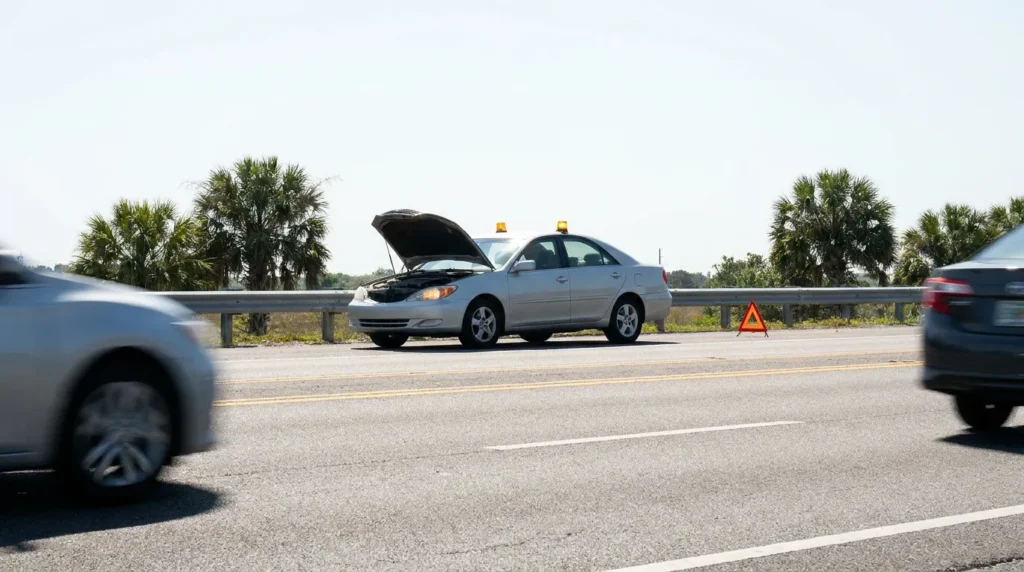
Hit While Stranded on the Shoulder? Your Rights Under Florida Law
Key Takeaways: Yes, you may be able to sue a driver who hit your disabled car on the shoulder in Florida if you can prove the driver was negligent and that the negligence caused your injuries. Under Florida’s Move Over Act, Fla. Stat. § 316.126(1)(b), drivers approaching a stopped disabled vehicle generally must move over or slow down if the vehicle has its hazard lights on, is using flares or emergency signs, or has people visibly present. A move over violation does not create its own right to sue, but it may serve as evidence of negligence. Your PIP coverage usually pays first, and you generally must meet the serious injury threshold to seek pain and suffering damages. Under Florida’s modified comparative negligence rule, you generally cannot recover if found more than 50% at fault. Most negligence claims from crashes after March 24, 2023, must be filed within two years, so collect evidence and talk to a lawyer early.
Yes, in many cases you may be able to sue a driver who hit your disabled car on the shoulder in Florida if you can prove the driver was negligent and that the negligence caused your injuries. Florida law requires drivers approaching a stopped, disabled vehicle to move over or slow down, stay in their lane, and drive carefully. When a driver ignores those duties and hits a stranded car on I-95 or US-192 near Melbourne, the injured motorist may have a negligence claim. Whether you can recover money, and how much, depends on the facts, Florida’s no-fault rules, and any claim that you shared the fault.
If you were hurt in a disabled vehicle crash, the team at Norden Leacox can help you understand your options and protect your claim. Call 407-801-3000 or contact us now to talk about what happened.
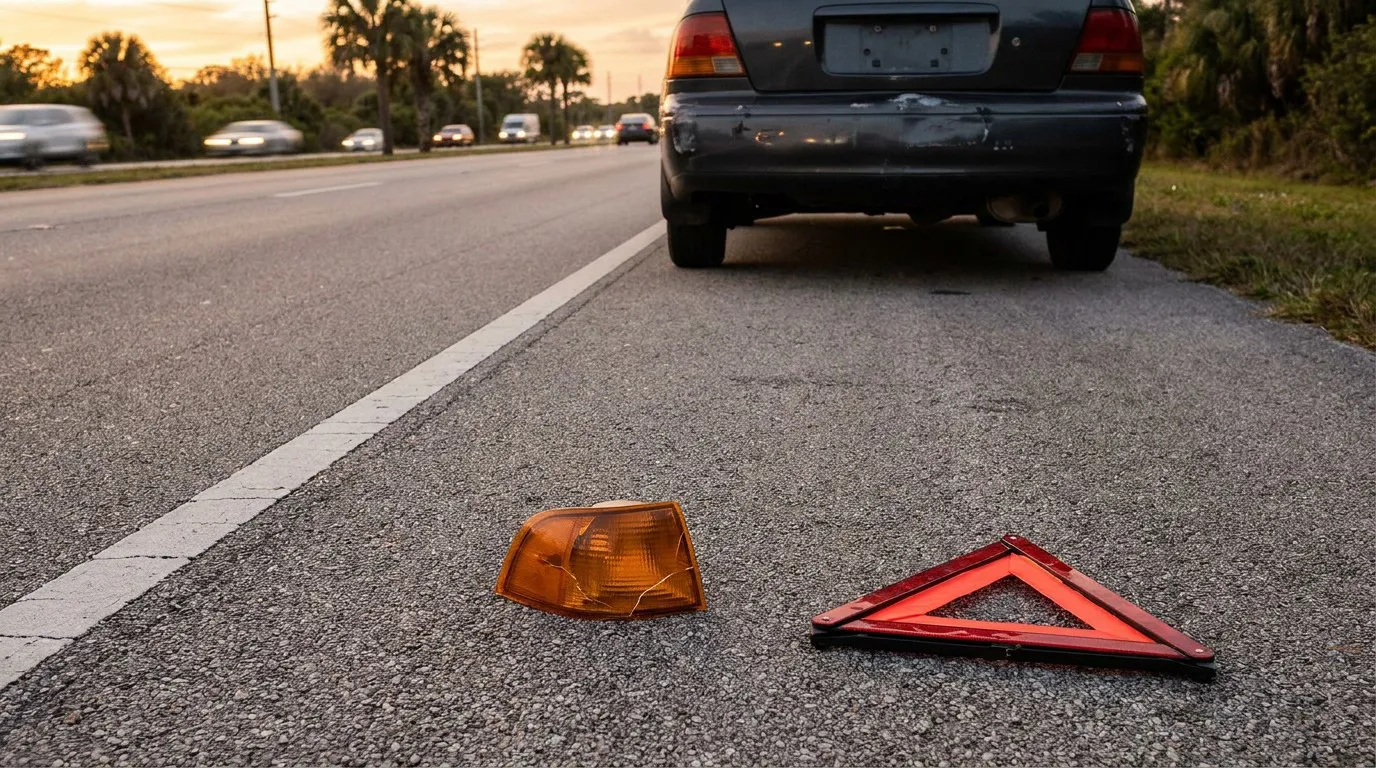
How the Florida Move Over Law Protects Disabled Vehicles
The Florida move over law covers ordinary disabled vehicles, not only police cars, ambulances, and tow trucks. Under Fla. Stat. § 316.126(1)(b), as amended via House Bill 425 during the 2023 legislative session with an effective date of January 1, 2024, the duty generally applies statewide, including in Melbourne, FL, when a disabled motor vehicle is stopped and any of these is true:
- Its warning or hazard lights are on
- The driver is using emergency flares or has posted emergency signs
- One or more people are visibly present
Once one of these applies, approaching drivers generally must act as soon as it is safe to do so. If your hazards were on, or you were standing beside your car, the other driver may have had a legal duty to give you room.
What Drivers Must Do: Move Over or Slow Down
What drivers must do depends on the type of road. On an interstate or any highway with two or more lanes going the same direction, Fla. Stat. § 316.126(1)(b)1 requires drivers to leave the lane closest to the disabled vehicle as soon as it is safe, unless a police officer directs otherwise. If they cannot change lanes safely, they must slow down under the two-lane rule in Fla. Stat. § 316.126(1)(b)2.
| Road Situation | Required Driver Action |
|---|---|
| Multi-lane highway (same direction) | Leave the lane closest to the disabled vehicle |
| Multi-lane, but lane change is unsafe | Slow down under the two-lane speed rule |
| Two-lane road, posted limit 25 mph or higher | Slow to 20 mph below the posted limit |
| Two-lane road, posted limit 20 mph or less | Slow to 5 mph |
For example, on a two-lane road near Melbourne with a 55 mph limit, a driver passing a disabled car would generally need to slow to 35 mph. A driver who sped past and drifted into your car may have broken this rule. You can read the full text in Florida’s Chapter 316 traffic laws.
Drivers Cannot Easily Claim They Didn’t Know
Florida law requires the state to teach drivers about this duty. Fla. Stat. § 316.126(1)(c) directs the Department of Highway Safety and Motor Vehicles to run a public awareness campaign about the Move Over Act and include it in all newly printed driver license materials. Not knowing a traffic law generally does not excuse breaking it.
Can a Move Over Violation Support a Shoulder Accident Lawsuit?
A move over violation can be useful evidence, but the statute does not create its own right to sue. Under Fla. Stat. § 316.126(6), breaking the Move Over Act is a noncriminal traffic infraction. Your civil claim comes from Florida negligence law. You generally must show that the driver owed you a duty, failed to meet it, caused your injuries, and that you suffered losses, and you must prove this is more likely true than not.
Even so, proof of a violation may help show that the driver failed to drive with care. In Florida, breaking a traffic law is generally treated as evidence of negligence, not automatic proof of it. Florida law generally keeps traffic tickets, and a plea or payment on a ticket, out of evidence in a civil trial. So paying the ticket does not automatically prove fault, and a driver who was never ticketed may still be found negligent.
Other Florida Traffic Laws That May Apply
Move over violations are rarely the only problem when a driver hits a stopped car. Several other parts of Chapter 316 may support your claim:
- Careless driving: Fla. Stat. § 316.1925(1) requires every driver to drive carefully, considering traffic and all other conditions, so as not to endanger anyone’s life, limb, or property.
- Lane rules: Fla. Stat. § 316.089(1) and § 316.085(2) bar drivers from leaving their lane until they have made sure they can do so safely.
- Aggressive careless driving: Fla. Stat. § 316.1923 defines this as doing two or more listed unsafe acts at the same time or one after another, such as speeding, unsafe lane changes, and following too closely.
A driver who drifted onto the shoulder while speeding and weaving may have broken several of these laws at once. To learn more about how fault is decided, see our guide on who is considered at fault in a Florida car accident.
Common Injuries in a Disabled Vehicle Crash
Getting hit while stopped on a shoulder often means a rear-end or sideswipe crash you never saw coming. People inside a stopped car usually have no time to brace, and those standing outside face even greater danger. Neck injuries are among the most common results.
Whiplash is a neck injury caused by the neck snapping back and forth, and the Mayo Clinic notes that rear-end car crashes are a leading cause. Symptoms often include neck pain, stiffness, and trouble moving your head. According to the Mayo Clinic’s overview of whiplash symptoms and causes, signs usually appear within days of the injury.
Delayed symptoms can cause problems for injury claims. Insurers may argue that pain showing up days later came from something else. Recording every symptom and treatment may help link your injuries to the crash.
💡 Pro Tip: See a doctor right away, even if you feel fine at the scene. Florida’s PIP rules under Fla. Stat. § 627.736 generally require first treatment within 14 days of the crash.
How Florida’s No-Fault and Fault Rules Affect Your Claim
Under Florida’s no-fault system, your own personal injury protection (PIP) coverage usually pays first. Under Fla. Stat. § 627.736, PIP generally covers 80% of reasonable medical bills and 60% of lost income, up to $10,000 total, no matter who caused the crash. Medical benefits may be limited to $2,500 unless a qualified provider finds you had an emergency medical condition. To seek pain and suffering damages from the at-fault driver, you generally must meet the serious injury threshold in Fla. Stat. § 627.737(2), such as significant and permanent loss of an important bodily function, a permanent injury, significant and permanent scarring or disfigurement, or death.
Shared Fault and the Stranded Motorist
Insurers often try to shift blame onto the person whose car broke down. They may claim you stopped in an unsafe spot, failed to turn on hazards, or stood too close to traffic. Under Florida’s modified comparative negligence rule in Fla. Stat. § 768.81(6), a person found more than 50% at fault generally cannot recover damages in a negligence case. If your share is 50% or less, your recovery is generally reduced by your percentage of fault.
That makes proof of your hazard lights, flares, and position on the shoulder especially important. Photos, witness statements, dashcam video, and the police report can help fight unfair blame.
💡 Pro Tip: If you can do so safely, take photos of your hazard lights flashing and where your car sits on the shoulder.
Deadlines for a Stranded Motorist Injury Claim
Florida generally gives you two years from the date of the crash to file a negligence lawsuit. Under Fla. Stat. § 95.11(4)(a), as amended in 2023, most negligence claims from crashes after March 24, 2023, must be filed within that time. Claims from earlier crashes generally fall under the old four-year limit. Missing the deadline may bar your claim entirely.
Exceptions are few, and courts read them narrowly. If a government vehicle hit you, Fla. Stat. § 768.28 generally requires written notice to the agency and the Department of Financial Services within three years before you can file suit. Wrongful death claims have their own deadlines. Speaking with a Florida move over law lawyer early can help you meet these deadlines.
Frequently Asked Questions
1. Does the Florida move over law apply if my hazard lights were off?
It may. Fla. Stat. § 316.126(1)(b) may also apply if you were using flares or emergency signs, or if people were visibly present. Even if it does not apply, the driver still had a general duty to drive with care under Fla. Stat. § 316.1925.
2. What if the other driver never got a ticket?
You may still have a valid claim. A civil negligence case is decided separately, and other evidence may prove the driver’s fault.
3. Can I recover pain and suffering damages after a shoulder crash?
Possibly. Florida generally requires you to meet the serious injury threshold in Fla. Stat. § 627.737(2) first.
4. What if my whiplash symptoms showed up days later?
Delayed symptoms are common with whiplash. See a doctor as soon as you notice them and keep detailed records. PIP benefits generally require first treatment within 14 days of the crash.
Protecting Your Recovery After a Shoulder Crash
Drivers in Florida generally have legal duties when they approach a disabled vehicle. The Move Over Act, lane rules, and careless driving laws may support a shoulder accident lawsuit when a driver fails to give a stranded motorist room. Your recovery will depend on proving negligence, meeting Florida’s injury threshold, fighting claims that you shared the fault, and filing before the deadline, which is generally two years.
If a driver hit your disabled car near Melbourne or anywhere in Central Florida, Norden Leacox is ready to review your case. Call 407-801-3000 or schedule your consultation today to learn how we may be able to help.
Disclaimer: This content is for informational purposes only and is not legal advice. Every case is unique, and results may vary. Consult an attorney about your specific circumstances.