


Norden Leacox Accident & Injury Law | July 10, 2026 | Car Accidents
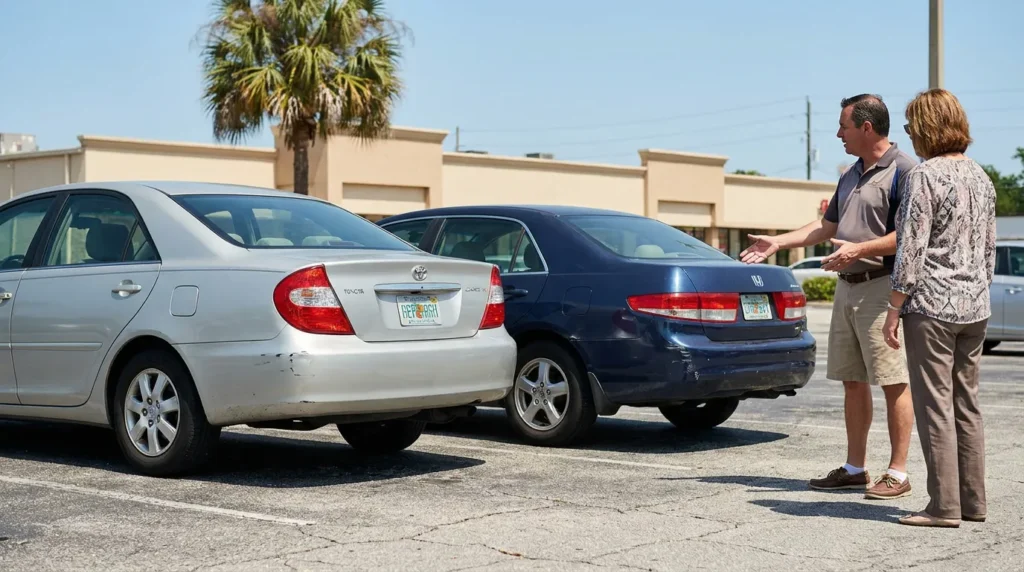
Understanding Fault After an Orlando Crash
Key Takeaways: In an Orlando car accident, the at-fault driver is the person whose negligence caused the collision by breaching a duty of reasonable care. Florida establishes fault through duty, breach, causation, and damages, proven by a preponderance of the evidence. Under the state’s modified comparative fault system, a victim more than 50 percent at fault cannot recover, while lesser shared blame proportionately reduces damages. When multiple drivers are involved, fault is apportioned individually, and each at-fault party pays only their proportionate share. Statutory violations such as failing to yield, texting, or reckless driving serve as strong evidence, supported by crash reports, citations, photos, and witness statements. Florida generally allows just two years to file a negligence claim, making prompt action critical.
The at-fault driver in an Orlando car accident is the person whose negligence caused the collision. Florida law defines fault through negligence, meaning a driver who breached a duty of reasonable care and caused your injuries can be held legally responsible. Identifying that party correctly is the foundation of any successful injury claim.
If you are sorting through medical bills and insurer phone calls after a crash, the team at Norden Leacox can help you understand your options. Call our office at 407-801-3000 or reach out through our online case review form to discuss what happened. Acting early helps preserve evidence that fault determinations depend on.
💡 Pro Tip: Fault in a civil case is decided by a preponderance of the evidence, a lower standard than criminal "beyond a reasonable doubt." Even if no one is criminally charged, you may still prove liability in a civil claim.
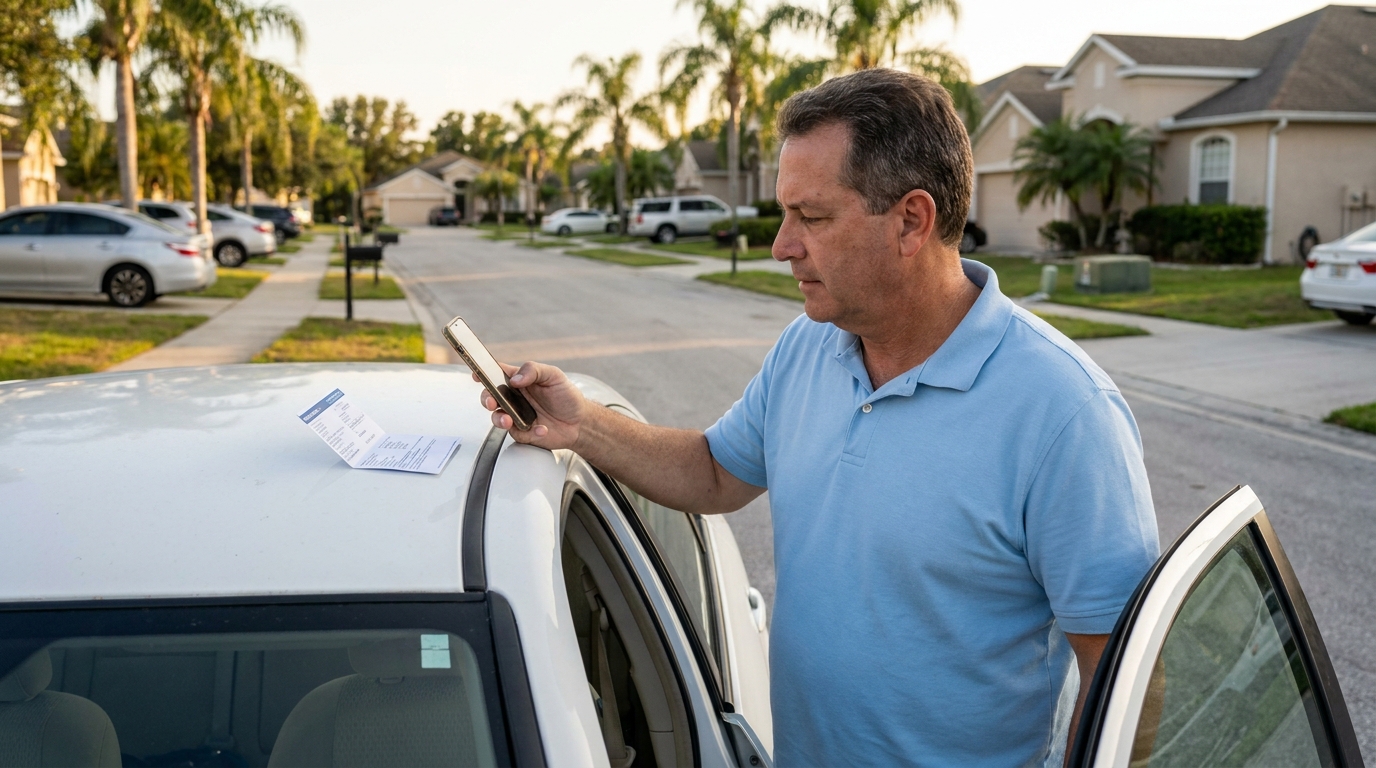
What "At Fault" Means Under Florida Negligence Law
Being "at fault" means a driver failed to exercise reasonable care and that failure caused the crash. To establish a claim, an injured person must prove duty, breach, causation, and damages. Florida law requires the at-fault owner or driver to carry full liability insurance coverage when a moving violation was charged and injuries were noted on the crash report.
These obligations exist because the state ties responsibility to demonstrable misconduct behind the wheel. Coverage generally includes minimum limits of bodily injury liability of $10,000 per person and $20,000 per crash, and you can review the state’s guidance on Florida crash insurance requirements to see how these duties apply. These minimums are often inadequate to cover serious injuries, which is one reason fault analysis can become contested.
How Florida’s Comparative Fault System Affects Your Recovery
Florida uses a modified comparative fault system that can significantly change how much an injured victim recovers. In a car accident negligence claim, a court or jury assigns each party a percentage of fault. Any party found to be greater than 50 percent at fault for their own harm may not recover any damages. This 50 percent threshold makes accurate fault determination critical.
Sharing some blame, however, does not automatically end your case. Under Florida law, contributory fault "diminishes proportionately the amount awarded" but "does not bar recovery." A driver found 20 percent responsible for a crash may still recover 80 percent of their proven damages. To understand how these percentages are weighed in detail, our overview of Florida comparative negligence law walks through the mechanics.
When Multiple Drivers Share the Blame
When several vehicles are involved, Florida apportions fault individually rather than collectively. The court enters judgment against each party liable based on their percentage of fault and not on joint and several liability. This means each at-fault driver generally pays only their proportionate share. A defendant may also attribute fault to a non-party, but must affirmatively plead the fault of a nonparty and prove at trial, by a preponderance of the evidence, the fault of the nonparty in causing the plaintiff’s injuries.
💡 Pro Tip: Because defendants can try to shift blame onto absent drivers, keep records of every vehicle and driver involved. Names, plate numbers, and witness contacts can prevent an empty-chair defense from reducing your recovery.
Common Ways the At-Fault Driver Is Identified
Certain statutory violations serve as powerful indicators of who is at fault in an Orlando crash. When a driver breaks a traffic law and causes a collision, that violation often becomes strong evidence of negligence. Florida’s traffic code, available through Florida traffic right-of-way rules, sets out many of the duties drivers owe one another.
Right-of-Way Violations at Intersections
Intersection crashes frequently turn on who had the right-of-way. The driver of a vehicle approaching an intersection shall yield to a vehicle which has entered from a different highway, and when two vehicles enter from different highways at the same time, the driver on the left shall yield to the vehicle on the right. If a driver is involved in a collision after driving past a yield sign without stopping, the collision shall be deemed prima facie evidence of the driver’s failure to yield.
Distracted, Reckless, and Negligent Driving
Distraction and recklessness are common bases for assigning fault. Florida’s texting ban makes distracted driving a statutory violation. The Florida Ban on Texting While Driving Law allows a driver who was texting at the time of a crash to be cited, and that citation can support a finding of fault. Any person who drives a vehicle in willful or wanton disregard for the safety of persons or property is guilty of reckless driving, which can support both criminal penalties and civil liability.
Common violations that often point to the at-fault party include:
- Failing to yield at uncontrolled or sign-controlled intersections
- Texting or other distracted driving in violation of the texting ban
- Reckless driving showing willful or wanton disregard for safety
- Following too closely, speeding, or running red lights
💡 Pro Tip: A traffic citation is persuasive but not automatically conclusive of civil liability. Courts may consider the full factual record, so do not assume a ticket alone settles everything.
Evidence Used in Fault Determination Orlando Cases
The official crash report is often the starting point for any Orlando negligence claim. A Florida Traffic Crash Report, Long Form must be completed and submitted within 10 days for crashes involving injury, death, complaints of pain, DUI violations, or an incapacitated vehicle. This report records the scene, parties, witnesses, and insurer information that adjusters and attorneys rely on.
Beyond the report, several categories of evidence help establish fault. Photographs, vehicle damage patterns, surveillance or dashcam footage, and witness statements all contribute. Because physical evidence can disappear quickly, prompt documentation matters.
| Evidence Type | Why It Matters |
|---|---|
| Long-form crash report | Records parties, witnesses, and insurer details |
| Traffic citations | May serve as evidence of a statutory violation |
| Photos and video | Captures damage, road conditions, and signals |
| Witness statements | Provides independent accounts of the sequence |
💡 Pro Tip: Florida’s two-year window for negligence claims should prompt early action. Florida law generally allows two years to file an action founded on negligence, and courts interpret exceptions to this deadline narrowly.
Why You Need an At Fault Car Accident Lawyer Orlando
Determining fault is rarely as simple as it first appears, which is why working with an at fault car accident lawyer Orlando residents trust can make a meaningful difference. Insurers frequently raise comparative fault arguments to reduce or deny payouts, and proving the other driver’s negligence takes careful preparation. A seasoned Orlando car accident lawyer can investigate the crash, gather evidence, and counter attempts to shift blame onto you.
A knowledgeable advocate also understands how administrative consequences differ from civil claims. Section 324.121, Florida Statutes authorizes the department to suspend the license of an at-fault party when a judgment is rendered involving a crash, and victims may pursue a final judgment by filing a civil suit. These processes are separate, and outcomes depend on the specific facts. Guidance from an at fault car accident lawyer Orlando victims rely on helps keep these tracks straight.
Frequently Asked Questions
-
How long do I have to file a car accident lawsuit in Orlando?
Florida generally provides two years from the date of the crash to file a negligence lawsuit. Missing this deadline typically forfeits your right to recover, though limited exceptions may apply and are interpreted narrowly by courts.
-
Can I still recover money if I was partly at fault?
Yes, as long as you were not more than 50 percent responsible. Your damages are reduced by your assigned percentage of fault rather than eliminated. Exceeding 50 percent fault, however, bars recovery.
-
What if more than one driver caused the crash?
Florida assigns each driver an individual percentage of fault. The court enters judgment against each party based on their percentage of fault, so each at-fault driver generally pays only their share.
-
Does a traffic ticket prove the other driver was at fault?
A citation is strong evidence but not always conclusive. Certain violations, such as running a yield sign before a collision, may be treated as prima facie evidence of failure to yield. Courts may still consider the full record when determining liability.
-
What insurance must an at-fault driver carry?
An at-fault driver may be required to maintain liability coverage under Florida law. The minimums generally include $10,000 per person and $20,000 per crash for bodily injury liability. These limits are often insufficient for severe injuries.
Protecting Your Right to Compensation
Identifying the at-fault driver in an Orlando car accident comes down to proving negligence under Florida’s statutory framework and comparative fault rules. From right-of-way violations and distracted driving to the long-form crash report and the two-year filing deadline, each piece fits into a larger picture that determines whether and how much you recover. Because outcomes depend on the specific facts, careful investigation and timely action remain essential.
You do not have to navigate fault disputes or insurer pushback alone. The attorneys at Norden Leacox are recognized for handling car accident liability Orlando claims and stand ready to evaluate your situation. Call us today at 407-801-3000 or request your consultation online to take the next step toward protecting your right to compensation.