


Norden Leacox Accident & Injury Law | November 13, 2026 | Truck Accidents
Why a Trucker’s Inspection Report Can Matter After a Melbourne Crash
Key Takeaways: Florida applies most federal motor carrier safety rules to commercial trucks. Drivers generally must write down defects in driver vehicle inspection reports (DVIRs), and carriers generally must fix them before the truck goes back on the road. A DVIR that flagged a defect, such as worn brakes, with no record of a repair may help prove negligence. It may also support a claim that an owner violated Florida Statutes § 316.610 by knowingly letting an unsafe truck on the road. Repair invoices, annual inspections, roadside and out-of-service reports, and state compliance review findings may back up this evidence. Carriers generally have to keep DVIRs for only three months, so sending a preservation letter quickly may be critical. Florida’s comparative fault rules and the general two-year filing deadline also make it important to act early.
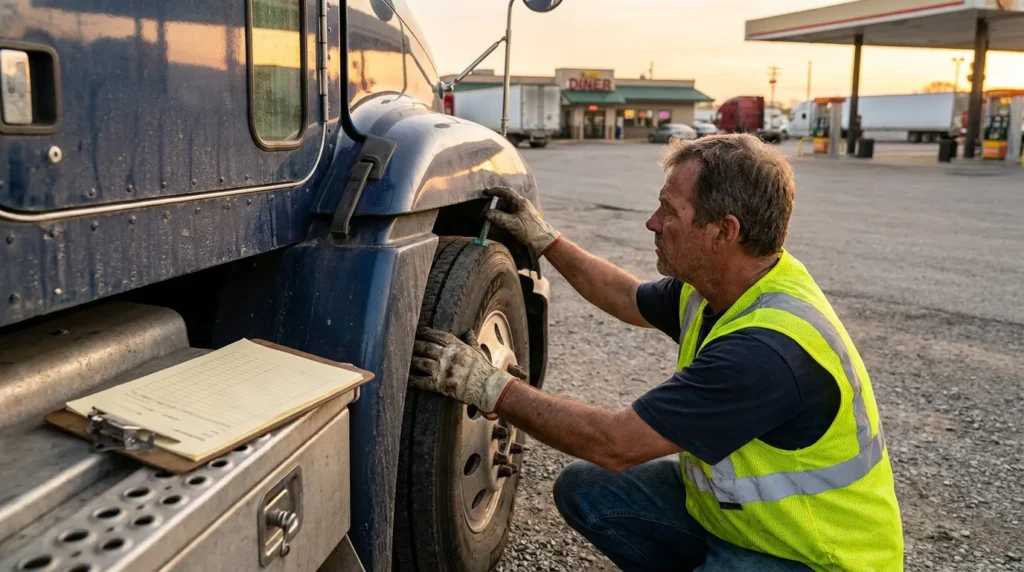
A trucker’s inspection report may be one of the most useful pieces of evidence in a Florida truck accident case. Truck drivers generally have to write down vehicle defects, and carriers generally have to fix them. If a report flagged worn brakes, bad lights, or damaged tires and nobody fixed them, that record could help you prove negligence against the driver, the trucking company, or both. If you were hurt on I-95, US-1, or another Brevard County road, knowing how these reports work can tell you which records to request before they disappear.
If a commercial truck injured you or someone you love, Norden Leacox can help you review the evidence and understand your options. Call 407-801-3000 or contact us now to talk about your truck crash claim.
How Federal and Florida Law Apply to Trucks on Brevard Roads
Florida adopts most federal motor carrier safety rules for commercial trucks. Under Florida Statutes § 316.302(1)(a), owners and drivers of commercial motor vehicles on Florida highways in interstate commerce must follow 49 C.F.R. parts 382-386 and 390-397. That range includes part 396, which covers inspection, repair, and maintenance, including the federal DVIR rules.
Local haulers that never leave Florida are generally covered too, with some exceptions. Florida Statutes § 316.302(1)(b) applies the same federal parts to intrastate owners and drivers, but only as those rules existed on December 31, 2023. It also makes the changes and exemptions listed in § 316.302, such as certain weight limits and hours-of-service differences. You can read the full text of Florida’s traffic control statutes on the Florida Senate website.
Commercial buses follow a similar framework. Florida Statutes § 316.70(1) and (3) make owners and drivers of private buses subject to 49 C.F.R. parts 382, 385, and 390-397. Authorized inspectors may stop a bus, inspect the vehicle or the driver’s records, and take unsafe vehicles out of service.
Driver Vehicle Inspection Report Requirements Explained
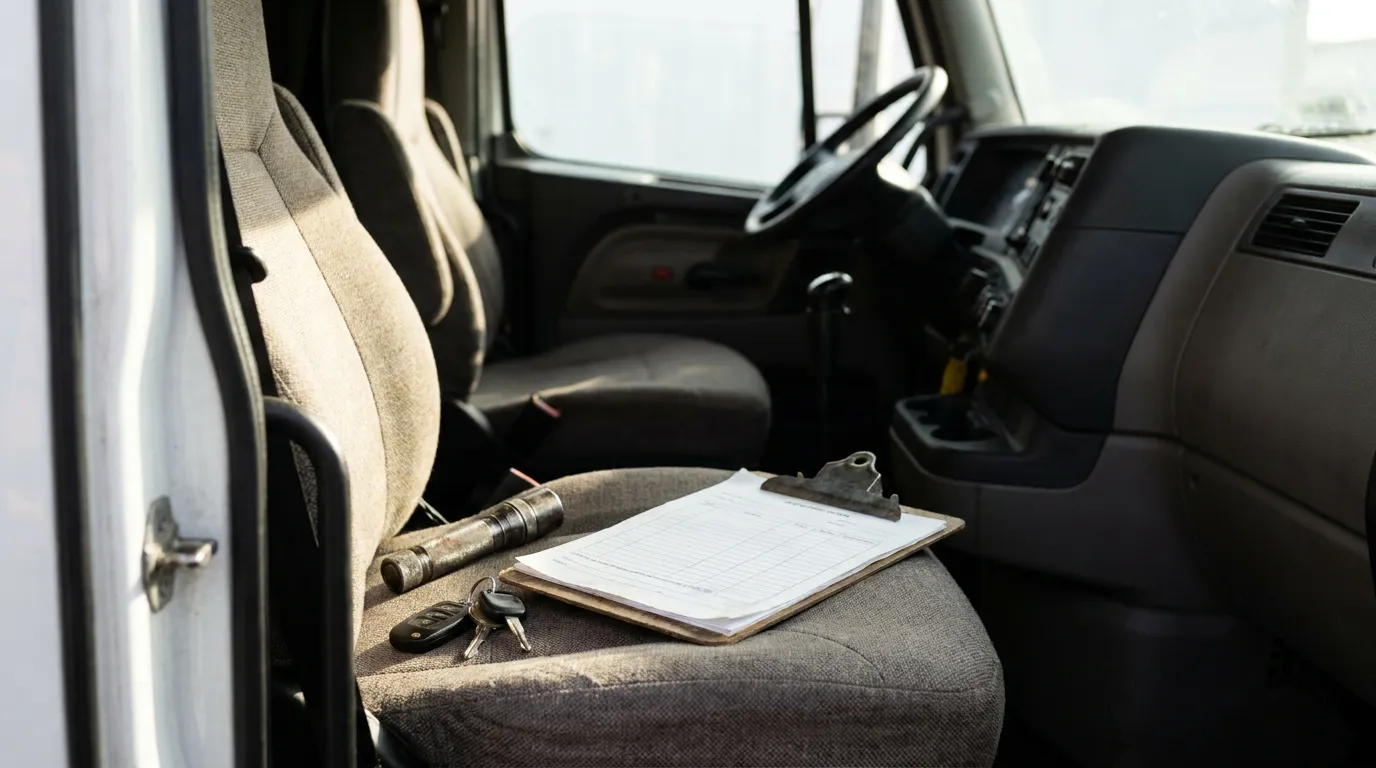
The DVIR rules create a written record of who knew what. Under 49 C.F.R. § 396.11, drivers generally must fill out a written report at the end of each workday. The report covers key parts such as service brakes, parking brake, steering, lights and reflectors, tires, horn, wipers, mirrors, coupling devices, wheels and rims, and emergency equipment. Under 49 C.F.R. § 396.13, the next driver generally must review the last report before driving and, if it listed defects, sign it to confirm that the carrier certified the repairs.
What the Carrier Must Do After a Defect Is Reported
A reported defect generally triggers a duty to repair. If a driver lists a defect that would likely affect safe operation, the carrier generally must fix it, or confirm that no repair is needed, before anyone drives the vehicle again. The carrier must also certify this on the report. Under § 396.11, carriers generally must keep the original report, the repair certification, and the next driver’s sign-off for three months. Drivers of property-carrying trucks generally no longer have to file a report when they find no defects, so a missing report does not always mean someone broke the rules.
Records That Often Go With a DVIR
An inspection report is usually just one part of a larger maintenance file. Other records that can help explain a DVIR include:
- Pre-trip and post-trip inspection reports
- Repair orders, mechanic invoices, and parts receipts
- Annual inspection records required under 49 C.F.R. § 396.17
- Roadside inspection and out-of-service reports
- ELD data, dispatch records, and driver messages
Using DVIR Evidence to Prove Each Element of Negligence
DVIR evidence may help you prove the parts of a negligence claim, depending on the facts. In Florida, you generally have to show duty, breach, causation, and damages. A DVIR bears most directly on breach. Proving causation and damages usually takes other evidence too, such as crash reconstruction and medical records.
| Element | How a DVIR May Help |
|---|---|
| Duty | May show the driver and carrier had to follow federal inspection rules |
| Breach | May show a known defect that went unrepaired, or a skipped inspection |
| Causation | May help link the reported defect, such as failed brakes, to how the crash happened |
| Damages | May support the claim that preventable harm added to your injuries and losses, which you generally prove with medical and financial records |
Knowingly Letting an Unsafe Truck on the Road
Florida law separately covers owners who allow unsafe vehicles on the road. Under Florida Statutes § 316.610, a person may not drive any vehicle in such unsafe condition as to endanger any person or property, and an owner may not cause or knowingly permit someone else to drive it. A report that flagged a defect the carrier never fixed may help show the owner knew about the danger. Courts generally treat a violation of this traffic statute as evidence of negligence, not automatic proof of it. Florida’s dangerous instrumentality doctrine, and the carrier’s responsibility for its employee driver, may also make the company liable.
When More Than One Party Is at Fault
Several parties may share blame for a defect-related crash. The driver may have skipped the inspection, the carrier may have ignored a reported problem, and a maintenance vendor or parts maker may also share fault. Under Florida’s comparative fault statute, each defendant generally pays only for its own share of the fault.
💡 Pro Tip: Ask your attorney to compare the date of each reported defect with the repair invoices. A gap between the two can sometimes tell you more than the report itself.
Regulatory Findings That Can Strengthen Your Case
State enforcement records may support what the inspection reports show. Under Florida Statutes § 316.302(6), the Florida Department of Highway Safety and Motor Vehicles may adopt safety rules, and its staff may conduct compliance reviews of motor carriers and shippers. Maintenance and inspection files from these reviews could become evidence, though the rules of evidence decide whether a court will admit them.
Penalties and out-of-service orders may point to a pattern of problems. Florida Statutes § 316.3025(3)(b)4 allows a $100 civil penalty for an out-of-service violation found when officers inspect a truck involved in a crash. Under § 316.3025(3)(e), compliance review penalties may reach $5,000 in total, or $25,000 in total for repeat violations. Under § 316.3026, the state may issue out-of-service orders, and running a truck in violation of one can bring serious penalties. These state proceedings are separate from your civil lawsuit, though their findings may be useful evidence.
Common Challenges and Florida Deadlines to Watch
Inspection records can be lost quickly if no one acts. Because carriers generally have to keep DVIRs for only three months, sending a preservation letter quickly may be critical. Once a carrier knows a claim is likely, destroying relevant records may lead to court sanctions. To learn more about what to gather, read our guide on truck accident evidence that victims often need.
Comparative fault may reduce what you recover. Under Florida Statutes § 768.81, as amended in 2023, if you are found more than 50 percent at fault, you generally cannot recover damages in most negligence cases. A lower share of fault generally reduces your award. Under Florida Statutes § 316.614(10), not wearing a seat belt does not by itself prove negligence, but a jury may consider it when assigning fault.
The filing deadline is generally short. Under Florida Statutes § 95.11(5)(a), you generally must file most negligence claims that arose on or after March 24, 2023, within two years. Wrongful death claims generally have a two-year deadline under § 95.11(4)(d). Claims involving government-owned vehicles may require notice before you sue and may have damage caps under § 768.28. You can review the Florida limitations statutes for the full text.
Frequently Asked Questions
1. Can I get a copy of the trucker’s inspection report myself?
In many cases, carriers will not hand over internal records on request. An attorney can send a demand to preserve them and later request the reports through discovery if you file a lawsuit.
2. Do the DVIR rules apply to local trucks?
Generally, yes. Florida Statutes § 316.302(1)(b) applies the federal rules to carriers that operate only in Florida, as those rules existed on December 31, 2023, with the exceptions and changes listed in that section.
3. What if the driver never wrote down a defect?
A clean or missing report does not necessarily end the case. Repair records, roadside inspections, and post-crash vehicle exams may reveal a defect the driver should have caught.
4. Does breaking a safety rule automatically prove negligence?
No. In Florida, breaking a traffic or safety rule is generally evidence of negligence, not final proof. You generally still must show the violation caused the crash and your injuries.
5. How long do I have to file a Florida truck accident lawsuit?
You generally must file most negligence claims within two years under Florida Statutes § 95.11(5)(a), though your deadline depends on your facts.
Turning Paperwork Into Proof
A truck inspection report may show what the driver and carrier knew before the crash. Together with repair records, state findings, and crash data, these reports may help prove breach and causation under Florida law. Because carriers may keep these records only briefly and filing deadlines are generally strict, acting early can help protect your claim. An experienced Florida trucking liability lawyer can help you get the evidence and pursue the full compensation you may be owed.
If you were hurt in a crash with a commercial truck in Melbourne or elsewhere in Florida, Norden Leacox can help you take the next step. Call 407-801-3000 or schedule your consultation to discuss your case.
Disclaimer: This content is for informational purposes only and is not legal advice. Every case is unique, and results may vary. Consult an attorney about your specific circumstances.