


Norden Leacox Accident & Injury Law | August 23, 2026 | Personal Injury
Understanding Your Rights After a Fall on Someone Else’s Property in Orlando
Key Takeaways: Orlando slip and fall victims can often recover compensation even when a hazard was open and obvious, because Florida law does not automatically bar claims for visible dangers. A property owner’s common-law duty to maintain reasonably safe premises survives under Fla. Stat. § 768.0755(2), and the open and obvious doctrine functions as a fact-sensitive defense rather than a guaranteed shield. Under Florida’s modified comparative fault system, an obvious hazard typically reduces your recovery by your percentage of fault, but a 2023 amendment bars recovery entirely if you are found more than 50 percent at fault. In most business cases, you must prove the owner had actual or constructive knowledge of the hazard. Your legal status as invitee, licensee, or trespasser shapes the duty owed, and negligence claims generally must be filed within two years. Prompt legal guidance helps preserve evidence and protect your rights.
Yes, Orlando slip and fall victims can often recover even when a hazard was open and obvious, though the outcome depends on specific facts. Florida law does not automatically bar your claim because a danger was visible. Instead, an obvious hazard typically reduces your recovery based on your share of fault rather than eliminating it, becoming decisive only when your negligence crosses a specific threshold. Understanding how the open and obvious doctrine florida courts apply interacts with comparative fault rules can make a meaningful difference.
If you were hurt on another person’s property, the team at Norden Leacox is ready to review your situation. Call our office at 407-801-3000 or reach out through our online case evaluation form to discuss your options.
Why a Visible Hazard Does Not Automatically End Your Claim
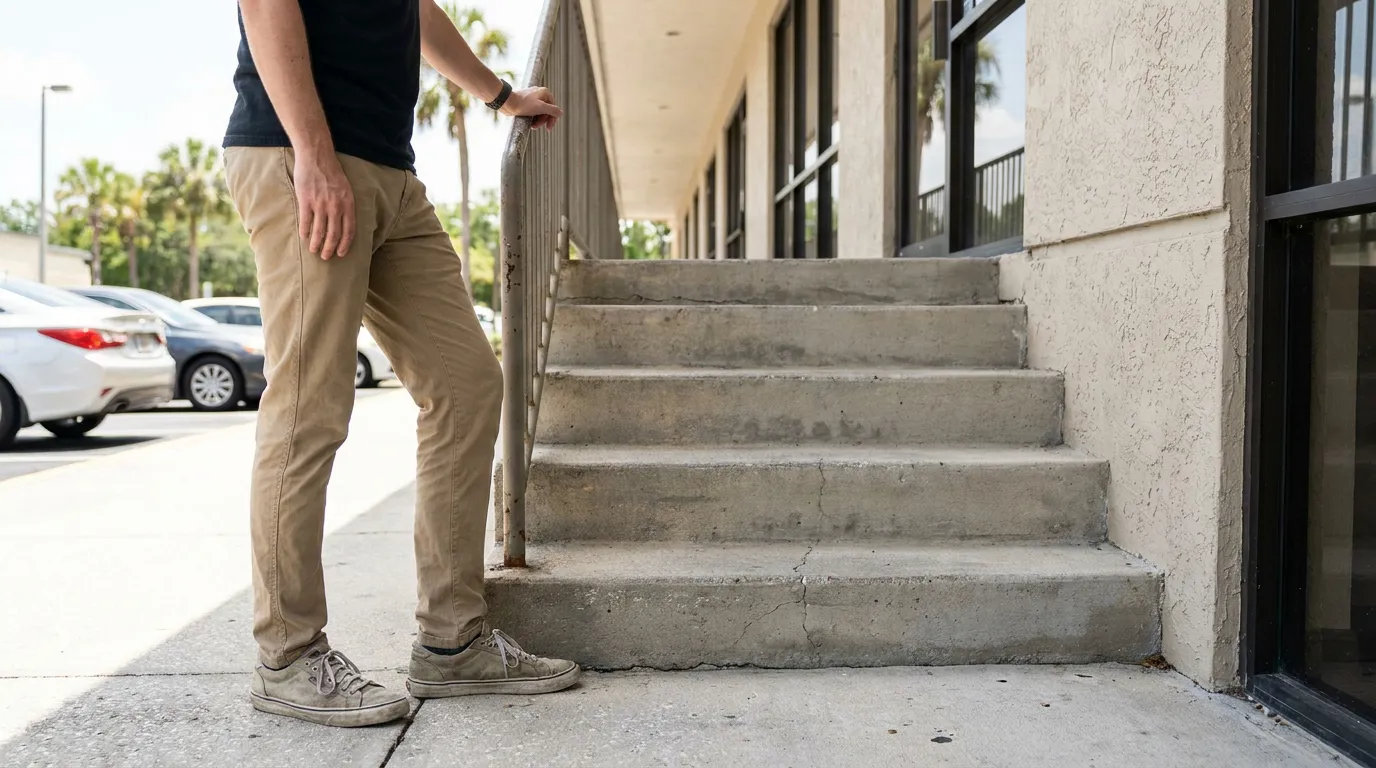
A property owner’s duty to keep premises reasonably safe survives even when a danger is visible. Many injured visitors assume that noticing a spill or obstacle disqualifies them from recovery, but that is generally not how Florida law works. Under Fla. Stat. § 768.0755(2), the statute governing slip-and-fall claims does not affect the common-law duty of care owed by a business in possession or control of its premises. An owner can still be held responsible for failing to correct or warn about a hazard, even an obvious one.
The open and obvious doctrine is a defense, not a guaranteed shield. Defendants raise it to argue that a hazard was so evident a reasonable person would have noticed and avoided it. Courts evaluate this argument considering all circumstances, including lighting, distractions, and whether the owner should have anticipated visitors might encounter the danger anyway. Because the doctrine is fact-sensitive, its application varies case by case.
💡 Pro Tip: Photograph the hazard from multiple angles as soon as possible after your fall. Lighting, signage, and the surrounding layout often determine whether a danger truly qualifies as open and obvious.
How Comparative Fault Shapes Your Recovery
Florida uses a modified comparative fault system that can reduce compensation without eliminating it entirely. Under Fla. Stat. § 768.81, titled "Comparative fault," courts apportion damages based on each party’s assigned percentage of fault. Under Fla. Stat. § 768.81(3), the court enters judgment against each liable party according to that party’s share of responsibility. A plaintiff found partly responsible, perhaps for ignoring a visible hazard, generally has recovery reduced by that percentage.
A 2023 amendment created a critical threshold every Orlando victim should understand. House Bill 837, effective March 24, 2023, added subsection (6) to the statute. Under Fla. Stat. § 768.81(6), any party found to be greater than 50 percent at fault for their own harm may not recover any damages. Review the full text within Chapter 768 of the Florida Statutes to see how these rules fit together.
This threshold is why an open and obvious hazard becomes decisive only in certain situations. If a jury assigns you 30 or 40 percent fault for encountering a visible danger, your claim survives with a reduced award. If your share exceeds 50 percent, however, the modified comparative negligence standard bars recovery altogether. The line between a reduced and barred claim often turns on evidence and how persuasively each side frames the visitor’s conduct.
Proving the Owner Knew About the Danger
In most Orlando business slip-and-fall cases, you must prove the owner’s knowledge of the hazard. Under Fla. Stat. § 768.0755(1), a person who slips on a transitory foreign substance in a business establishment must prove the business had actual or constructive knowledge of the dangerous condition and should have taken action to remedy it. This requirement matters even in an open and obvious dispute.
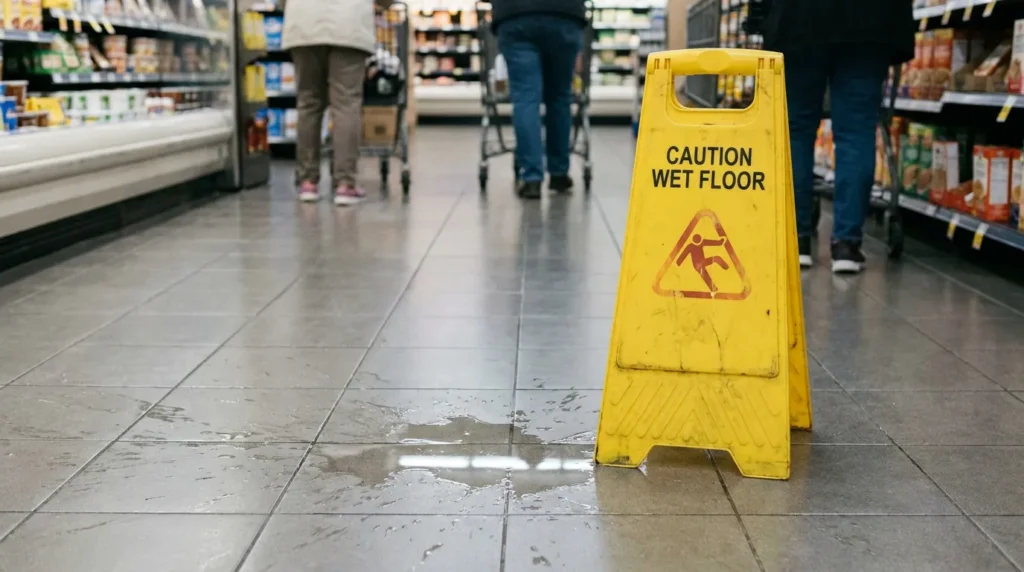
Constructive knowledge lets you establish liability without direct proof someone saw the spill. Under Fla. Stat. § 768.0755(1)(a)-(b), constructive knowledge may be shown where the dangerous condition existed long enough that, in the exercise of ordinary care, the business should have discovered it, or where the condition occurred with regularity and was therefore foreseeable. A freezer that leaks for hours creating a puddle a routine inspection would reveal is a classic example. Our discussion of constructive knowledge in an Orlando premises case walks through the evidence that often proves it.
Circumstantial evidence frequently drives these cases. Because owners rarely admit they knew about a danger, plaintiffs often rely on the length of time a hazard existed, patterns of recurring spills, and gaps in maintenance records. Surveillance footage, inspection logs, and witness accounts can all help establish that a reasonably prudent owner should have discovered and addressed the condition.
Your Legal Status on the Property Affects the Duty Owed
The duty a property owner owes depends on why you were on the premises. Florida law recognizes different categories of visitors, each owed a different level of protection. Legal reference sources such as Justia’s premises liability overview explain how invitees, licensees, and trespassers are treated differently.
Lawful business patrons generally receive the strongest protection. Invitees, such as customers in a store, are owed a duty to inspect for dangers, make prompt repairs, and warn of hazards. By contrast, Fla. Stat. § 768.075(3)(b) sharply limits the duty owed to undiscovered trespassers, requiring an owner only to refrain from intentional misconduct and imposing no duty to warn of dangerous conditions.
Here is a simplified look at how visitor status affects the duty owed:
| Visitor Status | General Duty Owed by Owner |
|---|---|
| Invitee (customer, patron) | Inspect, repair, and warn of hazards |
| Licensee (social guest) | Warn of known dangers not obvious to the guest |
| Undiscovered trespasser | Refrain from intentional harm; no duty to warn |
Acting Within Florida’s Deadline for Premises Claims
Time limits are among the most unforgiving aspects of any injury case. Following Florida’s 2023 tort reform, negligence actions, including premises-liability slip-and-fall claims, generally must be filed within two years. Under Fla. Stat. § 95.11(4)(a), actions founded on negligence must be brought within that window. Missing the deadline can bar recovery regardless of how strong the claim may be.
Limited exceptions may extend a deadline, but courts interpret them narrowly. Tolling and discovery-related exceptions do not apply automatically and depend on specific facts. This civil deadline is separate from any internal incident-reporting process a business may have, so do not assume filing a store report preserves your right to sue. Prompt legal guidance under the open and obvious doctrine florida framework is often valuable.
A knowledgeable advocate can help preserve evidence before it disappears. Surveillance video is frequently overwritten within days or weeks, and maintenance records can be difficult to obtain without prompt action. Working with an open and obvious doctrine florida lawyer early can help protect the proof your claim depends on.
💡 Pro Tip: Request in writing that the property owner preserve surveillance footage right away. A timely preservation letter can prevent critical evidence from being lost.
Frequently Asked Questions
1. Does an open and obvious hazard automatically defeat my Orlando claim?
No, an open and obvious hazard does not automatically bar recovery. It typically reduces your award based on your share of fault under Fla. Stat. § 768.81. Your claim is only barred if you are found more than 50 percent at fault under Fla. Stat. § 768.81(6).
2. What must I prove in a business slip-and-fall case?
You must prove the business had actual or constructive knowledge of the hazard. Under Fla. Stat. § 768.0755(1), you must show the establishment knew or should have known about the dangerous condition and failed to remedy it.
3. How long do I have to file a premises liability claim?
Most negligence claims must be filed within two years. Fla. Stat. § 95.11(4)(a) sets this deadline for actions founded on negligence. Exceptions may apply in limited circumstances, but courts interpret them narrowly.
4. Does my status as a visitor matter?
Yes, your legal status significantly affects the duty owed to you. Invitees such as customers receive the highest protection, while trespassers are owed far less under Fla. Stat. § 768.075(3)(b).
5. Can I still recover if I was partly careless?
In many cases, yes, subject to comparative fault rules. Your recovery may be reduced by your percentage of fault. If your share exceeds 50 percent, however, recovery is barred under current Florida law.
Protecting Your Right to Compensation After a Fall
An open and obvious hazard rarely ends the conversation about injury compensation in Orlando. Florida’s comparative fault framework, the surviving common-law duty to maintain safe premises, and the knowledge requirements for business slip-and-fall claims all leave room for injured visitors to recover. The key questions are how fault is apportioned, whether the owner knew or should have known about the danger, and whether you act within the two-year deadline.
If you or a loved one was injured by a hazard on someone else’s property, the advocates at Norden Leacox are here to help you understand your rights. Call us today at 407-801-3000 or complete our confidential contact form to schedule a conversation about your premises liability claim.