


Norden Leacox Accident & Injury Law | August 7, 2026 | Personal Injury
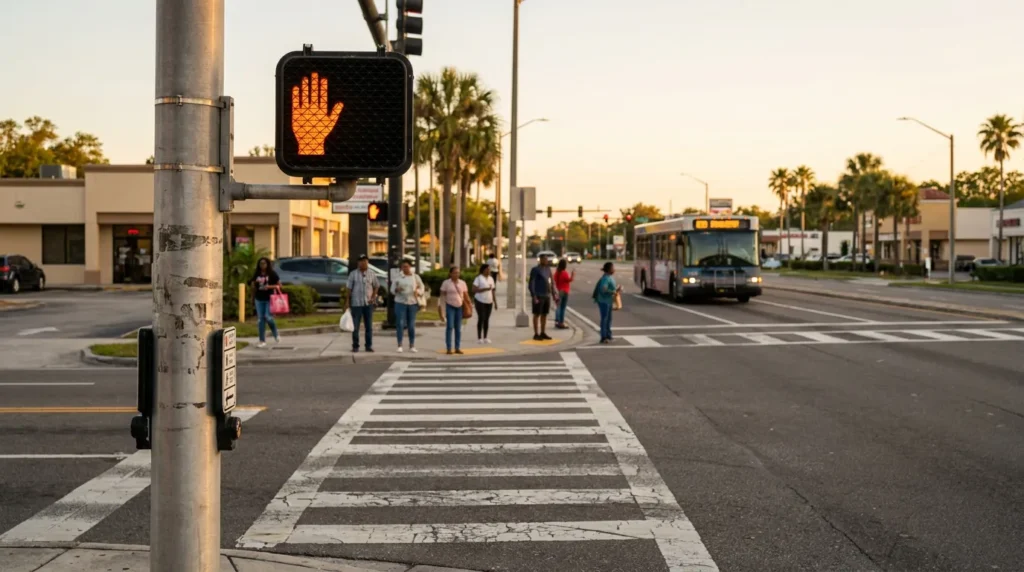
Crossing Outside the Lines: What Florida Law Means for Injured Pedestrians
Key Takeaways: Orlando pedestrians can often recover damages after a jaywalking crash because Florida does not treat crossing outside a crosswalk as an automatic bar to compensation. The state applies modified comparative negligence under Fla. Stat. § 768.81, reducing recovery by the pedestrian’s fault percentage but only barring recovery when fault exceeds 50 percent. While pedestrian duties under Fla. Stat. § 316.130 may establish some fault, drivers still owe duties of care, and factors like speeding, distraction, or visibility can shift blame toward the driver. Injured pedestrians may pursue economic damages including medical bills and lost income, plus non-economic damages like pain and suffering. Hit-and-run situations and strict filing deadlines under Fla. Stat. § 95.11 make prompt reporting, evidence preservation, and timely action essential.
Yes, an Orlando pedestrian can often recover damages after a jaywalking crash, even when crossing outside a marked crosswalk. Florida does not treat jaywalking as an automatic bar to compensation. Instead, the state uses a comparative fault framework that weighs both parties’ conduct, then adjusts recovery based on each party’s share of blame. While jaywalking increases collision likelihood, that risk factor is only one piece of a broader fault analysis rather than a final verdict against the injured person.
If you were hurt while walking in Central Florida, you do not have to sort through these rules alone. The team at Norden Leacox helps injured pedestrians understand their options. Call 407-801-3000 or use the firm’s online case review form to discuss what happened. Acting promptly helps protect both evidence and your legal rights.

Understanding the Florida Jaywalking Law 316.130
Florida’s core pedestrian traffic rules live in one statute that every walker and driver should know. Section 316.130, titled "Pedestrians; traffic regulations," contains numerous subsections defining where and how pedestrians may lawfully cross, including duties to use crosswalks and yield to traffic when crossing outside marked crosswalks. Read the full text within the state’s pedestrian traffic regulations in Chapter 316. Violating these rules does not automatically bar an injured Orlando pedestrian from recovering damages, but it can establish the pedestrian’s share of fault.
Not every pedestrian action counts against the injured person. For example, Fla. Stat. § 316.1301(3) protects blind and incapacitated pedestrians by providing that a qualifying person’s failure to carry a cane or use a guide dog "shall not be considered comparative negligence, nor shall such failure be admissible as evidence" in a negligence action. While specific to visually impaired pedestrians, this illustrates that Florida statutes can restrict how a pedestrian’s conduct is used against them. Understanding the florida jaywalking law 316.130 in context helps injured people avoid assuming a crossing mistake ends their case.
How Comparative Negligence Shapes an Orlando Pedestrian Crash Claim
Florida applies a modified comparative negligence system that reduces, but does not always eliminate, a jaywalking pedestrian’s recovery. Under Fla. Stat. § 768.81(2), "contributory fault chargeable to the claimant diminishes proportionately the amount awarded as economic and noneconomic damages for an injury attributable to the claimant’s contributory fault, but does not bar recovery, subject to subsection (6)." If a jury finds you 30 percent responsible, your damages are reduced by 30 percent. For greater depth, review this overview of Florida comparative negligence law.
The 50 Percent Threshold That Can End a Case
The most important limit is the greater-percentage-of-fault bar. Fla. Stat. § 768.81(6) provides that "any party found to be greater than 50 percent at fault for his or her own harm may not recover any damages." An Orlando pedestrian who jaywalked may still recover if assigned 50 percent or less of the blame, but recovery is barred if fault exceeds that threshold. Because this determination is fact-sensitive, outcomes depend heavily on specific evidence, and courts and juries may weigh driver speed, visibility, and distraction alongside the pedestrian’s conduct.
| Pedestrian’s Assigned Fault | General Effect on Recovery |
|---|---|
| 0% to 50% | Damages reduced by the fault percentage |
| More than 50% | Recovery generally barred |
Each liable party pays only their own share of fault. Under Fla. Stat. § 768.81(3), "the court shall enter judgment against each party liable on the basis of such party’s percentage of fault and not on the basis of the doctrine of joint and several liability." A driver generally pays only their apportioned share of damages, making identification of every potentially responsible party important.
Damages You May Be Able to Recover
Injured pedestrians in a jaywalking crash may pursue several categories of compensation. Economic damages are defined in Fla. Stat. § 768.81(1)(b) to include "past lost income and future lost income…medical and funeral expenses…and any other economic loss." Recoverable losses may include:
- Medical bills for emergency care, surgery, and rehabilitation
- Past and future lost income when injuries limit your ability to work
- Out-of-pocket costs connected to the crash and recovery
Non-economic losses, such as pain and suffering, may also be available under the same comparative framework. These damages are inherently subjective and depend on injury severity and permanence. Documenting your treatment and its impact on daily life generally strengthens a pedestrian injury claim in Orlando.
When the Driver Flees: Hit-and-Run Risks for Pedestrians
Pedestrians are especially vulnerable when a driver leaves the scene. Drivers have a legal duty to remain, and the Florida Highway Safety and Motor Vehicles agency runs a hit-and-run awareness campaign educating drivers on their responsibilities. When a driver flees, identifying and recovering from the at-fault party becomes complicated, making early investigation essential.
The scale of this problem is significant. According to FLHSMV, there were over 104,000 hit-and-run crashes in Florida in 2023, resulting in 271 fatalities and over 800 serious injuries. Nearly 25 percent of all crashes involve hit-and-runs. Pedestrians bear disproportionate harm, 159 of the 271 hit-and-run fatalities were pedestrians and 47 were bicyclists, roughly 76 percent of those deaths.
Prompt reporting can help investigators locate the driver. FLHSMV advises that information can be reported by calling *FHP (*347) or anonymously to Florida Crime Stoppers at **TIPS (**8477). Preserving details such as partial plate numbers, vehicle color, or direction of travel can prove valuable later.
💡 Pro Tip: If physically able, ask nearby witnesses for their contact information before they leave, since independent accounts often help counter comparative-fault arguments in a jaywalking case.
Deadlines That Can Make or Break Your Pedestrian Claim
Florida sets firm time limits for filing personal injury lawsuits, and missing them can end a claim regardless of merit. Fla. Stat. § 95.11 governs deadlines for civil actions, including pedestrian negligence claims. Because the legislature shortened the negligence limitations period to two years for causes of action accruing on or after March 24, 2023, confirming the current limitation period for your specific situation is essential.
Certain exceptions may extend a deadline, but courts interpret these narrowly. Tolling or delayed-discovery arguments do not apply automatically and are available only in limited circumstances. It is also worth distinguishing a civil statute of limitations from government administrative claim deadlines, which are separate processes with their own timing rules. When questions exist about which deadline applies, treating the earliest reasonable date as your target helps protect your rights.
Building a Strong Pedestrian Injury Claim in Orlando
Strong claims begin with careful documentation and preserved evidence. Research consistent with this pedestrian crossing-behavior study notes that jaywalking events are often less anticipated by drivers than marked-crosswalk crossings, affecting reaction time and conflict severity. This dynamic matters because it can support arguments that a driver’s speed or inattention contributed to the crash, even where a pedestrian crossed outside a crosswalk.
Practical Steps After a Jaywalking Crash
Early actions can meaningfully affect how comparative fault is assigned. Consider the following when your health allows:
- Seek prompt medical care and follow through with treatment
- Photograph the scene, your injuries, and any traffic controls
- Request the crash report and note responding officers
- Avoid giving recorded statements to insurers before seeking guidance
Because these cases turn on nuanced fault questions, working with a legal advocate can help. An orlando fl pedestrian lawyer can evaluate liability, gather evidence, and quantify both economic and non-economic losses while countering insurer efforts to overstate a pedestrian’s share of fault.
Frequently Asked Questions
-
Can I recover damages if I was partly at fault for jaywalking?
Often, yes. Under Fla. Stat. § 768.81(2), your recovery is reduced by your percentage of fault, but you may still recover as long as your share does not exceed 50 percent.
-
Does jaywalking automatically mean the crash was my fault?
No. Violating the florida jaywalking law 316.130 can be used as evidence of fault, but drivers still owe duties of care, and juries may assign significant fault to a driver who was speeding or distracted.
-
What if the driver who hit me fled the scene?
You may still have options. Reporting the crash promptly to authorities and preserving vehicle details can aid identification, and uninsured motorist coverage may apply depending on your policy.
-
How long do I have to file a pedestrian injury lawsuit in Florida?
The deadline is set by Fla. Stat. § 95.11 and depends on your claim. For negligence claims accruing on or after March 24, 2023, the period is generally two years, so confirming the current deadline early helps avoid losing your right to sue.
-
What damages can an injured Orlando pedestrian pursue?
Recoverable losses may include medical costs, lost income, and pain and suffering. Economic damages are defined broadly under Fla. Stat. § 768.81(1)(b), while non-economic damages depend on injury severity.
Moving Forward After a Jaywalking Crash in Central Florida
A jaywalking crash does not close the door on compensation for injured Orlando pedestrians. Florida’s comparative fault rules under Fla. Stat. § 768.81, combined with pedestrian duties in Fla. Stat. § 316.130, mean fault is measured proportionally rather than assumed against the person on foot. As long as your share of fault does not exceed 50 percent, you may recover meaningful damages, though the outcome depends on specific facts and evidence.
When you are ready to protect your rights and understand your options, help is available. Reach out to Norden Leacox by calling 407-801-3000 or completing the firm’s confidential contact request to discuss your pedestrian injury claim. Taking action promptly helps preserve evidence and safeguard critical deadlines.