


Norden Leacox Accident & Injury Law | July 19, 2026 | Car Accidents
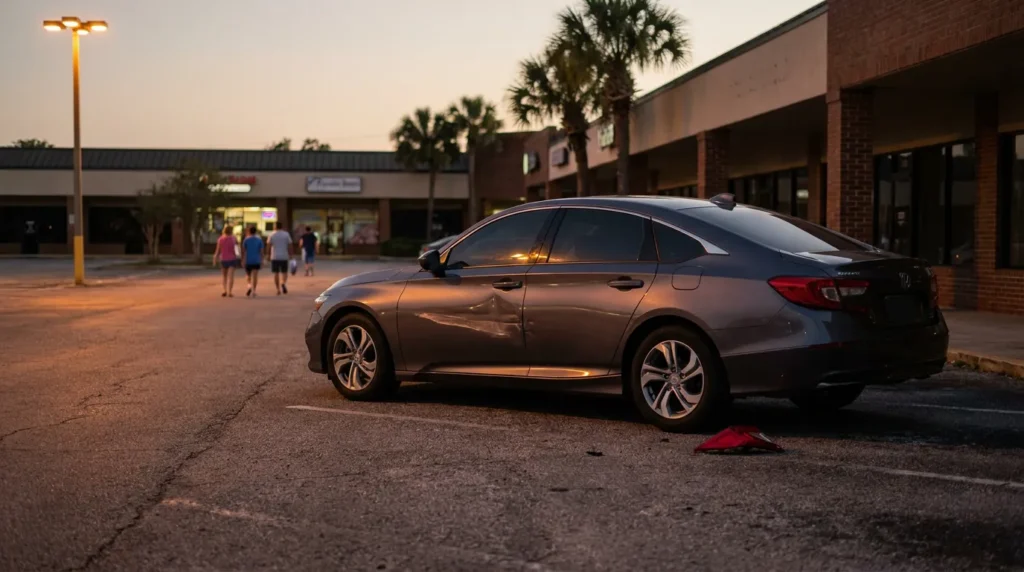
Understanding Who Pays After a Hit-and-Run in Titusville
Key Takeaways: In a Titusville hit-and-run, liability can rest with the fleeing driver, the registered vehicle owner under permissive-use rules, or be addressed through your own PIP and uninsured motorist coverage. Florida law requires drivers to stop and remain at the scene, with fleeing a crash involving serious injury being a second-degree felony under the Aaron Cohen Life Protection Act. If identified, the driver and sometimes the vehicle’s owner may be liable up to $100,000 per person and $300,000 per incident. When the driver is never found, your PIP benefits apply first, followed by UM coverage. Reporting the crash within 24 hours protects both your evidence and your premiums, while Florida’s modified comparative fault rule bars recovery if you are more than 50 percent at fault.
When a driver flees a crash in Titusville, liability can fall on the fleeing driver, the registered vehicle owner, or your own insurance policies. Florida law requires drivers to stop immediately at any crash causing property damage, injury, or death. When drivers break this duty, the law treats it as a crime and opens multiple recovery paths for victims. The outcome depends on whether the at-fault driver is identified and what coverage is available.
If you were injured by a fleeing driver, the team at Norden Leacox can help you understand your options. Call a trusted Titusville car accident lawyer today at 407-801-3000 to discuss your rights.
The Legal Duty That Creates Hit-and-Run Liability
Every driver in Florida carries a clear legal duty to stop and remain after a crash. Florida law requires any driver involved in a crash causing serious bodily injury to immediately stop at or near the scene and remain until they have exchanged information and rendered aid. Breaking that duty creates liability in a hit-and-run case, regardless of fault.
The criminal exposure for fleeing is severe. Willfully leaving the scene of a crash involving serious bodily injury is a second-degree felony, punishable under Florida Statutes §§ 775.082, 775.083, or 775.084; the offense is a third-degree felony for non-serious injury and a first-degree felony when death results. The Aaron Cohen Life Protection Act, codified at section 316.027, Florida Statutes, took effect July 1, 2014, establishing the statutory framework for hit-and-run cases statewide. Review the Florida hit-and-run statute for additional context.
Even minor property-damage crashes carry duties. For property-damage-only crashes, drivers must stay and attempt to contact the owner, or leave contact and insurance information if the owner cannot be located. The stay at the scene campaign emphasizes that leaving is both reckless and illegal.
💡 Pro Tip: Photograph the scene, debris, and surrounding businesses immediately. Nearby surveillance cameras often capture fleeing vehicles, but footage can be lost within days if not requested promptly.
When the Fleeing Driver Is Identified
If investigators identify the driver, that person becomes the primary target for a liability claim. Police, witnesses, and traffic cameras frequently help name a driver even after they flee. Once identified, the at-fault driver may be responsible for your economic and non-economic damages under standard negligence principles.
The vehicle’s owner may also share responsibility. Florida law allows the owner who loans a car to a permissive user to be held liable for bodily injury up to $100,000 per person and $300,000 per incident, plus up to $500,000 in economic damages if the permissive user is uninsured or has insufficient coverage. This rule, found at Florida Statutes § 324.021(9)(b)(3), means both owner and driver may bear financial responsibility.
Comparative fault can shape what you recover. Florida follows modified comparative fault, and under 2023 reform, a party greater than 50 percent at fault for their own harm cannot recover damages. Under Florida Statutes § 768.81(3)(a), defendants must affirmatively plead and prove by a preponderance of the evidence the fault of any nonparty. These allocations are fact-dependent and vary case by case.
Recovering When the Driver Is Never Found
When the at-fault driver cannot be identified, your own coverage often becomes the central recovery tool. Uninsured motorist (UM) coverage is designed for this situation. If injured while occupying a vehicle, the UM coverage on that vehicle applies; if not in a vehicle, you may select coverage from any policy on which you are a named insured. Many victims consult a lawyer about insurance information early in the process.
UM policies come in different forms. Insurers may offer limited UM policies, stacked or non-stacked, with at least 20 percent premium reduction for non-stacked options. The named insured must sign an acknowledgment of those limitations. This distinction can significantly affect how much coverage stacks across multiple vehicles.
Common recovery sources in a Titusville hit-and-run include:
- Your Personal Injury Protection (PIP) benefits for initial medical costs and lost wages
- Uninsured motorist coverage when the driver is unknown or uninsured
- The fleeing driver’s liability policy, if identified
- The vehicle owner’s policy under permissive-use rules
💡 Pro Tip: Keep a single folder for every medical record, pay stub, and repair estimate. Organized documentation makes it easier to quantify economic and non-economic losses later.
How Florida’s No-Fault System Affects Your Claim
Florida’s no-fault system means your own PIP coverage activates first, even before any claim against the fleeing driver. After any car accident, including a hit-and-run, injured drivers must first turn to their own Personal Injury Protection coverage for initial medical and lost wage benefits, regardless of fault. PIP benefits apply immediately and cover up to 80 percent of medical expenses and 60 percent of lost wages up to the policy limit. Review the Florida PIP benefits statute for further detail.
Insurers cannot quietly waive these obligations. Florida law mandates that PIP provisions have full force and effect regardless of their express inclusion in a policy, meaning insurers cannot waive these obligations. Your insurer also owes you specific notice within 21 days of receiving notice of the accident, explaining available benefits, significant exclusions, when payments are due, and how PIP coordinates with other insurance.
💡 Pro Tip: Report the crash to your own insurer promptly. Doing so helps trigger the 21-day PIP notice requirement and preserves your access to benefits.
Why Reporting Quickly Protects Your Rights
Reporting a hit-and-run to law enforcement quickly protects both your evidence and your premiums. A formal crash report is legally required when the accident involves injury, death, complaints of pain, or renders a vehicle inoperable. Under Florida Statutes § 316.066(1)(a), this official report becomes essential evidence for any later car accident claim in Brevard County.
Prompt reporting also shields you from certain premium penalties. Florida’s unfair insurance practices statute prohibits insurers from imposing a premium surcharge or refusing to renew a policy if the insured was hit by a hit-and-run driver, as long as the accident was reported to proper authorities within 24 hours. This protection, found at Florida Statutes § 626.9541(1)(o)(2)(b)(IV), reinforces why calling Titusville police or Brevard County Sheriff matters.
Vulnerable Road Users Face Heightened Risk
Pedestrians, bicyclists, and motorcyclists are harmed at disproportionate rates in Florida hit-and-runs. Vulnerable road users made up 46.38 percent of the 871 hit-and-run crashes with severe bodily injury according to preliminary 2023 data. These victims may not be occupying a vehicle, which changes how UM coverage selection works.
The Broader Picture in Florida
Hit-and-run crashes remain common and dangerous across the state. Of Florida’s 104,273 hit-and-run crashes in a recent year, 86,987 involved property damage only. Between 2015 and 2023, roughly 923,000 hit-and-run crashes resulted in 2,162 fatalities.
Comparing Your Potential Sources of Recovery
| Recovery Source | When It Generally Applies |
|---|---|
| PIP (your policy) | First, for early medical and wage benefits |
| UM coverage | When the driver is unidentified or uninsured |
| Driver liability | When the fleeing driver is identified |
| Owner liability | When the vehicle owner loaned the car |
How a Titusville Car Accident Lawyer Can Help
A knowledgeable advocate can help you coordinate overlapping coverage sources and protect your evidence. Hit-and-run cases often involve PIP, UM coverage, and potential third-party claims simultaneously, and missteps can reduce your recovery. Working with an experienced Titusville car accident lawyer helps you preserve deadlines, document injuries, and counter comparative-fault arguments.
💡 Pro Tip: Avoid giving a recorded statement to any insurer before you understand how comparative fault and nonparty allocation could affect your claim.
Frequently Asked Questions
-
Can I still recover if the hit-and-run driver is never caught?
Yes. If injured while occupying a vehicle, the UM coverage on that vehicle applies. If not in a vehicle, you may select coverage from any policy on which you are a named insured. -
Will my insurance rates go up after a hit-and-run claim?
Generally not, if you report quickly. Insurers cannot surcharge or refuse renewal when you were hit by a hit-and-run driver and reported it within 24 hours. -
Is the vehicle owner liable if someone else was driving?
Under certain circumstances, yes. An owner who loans a vehicle to a permissive user can be liable for bodily injury up to $100,000 per person and $300,000 per incident, with possible additional economic damages. -
Does my PIP coverage apply even though I did not cause the crash?
Yes. Injured drivers must first turn to their own PIP coverage for initial medical and lost wage benefits, regardless of fault. -
What if I was partly at fault?
Recovery may still be possible. Under Florida Statutes § 768.81(6), a party greater than 50 percent at fault for their own harm may not recover damages.
Protecting Your Recovery After a Titusville Hit-and-Run
Liability for a Titusville hit-and-run can rest with the fleeing driver, the vehicle owner, or be addressed through your own PIP and UM coverage. The law imposes a duty to stop, treats fleeing as a felony, and provides several recovery paths depending on whether the driver is identified. Prompt reporting, careful documentation, and understanding Florida’s no-fault and comparative-fault rules all influence the outcome.
If a fleeing driver left you injured, the team at Norden Leacox is ready to help you pursue fair compensation. Reach out through our contact page or call a dedicated Titusville car accident lawyer at 407-801-3000 to discuss your options today.