


Norden Leacox Accident & Injury Law | July 17, 2026 | Personal Injury
Understanding Apartment Crime Liability Under Florida Law
Key Takeaways: After a negligent security attack at an Orlando apartment, liability often extends beyond the criminal attacker to property owners or managers who failed to provide reasonable security against foreseeable crime. Florida treats the owner’s negligence and the attacker’s intentional act as legally distinct. Victims must rely on common law premises liability theories since the security statute creates no private cause of action. Under Fla. Stat. § 768.0706, owners who substantially implement specific measures, cameras, lighting, deadbolts, CPTED assessments, and employee training, gain a presumption against liability, but bear the burden of proving compliance. Fault is divided by each party’s percentage of responsibility, and plaintiffs found more than 50% at fault may be barred from recovery under Florida’s 2023 reforms. Most negligent security claims must be filed within two years of injury, making early evidence preservation critical. Ultimately, liability depends on duty, foreseeability, compliance, and evidence strength.
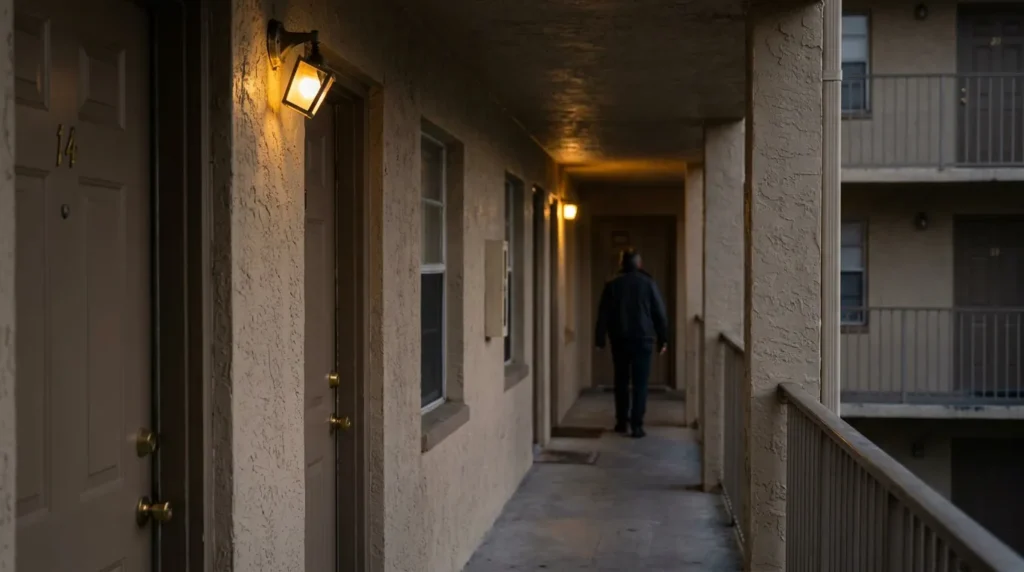
When violent crime occurs at an Orlando apartment complex, liability often extends beyond the attacker to property owners or managers who failed to provide reasonable security. Florida law allows injured tenants and visitors to pursue premises liability claims when inadequate safety measures enable foreseeable crime. While the criminal is responsible for the intentional act, negligent landlords may share legal responsibility. Determining liability depends on duty, foreseeability, and whether the property met expected security standards.
💡 If you or a loved one was hurt during an apartment attack, you do not have to untangle these overlapping responsibilities alone. The team at Norden Leacox helps injured Orlando residents understand their rights, and you can call us at 407-801-3000 or reach out through our contact page to discuss what happened.
How Negligent Security Fits Within Premises Liability in Orlando
Negligent security is a specific branch of premises liability focusing on a property owner’s failure to protect people from foreseeable third-party crime. In a negligent security Orlando case, the injured person must prove the four classic negligence elements: duty, breach, causation, and damages. Property owners owe tenants and lawful visitors a duty to keep premises reasonably safe, including reasonable measures to deter criminal activity.
Florida law treats property owner negligence and attacker intent as legally distinct. Florida’s comparative-fault statute excludes intentional torts under Fla. Stat. § 768.81(4). However, 2023 reforms added Fla. Stat. § 768.0701, requiring the trier of fact in negligent security actions to consider the fault of all persons who contributed to injury, including the criminal attacker. This creates a layered analysis where landlord carelessness and assailant conduct may now be weighed together, an evolving nuance in apartment attack liability.
💡 Pro Tip: Foreseeability is often the heart of these claims. Prior crime reports, police call logs, and complaints made to management can show the danger was known, so request and preserve these records as early as possible.
Security Measures Apartment Owners Must Address
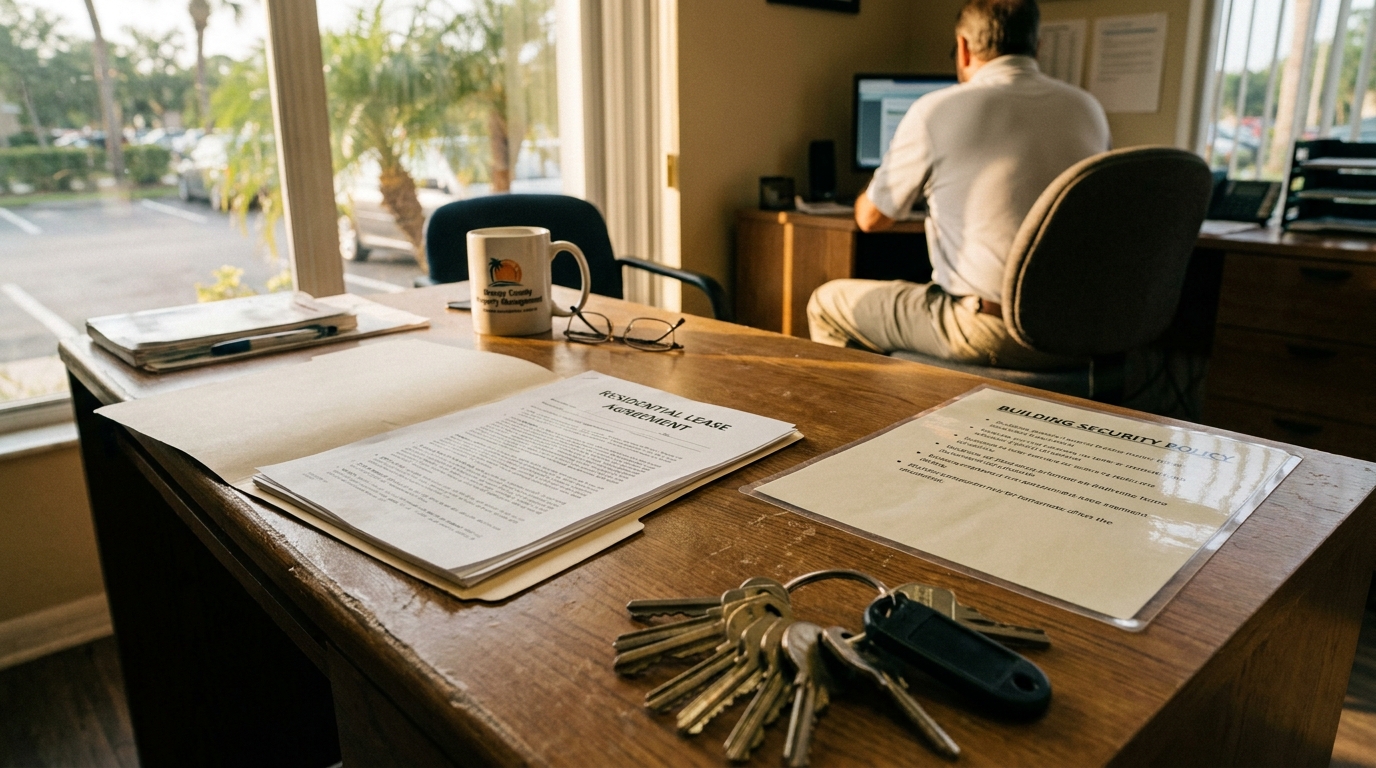
Florida sets out specific security measures that apartment owners can implement to gain legal protection, and failure to meet them can support a claim. Under Fla. Stat. § 768.0706(2)(a), owners of multifamily residential properties with at least five units who substantially implement listed security measures gain a rebuttable presumption against liability for criminal acts by third parties who are not employees or agents. When Orlando apartments fail to meet these benchmarks, they lose this presumption and face exposure for inadequate security Florida tenants experience.
The statutory list is detailed and concrete:
- Security cameras at entry and exit points retaining footage for at least 30 days
- Parking lot lighting at minimum 1.8 foot-candles, plus lighting in walkways and common areas from dusk to dawn
- At least 1-inch deadbolt on each unit door, with locking devices on windows and sliding doors
- Locked pool gate access and peepholes on unit doors
Florida law also imposes assessment and training obligations. Owners must obtain a Crime Prevention Through Environmental Design assessment no more than 3 years old by January 1, 2025, under Fla. Stat. § 768.0706(2)(b). Additionally, owners must provide crime deterrence and safety training to current employees, familiarizing them with security principles, devices, measures, and standards, reviewed at least every 3 years per Fla. Stat. § 768.0706(2)(c). Review these requirements in the state’s Chapter 768 negligence statutes.
Who Carries the Burden in a Premises Liability Claim Florida Recognizes
The property owner, not the injured person, must prove compliance to earn the liability presumption. Under Fla. Stat. § 768.0706(3), the burden of proof is on the owner or principal operator to demonstrate substantial implementation of statutory security measures. This shifts significant litigation work onto the property owner.
It is equally important to understand the statute’s limits. While Section 768.0706 creates a shield for compliant owners, this section does not establish a private cause of action under Fla. Stat. § 768.0706(5). Victims must rely on existing common law negligence and premises liability theories, the statute functions as a defense tool, not a standalone basis to sue. For broader foundation on these cases, see our overview of Florida personal injury claims.
💡 Pro Tip: Because the owner must affirmatively prove compliance, gaps in their records, such as missing CPTED assessments or undocumented employee training, can become central evidence in your case.
How Fault Is Divided Among the Owner, Manager, and Attacker
Florida divides damages based on each party’s share of fault rather than holding one defendant responsible for the entire judgment. Under Fla. Stat. § 768.81(3), the court enters judgment against each party based on their percentage of fault, not joint and several liability. This apportionment framework is central to splitting responsibility among apartment owners, property managers, and criminal attackers.
Defendants frequently try to shift blame onto the criminal. A defendant must affirmatively plead and prove a nonparty’s fault by a preponderance of evidence to include them in damage apportionment under Fla. Stat. § 768.81(3)(a). In negligent security cases, Fla. Stat. § 768.0701 directs the trier of fact to consider the attacker’s fault alongside the owner’s negligence, potentially reducing owner exposure. However, appellate courts have not fully settled this newer provision’s boundaries, so how attacker conduct interacts with owner negligence remains contested and fact-dependent.
Your own conduct may also be examined under changed rules. Florida’s 2023 reforms created a 50% bar, plaintiffs found more than half at fault may be barred from recovering, unlike the prior rule that merely reduced recovery proportionately.
Why Filing Deadlines Demand Early Action
Time limits in negligence cases are strict, and missing them can permanently end otherwise strong claims. Following Florida’s 2023 tort reform under HB 837, the limitations period for general negligence claims shortened from four years to two years. Victims of negligent security attacks must generally file suit within two years of injury or risk being time-barred.
Exceptions to filing deadlines exist but are interpreted narrowly. Tolling and discovery-based extensions may apply in limited circumstances but are not automatic and should never be treated as guaranteed.
💡 Pro Tip: Treat the two-year clock as the outer limit, not a target. Evidence such as surveillance video is often overwritten within weeks, so acting quickly protects both your deadline and your proof.
| Issue | General Rule | Key Statute |
|---|---|---|
| Filing deadline | Generally two years for negligence | Fla. Stat. § 95.11 |
| Fault division | Apportioned by percentage of fault | Fla. Stat. § 768.81(3) |
| Owner’s presumption | Owner must prove compliance | Fla. Stat. § 768.0706(3) |
The controlling deadline rules come directly from Florida’s limitations statute. Review the current text of the state’s statute of limitations rules for actions other than recovery of real property. Because Orlando sits within Florida’s jurisdiction, these statewide deadlines govern local injury and negligence matters.
Building a Strong Negligent Security Case
Strong negligent security cases are built on evidence showing the danger was foreseeable and the response inadequate. Practical proof includes prior incident reports, security camera footage, lighting measurements, maintenance records, lease provisions, and witness accounts from neighbors or staff. Documenting lock, gate, and lighting conditions soon after an attack preserves details that fade quickly.
Florida’s habitability principles reinforce the broader duty owners owe. Under Fla. Stat. § 83.63, when premises are damaged or destroyed so that enjoyment is substantially impaired, tenants may terminate rental agreements and immediately vacate. While this statute addresses physical damage rather than personal injury, it reflects the consistent expectation that landlords maintain safe, habitable property. An experienced Orlando premises liability lawyer can help connect these duties to specific apartment attack facts.
Frequently Asked Questions
1. Can I sue the apartment owner if the actual attacker was a stranger?
Yes, in many cases you can pursue the owner separately from the criminal. Liability turns on whether the owner breached a duty to provide reasonable security against foreseeable crime, evaluated independently of the attacker’s intentional act, though Florida law now allows the attacker’s fault to be weighed in apportioning damages.
2. What if I was partially at fault for what happened?
Your recovery may be reduced or barred depending on your share of fault. Following 2023 reforms, plaintiffs found more than 50% at fault may be barred from recovering, so specific facts matter significantly.
3. How long do I have to file a negligent security claim in Orlando?
Generally, you have two years from the date of injury under Fla. Stat. § 95.11. Limited exceptions may extend that window but are applied narrowly, so prompt legal review is important.
4. Does the apartment automatically avoid liability if it had cameras and locks?
Not automatically. The owner bears the burden of proving substantial implementation of all statutory measures under Fla. Stat. § 768.0706(3), and the resulting presumption is rebuttable, so compliance gaps can defeat it.
5. What evidence should I gather after an apartment attack?
Preserve anything showing foreseeability and inadequate security. Police reports, prior crime complaints, photos of broken locks or dark walkways, and surveillance footage are often valuable, and acting quickly prevents evidence loss.
Protecting Your Rights After an Orlando Apartment Attack
Liability after a negligent security attack at an Orlando apartment often rests on multiple parties. The attacker bears responsibility for the crime, but property owners who ignored foreseeable risks and failed to meet Florida’s security expectations may also be accountable. Because the law involves shifting burdens, comparative-fault rules, and strict two-year deadlines, outcomes depend heavily on specific facts and preserved evidence.
You do not have to navigate these questions alone. The attorneys at Norden Leacox are recognized for handling Florida premises injury matters and can help you understand options after an apartment attack. Call 407-801-3000 today or request a consultation online to take the first step toward protecting your rights.