


zleacox@nordenleacox.com | July 27, 2026 | Personal Injury
How Helmet Use Shapes Your Injury Claim After a Cocoa Crash
Key Takeaways: Wearing a helmet can reduce a motorcyclist’s risk of death by roughly 37 percent. In Cocoa, FL, riders under 21 must always wear a helmet, while those over 21 may ride without one if they carry at least $10,000 in medical benefits coverage. Helmet non-use can become a comparative fault argument under Florida’s modified comparative negligence system, which bars recovery if you are found more than 50 percent at fault. Because motorcycles are not covered by PIP no-fault benefits, recovery often depends on the at-fault driver, vehicle owner liability, or your own uninsured and underinsured motorist coverage. Strong documentation is essential to counter fault arguments and support a claim.
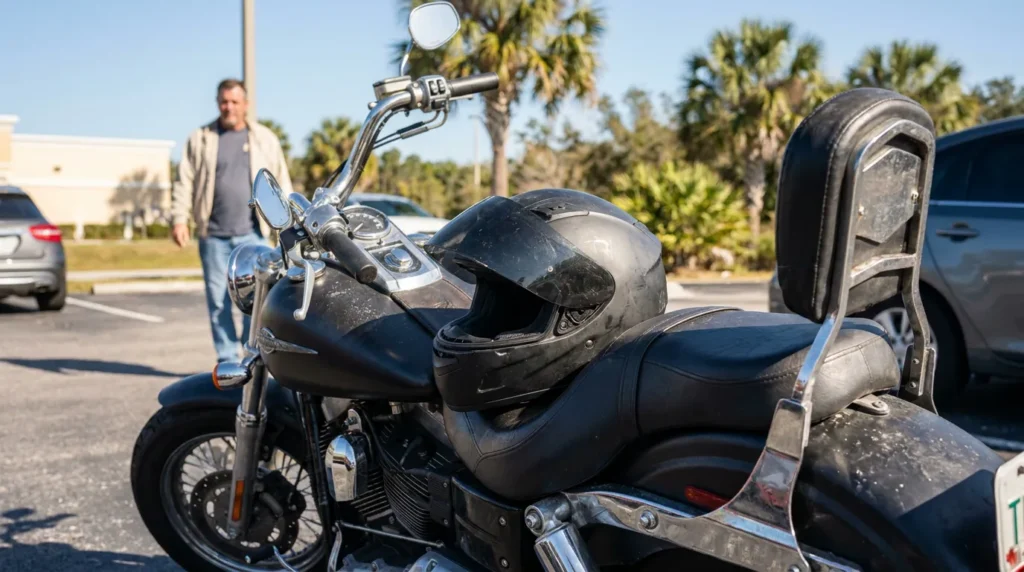
Wearing a helmet can cut a motorcyclist’s risk of death by roughly 37 percent, which makes it one of the most powerful safety choices a rider can make. In Cocoa, FL, helmet use also influences how a court may view fault and damages if you are hurt. Understanding the connection between rider safety and your legal rights helps you protect both your health and any future motorcycle accident claim.
If you or a loved one suffered a head injury after a crash, the team at Norden Leacox is ready to help you understand your options. You can call us at 407-801-3000 for a free consultation or reach out through our contact page to discuss what happened.
What Florida Law Requires of Motorcycle Riders
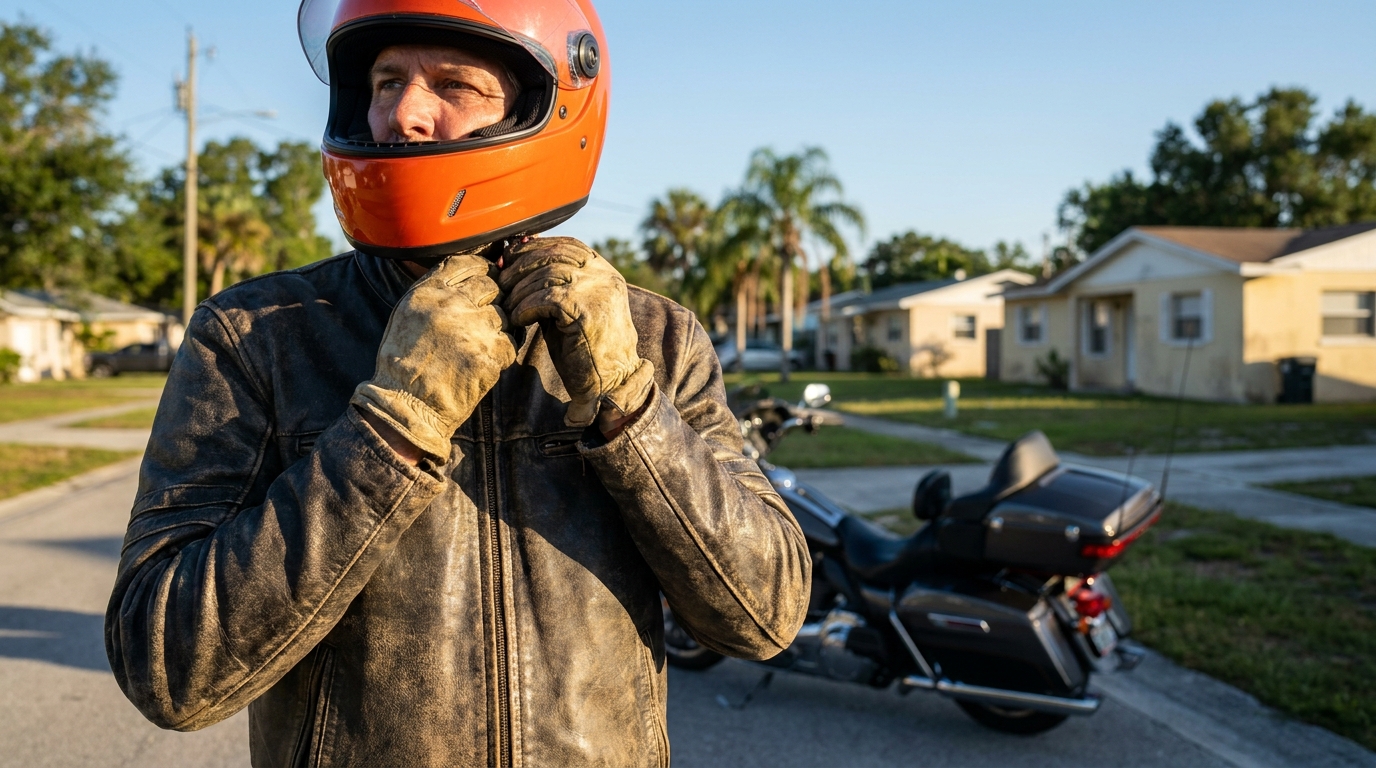
Florida law sets clear equipment standards for everyone who rides. Under the state’s motorcycle equipment statute, Fla. Stat. § 316.211 requires riders to wear protective headgear compliant with Federal Motorcycle Vehicle Safety Standard 218, along with approved eye protection. Riders under 21 must always wear a helmet. Violating this requirement is a noncriminal traffic infraction.
There is one narrow exception for older riders. Under Fla. Stat. § 316.211, riders over age 21 may legally ride without a helmet only if they carry at least $10,000 in medical benefits coverage. For Cocoa, FL riders, choosing to forgo a helmet, even when legally permitted, can carry serious consequences in a personal injury claim if head injuries result.
💡 Pro Tip: Keep proof of your $10,000 medical benefits coverage with your registration documents. If a dispute arises over helmet use, you may need to show you met the statutory exemption.
Why Helmet Statistics Matter to Your Recovery
Motorcycle helmet statistics consistently show that head protection saves lives. Beyond the roughly 37 percent reduction in death risk, helmets substantially reduce the severity of traumatic brain injuries that often drive the highest medical costs in a claim. A serious head injury can require lifelong care, which is why prevention and documentation both matter.
Florida reinforces this safety focus through education. The state maintains a mandatory Motorcycle Safety Education Program under Fla. Stat. § 322.0255. First-time applicants under 21 must complete at least 12 hours of instruction, including a minimum of 6 hours of actual motorcycle operation, with curriculum modeled on Motorcycle Safety Foundation standards.
How Comparative Fault Affects a Motorcycle Accident in Cocoa FL
Florida follows a modified comparative negligence system that can reduce or eliminate your recovery. As of March 24, 2023, Section 768.81 was amended so that a party found to be greater than 50 percent at fault may not recover any damages. This is a meaningful change from the prior pure comparative fault standard.
Helmet non-use can become a comparative fault argument. If a rider over 21 legally chose not to wear a helmet but sustained serious head injuries, the defense may argue that the rider bears significant comparative fault for those injuries. Under the comparative fault provisions in Fla. Stat. § 768.81(6), that argument could reduce a recovery or bar it entirely if assigned fault exceeds 50 percent.
Damages are apportioned by each party’s percentage of fault. Under Fla. Stat. § 768.81(3), Florida courts enter judgment against each liable party based on that party’s percentage of fault. A defendant may affirmatively plead the fault of a nonparty and must prove that fault at trial by a preponderance of the evidence. This means insurers may try to shift blame onto the rider.
💡 Pro Tip: Photographs, witness statements, and medical records that show how your injuries occurred can help counter an inflated fault argument.
Claims That Fall Outside the Comparative Fault Rule
Not every claim is governed by the comparative fault statute. Subsection (4) of Fla. Stat. § 768.81 states that the section does not apply to intentional torts and certain actions under chapters 403, 498, 517, 542, or 895. Under Fla. Stat. § 768.81(6), the more-than-50-percent recovery bar does not apply to medical negligence actions under chapter 766.
Who Pays After a Motorcycle Accident Claim in Cocoa FL
Figuring out who pays your bills is often more complicated for motorcyclists. In Florida, motorcycles are generally not treated as motor vehicles for no-fault purposes, so Personal Injury Protection coverage does not apply to motorcycle crashes. That distinction makes identifying responsible parties especially important for an injured rider.
Vehicle owners can share financial responsibility. Under Fla. Stat. § 324.021(9)(b)3, an owner who loans a vehicle to a permissive user is generally liable up to $100,000 per person and $300,000 per incident for bodily injury. An additional $500,000 in economic damages may apply if the permissive user is uninsured or carries less than $500,000 in combined liability coverage.
The table below summarizes key sources of responsibility.
| Source of Recovery | Governing Authority | Practical Note |
|---|---|---|
| At-fault driver liability | Fla. Stat. § 768.81 | Apportioned by percentage of fault |
| Vehicle owner (permissive use) | Fla. Stat. § 324.021(9)(b)3 | Caps apply per person and per incident |
| Rider medical benefits exemption | Fla. Stat. § 316.211 | Minimum $10,000 for riders over 21 |
💡 Pro Tip: Because PIP does not cover motorcycle crashes, review your own uninsured and underinsured motorist coverage before you ride.
Evidence That Strengthens Your Case
Strong documentation often determines the outcome of a motorcycle accident claim. After any crash resulting in death, injury, complaints of pain, or significant damage, law enforcement must complete a Florida Traffic Crash Report within 10 days under Fla. Stat. § 316.066(1)(a). Always call law enforcement so the report is completed.
Preserving proof early makes a measurable difference. Medical records, scene photographs, and witness contact information all help establish how your injuries occurred and who was responsible. For a deeper look at what helps, review our guide on the evidence that strengthens a Cocoa motorcycle claim.
Helpful steps to take after a crash include:
- Call law enforcement and request a crash report
- Seek prompt medical care and follow treatment recommendations
- Photograph the scene, vehicles, and visible injuries
- Collect names and contact details for witnesses
- Avoid giving recorded statements to insurers before consulting counsel
When a Crash Becomes a Wrongful Death Case
A fatal motorcycle crash opens a separate path to recovery for surviving family members. Under the Florida Wrongful Death Act, Fla. Stat. §§ 768.16 through 768.26, certain survivors may recover damages including lost support, services, and companionship. Families should understand that helmet non-use by a rider over 21 may be raised as a comparative fault issue.
Claims involving government vehicles or road defects carry special notice rules. If a crash involves a government-owned vehicle or state-maintained roadway defect, Fla. Stat. § 768.28(6)(a) generally requires written pre-suit notice to the appropriate agency within three years of the claim accruing. For wrongful death claims against a state entity, written notice must generally be presented within two years. Missing a pre-suit notice deadline can bar an otherwise valid claim.
How a Cocoa Florida Motorcycle Accident Lawyer Can Help
A knowledgeable Cocoa FL motorcycle injury attorney can help you respond to fault arguments and pursue fair compensation. Because comparative fault, owner liability caps, and the absence of PIP all interact, these cases reward careful legal analysis. A plaintiff-focused approach centers on proving duty, breach, causation, and damages while documenting medical evidence that supports your recovery.
Our firm serves injured riders across Central Florida. If you were hurt in a crash and want to understand your rights, our team draws on extensive experience handling rider injury claims. You can learn more about our approach on our Orlando motorcycle accident lawyer page.
Frequently Asked Questions
1. Does not wearing a helmet automatically bar my claim in Florida?
No, but it can complicate matters. A rider over 21 may legally ride without a helmet if they carry at least $10,000 in medical benefits coverage. However, the defense may argue that helmet non-use contributed to head injuries, which under Fla. Stat. § 768.81(6) could reduce or eliminate recovery if your fault exceeds 50 percent.
2. Why does PIP not cover my motorcycle accident?
Motorcycles are generally not treated as motor vehicles for no-fault coverage in Florida. Personal Injury Protection does not apply to motorcycle crashes. Injured riders often rely on the at-fault party, vehicle owner liability, or their own uninsured and underinsured motorist coverage.
3. How long do I have to file a claim against a government entity?
Special deadlines apply. Under Fla. Stat. § 768.28(6)(a), written pre-suit notice generally must be presented within three years for most claims and within two years for wrongful death claims against a state entity. Prompt action is important.
4. What should I do at the scene of a Cocoa crash?
Call law enforcement and seek medical care right away. Under Fla. Stat. § 316.066(1)(a), officers must complete a crash report within 10 days for qualifying crashes. This report, along with photos and witness information, can become critical evidence.
5. Can a vehicle owner be held responsible if someone else was driving?
Often, yes. Under Fla. Stat. § 324.021(9)(b)3, an owner who loaned the vehicle to a permissive user may be liable up to $100,000 per person and $300,000 per incident, with additional economic damages possible when the driver is uninsured or underinsured.
Protecting Your Rights After a Cocoa Crash
Helmet use remains one of the strongest steps a rider can take to survive a crash, and it also shapes the legal road ahead. Florida’s helmet rules, comparative fault standard, owner liability caps, and crash reporting requirements all influence how a motorcycle accident in Cocoa FL is resolved. Because every case turns on its own facts, informed guidance makes a real difference.
If you are ready to discuss your situation, Norden Leacox offers a free consultation to injured riders and their families. Call us today at 407-801-3000 or send us a message through our online contact form to learn how we may be able to help you move forward.