


zleacox@nordenleacox.com | August 6, 2026 | Truck Accidents

Understanding Florida’s Truck Driver Break Requirements
Key Takeaways: Orlando truck drivers must take a 30-minute rest break under federal FMCSA rules after 8 cumulative hours of driving without interruption. The break must be 30 consecutive minutes but can combine off-duty, sleeper berth, and on-duty not driving statuses like fueling or roadside inspections. Florida adopts these federal standards through Chapter 316 for interstate and intrastate drivers, while adding weekly on-duty limits for intrastate operators. Exceptions exist, notably the short-haul rule under 49 C.F.R. § 395.1(e)(1) for qualifying local drivers. When a fatigued driver skips a required break and causes a crash, that violation can serve as evidence of negligence. Logbooks, ELD data, and records can disappear quickly, making early preservation critical.
Yes, most Orlando truck drivers are required to take a 30-minute rest break under federal law. The Federal Motor Carrier Safety Administration (FMCSA) rule applies to commercial drivers across the country. Property carriers must take a 30-minute break after 8 cumulative hours of driving without at least a 30-minute interruption. When a fatigued trucker ignores this obligation and causes a collision, that violation can become important evidence in an injury claim.
If you or a loved one was hurt in a wreck involving a commercial vehicle, Norden Leacox is ready to help. Call us at 407-801-3000 or use our online case review form to discuss your case. Acting quickly helps protect records that may prove a driver was over their limit.
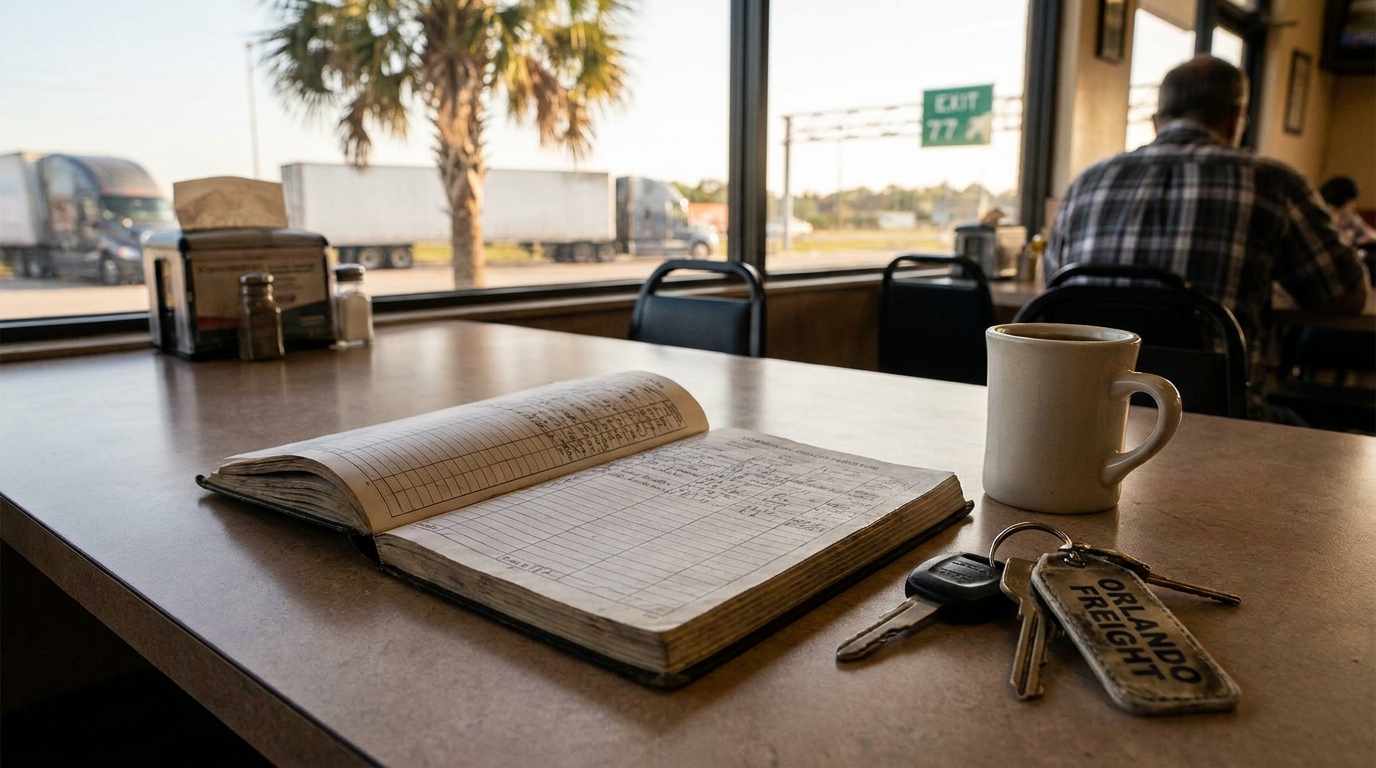
What the 30-Minute Break Rule Actually Requires
The federal break requirement is straightforward but flexible in application. Under 49 C.F.R. § 395.3(a)(3)(ii), property-carrying commercial drivers may not drive after 8 cumulative hours without at least a 30-minute interruption. This requirement is part of 49 C.F.R. Part 395, which governs hours of service nationwide. The same rule applies to drivers hauling freight through Orlando as anywhere else in the country.
The break does not require complete idleness. Under 2020 revisions, the qualifying interruption can be satisfied using on-duty not driving time, not just off-duty time. Time during a roadside inspection counts if the driver is stopped for at least 30 consecutive minutes. This change gave drivers more practical compliance options while requiring a genuine pause from driving.
💡 Pro Tip: If driver fatigue played a role in your crash, ask your attorney about requesting the driver’s logbook and electronic logging device (ELD) data early. These records show whether the required break was taken.
How Drivers Can Combine Duty Statuses
A qualifying break must run for 30 consecutive minutes but can combine different non-driving statuses. Drivers may use off-duty, sleeper berth, or on-duty not driving statuses to reach 30 consecutive minutes. Learn more on the FMCSA page explaining whether the 30-minute break must be consecutive.
A simple example illustrates the flexibility. A driver could use 10 minutes off-duty, followed by 20 minutes fueling and completing paperwork as on-duty not driving time, provided the periods are consecutive. Qualifying statuses include:
- Off-duty time
- Sleeper berth time
- On-duty not driving time (roadside inspection, fueling)
- Any combination, provided the 30 minutes are consecutive
Hours of Service Rules for Truck Drivers in Florida
Florida adopts federal standards directly rather than creating separate break rules. The 30-minute break requirement comes from federal FMCSA regulations applying uniformly across all states. Florida law requires commercial motor vehicle owners and drivers on public highways engaged in interstate commerce to comply with 49 C.F.R. parts 382-386 and 390-397. Read the controlling state law in Florida Statutes Chapter 316.
The obligation extends to intrastate drivers. Under FL § 316.302(1)(b), drivers in intrastate commerce are subject to rules in 49 C.F.R. parts 382-386 and 390-397, as they existed on December 31, 2023. The 30-minute break obligation applies to nearly all commercial truck drivers in the Orlando area, subject to limited exceptions.
| Type of Operation | Governing Authority | 30-Minute Break Applies? |
|---|---|---|
| Interstate commercial freight | FMCSA via FL § 316.302(1)(a) | Generally yes |
| Intrastate commercial freight | FMCSA standards via FL § 316.302(1)(b) | Generally yes |
| Qualifying short-haul drivers | 49 C.F.R. § 395.1(e)(1) | Generally no |
Weekly Limits for Intrastate Florida Drivers
Florida adds weekly on-duty limits to the federal break rule. Under FL § 316.302(2)(c), intrastate commercial drivers may not drive after being on duty more than 70 hours in 7 consecutive days, or 80 hours in 8 consecutive days. Thirty-four consecutive hours off duty ends any such period. These limits work alongside the 30-minute break rule to reduce driver fatigue.
A narrow agricultural exemption exists but rarely applies to freight haulers. Florida exempts operators transporting unprocessed agricultural products or livestock during harvest periods within the state. Motor carriers must provide time records to the Florida Department of Highway Safety and Motor Vehicles upon request. This exemption generally excludes ordinary commercial freight truckers in Orlando.
Exceptions That May Apply to Orlando Drivers
The most common exception is the short-haul rule. Passenger and property carriers qualifying for the short-haul exception under 49 C.F.R. § 395.1(e)(1) are not required to use a RODS, ELD, or take a 30-minute break. This applies to local Orlando drivers operating within the short-haul radius who return to their work-reporting location within allowed time.
💡 Pro Tip: Whether a driver qualifies for the short-haul exception depends on details like distance traveled and hours worked. Don’t assume exemption simply because they drove locally.
Who the Federal Rules Generally Cover
The federal framework reaches most commercial vehicles, not just large tractor-trailers. Drivers must follow hours-of-service regulations when operating a commercial motor vehicle used in business and interstate commerce that weighs 10,001 pounds or more, has a gross vehicle weight rating of 10,001 pounds or more, or transports passengers or hazardous materials. Our discussion of hours of service rules for truck drivers in Florida breaks down daily and weekly limits in detail.
Why Break Violations Matter After an Orlando Truck Crash
A missed break provides powerful evidence of negligence. To recover compensation, injured parties must prove duty, breach, causation, and damages. When drivers violate federal safety rules like the 30-minute break requirement, that violation may establish breach of the duty to operate safely. Outcomes depend on specific facts, and Florida’s comparative fault principles may affect recovery.
Fatigue cases hinge on records that disappear quickly. Logbooks, ELD data, dispatch records, maintenance files, and video can show whether a driver was over their limit or skipped required rest. Timely preservation requests to carriers prevent evidence from being overwritten or destroyed. Because trucking companies and insurers move fast, injured parties should act promptly.
💡 Pro Tip: Save everything from the scene, photos, the police report number, and witness names. These details support fatigue claims before formal evidence requests are sent.
Identifying Every Responsible Party
Liability may extend beyond the driver. Depending on facts, the motor carrier, cargo loader, maintenance contractor, or parts manufacturer may share responsibility. A carrier that pressured a driver to skip mandatory breaks or failed to monitor hours of service could face liability for negligent practices.
Frequently Asked Questions
-
Does the 30-minute break apply to local Orlando delivery drivers?
Often yes, but not always. Drivers qualifying for the short-haul exception under 49 C.F.R. § 395.1(e)(1) are generally not required to take the 30-minute break. Whether a particular driver qualifies depends on their route and schedule.
-
Can the break be spent doing paperwork or fueling?
Generally yes. FMCSA materials state the break may be satisfied by any non-driving period of 30 consecutive minutes, including on-duty not driving, off-duty, sleeper berth, or any combination. The driver simply cannot be driving for the full 30 minutes.
-
Is the 30-minute break a Florida law or a federal law?
It is a federal rule that Florida enforces through state statute. The break is required under 49 CFR § 395.3(a)(3)(ii) for property-carrying commercial drivers. Florida adopts these federal standards for interstate and intrastate drivers.
-
How can I prove a trucker skipped a required break?
Driver logs and electronic data usually tell the story. ELD records, logbooks, and dispatch communications reveal whether a break was taken. Because this evidence can be lost, early preservation is important.
-
Does a break violation guarantee my case will succeed?
No. A violation may support a negligence claim but doesn’t guarantee any outcome. You must still prove causation and damages, and Florida’s comparative fault rules may reduce recovery. Results depend on the unique facts of each case.
Moving Forward After a Fatigue-Related Collision
The 30-minute rest break is a meaningful safeguard with serious consequences when ignored. Federal law requires property-carrying drivers to interrupt driving after 8 cumulative hours, and Florida enforces these FMCSA break rules through Chapter 316. While exceptions like the short-haul rule exist, the obligation reaches most commercial drivers in the area. When a violation contributes to a crash, it can become central to an injury claim, though results depend on facts and available evidence.
If a tired trucker caused your injuries, an experienced Orlando truck accident attorney at Norden Leacox can help you pursue accountability and full recovery. Call us today at 407-801-3000 or request your confidential consultation to learn how we can protect your rights and preserve the evidence your case needs.