


Norden Leacox Accident & Injury Law | September 17, 2026 | Truck Accidents
When Freight Moves, Everything Changes: Building Proof After a Shifting Load Crash
Key Takeaways: Proving a load shift caused your Orlando truck accident injuries requires connecting a statutory duty, breach, and reconstruction evidence. Florida’s FL Sec. 316.520 requires vehicles be loaded so cargo cannot shift, drop, or escape. Proof comes from bills of lading, securement records, scale tickets, scene photographs, ECM data, and video, analyzed with expert reconstruction. Liability may extend to the motor carrier, shipper, loading contractor, broker, or equipment manufacturer, with damages apportioned under Florida’s modified comparative fault framework. Most negligence claims accruing after March 24, 2023 must be filed within two years under Fla. Stat. § 95.11(5)(a).
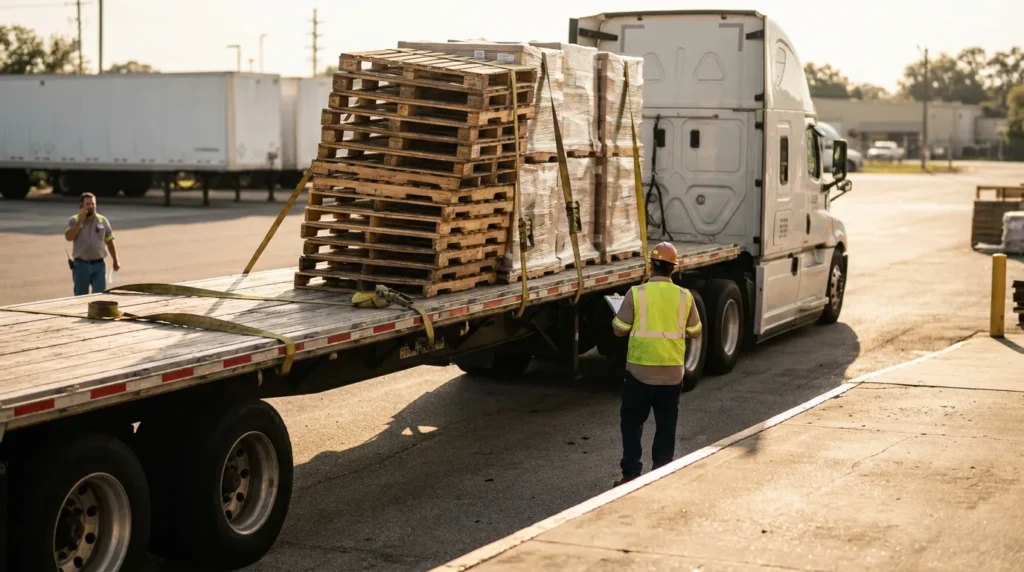
A load shift crash rarely announces itself. One moment traffic on I-4 or the 408 is flowing, and the next a trailer is jackknifing or tipping because cargo moved when it should not have. Proving a shifted load caused your injuries requires connecting a statutory duty to secure cargo, evidence the duty was breached, and reconstruction showing the breach caused the collision.
If a shifting freight crash left you injured in Central Florida, the timeline for preserving evidence is short. The team at Norden Leacox handles complex commercial vehicle claims and can move quickly to secure load manifests, securement logs, and electronic data before they disappear. Call 407-801-3000 or reach out to our team today to discuss what happened.
The Florida Statute That Defines the Standard of Care
Florida law prohibits driving any vehicle on a highway unless loaded to prevent cargo from dropping, shifting, leaking, or escaping. FL Sec. 316.520(1) supplies a concrete standard of care. When freight moves and causes a rollover or loss of control, that may be evidence of failure to meet the requirement.
The statute binds both "every owner and driver, severally" under FL Sec. 316.520(1)-(2), meaning a motor carrier owning the trailer may face exposure alongside the driver. It ties Florida’s standard to federal FMCSA securement rules governing tiedowns, working load limits, and commodity-specific requirements.
FL Sec. 316.520(3) treats violations as noncriminal traffic infractions, but willful violations resulting in serious bodily injury or death constitute criminal traffic offenses and second-degree misdemeanors. A citation is not proof of civil liability, and plea dispositions of noncriminal infractions are generally inadmissible in civil proceedings. Evidence a driver violated a safety statute in the Florida motor vehicle traffic statutes may be considered by a jury as negligence evidence.
Cargo Securement Violations Truck Accident Liability: What Actually Has to Be Proven
Establishing cargo securement violations truck accident liability requires more than showing freight moved. Defense may argue the load was properly secured and an outside factor caused the shift. Overcoming that argument depends on documentary evidence and technical analysis.
The Documents That Tell the Story
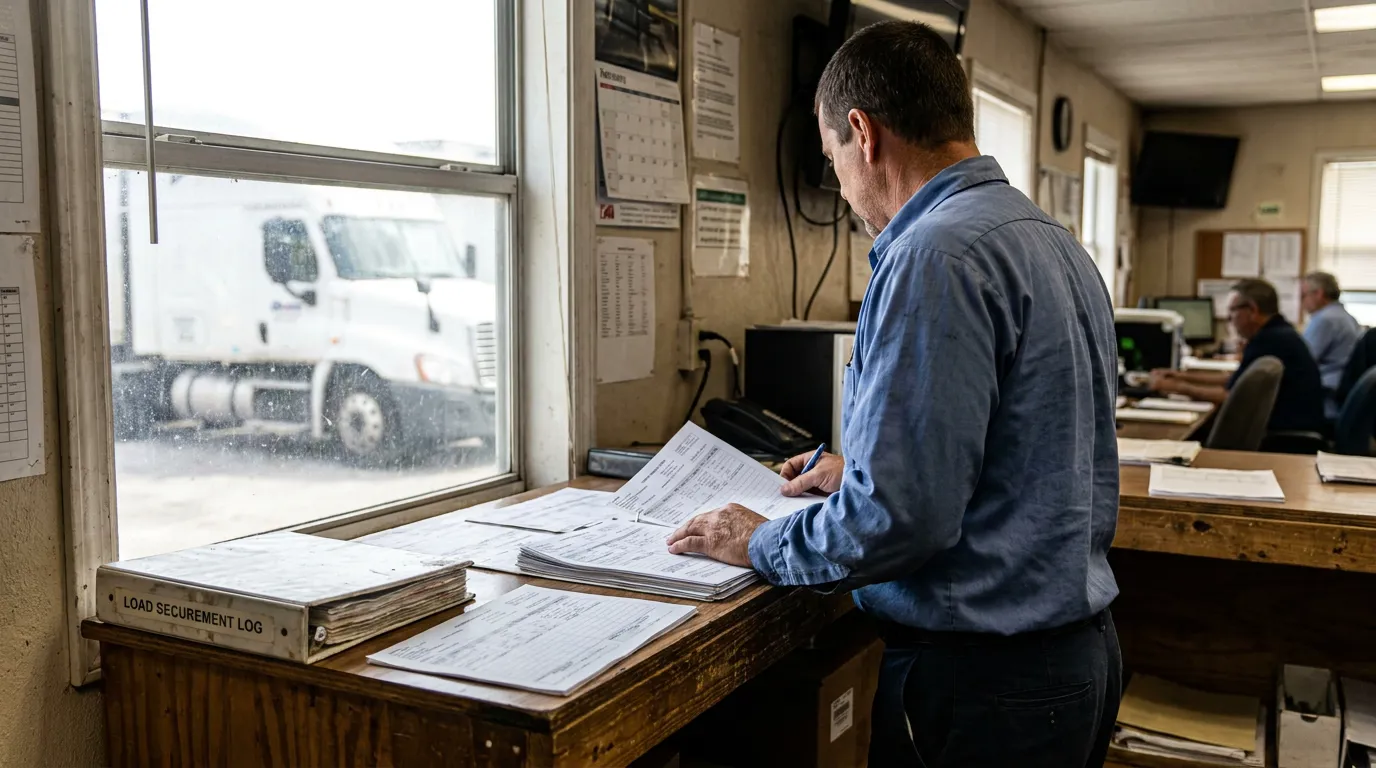
Load-shift cases turn on records generated before the truck left the terminal:
- Bills of lading and load manifests showing what was hauled, weight, and distribution
- Securement inspection records and pre-trip/post-trip reports
- Weigh station tickets, scale receipts, and overweight citations
- Photographs of tiedowns, straps, chains, blocking, and bracing at the scene
- ECM data showing speed, braking, and steering inputs before impact
- Dashcam, trailer-mounted, or nearby surveillance video
Overloading evidence deserves particular attention. Under FL Sec. 316.545(3)(a), violators are "conclusively presumed to have damaged the highways of this state," with penalties per pound of excess weight. While this presumption establishes highway-use penalties rather than personal injury causation, overloading proof may corroborate improper loading when paired with reconstruction.
Where Accident Reconstruction Fits
Reconstruction analysis translates physical evidence into causation narratives. Engineers evaluate rollover threshold, center-of-gravity migration, load distribution, and tire marks to determine whether trailer rollover preceded or followed loss of control. Scene photographs of debris fields, strap failures, and trailer deformation supply the inputs, which is why understanding what evidence truck accident victims need is valuable immediately after a crash.
💡 Pro Tip: Send a written preservation letter to the carrier early. ECM data can be overwritten, and inspection records are retained only for limited periods.
Identifying Every Party Who Touched the Load
Freight often passes through several hands, and each may create liability. Potentially responsible parties include the driver, motor carrier, shipper that loaded the trailer, third-party loading contractor, broker, or manufacturer of failed securement equipment. Florida’s definition of negligence action may support alternative theories. FL Sec. 768.81(1)(c) defines "negligence action" to include "a civil action for damages based upon a theory of negligence, strict liability, products liability," meaning load-shift claims may proceed on multiple theories simultaneously.
| Potentially Liable Party | Typical Theory | Key Evidence |
|---|---|---|
| Driver | Failure to inspect or re-secure load | Inspection reports, logs, ECM data |
| Motor carrier | Negligent training, supervision, dispatch | Policies, training files, prior violations |
| Shipper or loading contractor | Improper loading or weight distribution | Manifests, loading records, scale tickets |
| Equipment manufacturer | Defective tiedown or securement device | Failed hardware, recall history, testing |
How Comparative Fault Shapes an Orlando Injury Claim
Florida apportions damages according to each party’s share of responsibility. Under Fla. Stat. §768.81 and Fabre v. Marin, defendants generally pay damages "only in proportion to the percentage of fault by which that defendant contributed to the accident."
Florida now applies modified comparative negligence to most negligence actions filed after March 24, 2023: claimants found more than 50 percent at fault are barred from recovery, and fault at or below that threshold reduces recovery proportionally. Medical negligence actions are excepted.
Nonparties on the Verdict Form
Defendants may place non-sued third parties (Fabre defendants) on verdict forms if properly identified and pleaded. Under Fla. Stat. §768.81(3)(a)(2), "a defendant must prove at trial, by a preponderance of the evidence, the fault of the nonparty in causing the plaintiff’s injuries." Florida courts permit apportionment to parties the plaintiff cannot sue directly.
This matters when a loading employer is immune. Fault may be measured by comparing percentages to all contributing entities, regardless of joinder. Thorough causation evidence protects the injured party’s recovery. Florida abandoned contributory negligence in Hoffman v. Jones, 280 So. 2d 431 (Fla. 1973), under which even one percent fault barred recovery. The modern comparative fault apportionment framework remains more forgiving, though 2023 amendments narrowed it by barring recovery for claimants more than 50 percent at fault.
Deadlines That Can End a Claim Before It Starts
Negligence actions in Florida generally must be brought within two years. Fla. Stat. § 95.11(5)(a) places negligence actions in the two-year bucket, changed by 2023 HB 837 for causes accruing after March 24, 2023. Claims accruing before that date generally remain subject to the prior four-year period.
Accrual analysis is fact-dependent, and courts interpret tolling narrowly. Related claims from the same crash may carry different deadlines. Wrongful death claims are governed by separate limitations provisions.
If a government vehicle is involved, presuit notice and waiver-of-immunity requirements of Fla. Stat. § 768.28 may apply.
Damages Available Once Causation Is Established
Florida statutorily defines recoverable economic losses in negligence actions. FL Sec. 768.81(1)(b) provides "economic damages" include "past lost income and future lost income reduced to present value; medical and funeral expenses; lost support and services… and any other economic loss that would not have occurred but for the injury." Noneconomic damages, including pain and suffering, may also be recoverable. In motor vehicle cases, PIP no-fault rules under Fla. Stat. § 627.737 limit when noneconomic damages may be sought, generally requiring permanent injury thresholds.
Load-shift collisions frequently produce catastrophic harm because of forces involved when tens of thousands of pounds move unexpectedly. Future care costs often dwarf immediate medical bills.
💡 Pro Tip: Keep a contemporaneous journal of symptoms, missed workdays, and activities you can no longer perform. Insurers challenge subjective complaints, and consistent records created close in time carry more weight.
Working With Counsel Who Knows Commercial Vehicle Litigation
These cases are document-heavy, deadline-driven, and aggressively defended. Norden Leacox has been recognized by Orlando Magazine in its Best of ORL 2026 list as the second-place legal firm in Central Florida among firms with fewer than ten attorneys, and attorneys Mike Vaughn and Zachary Leacox hold invitation-only membership in the American Board of Trial Advocates, which recognizes courtroom experience and commitment to the civil jury system.
An experienced cargo securement violations truck accident liability lawyer can issue preservation demands, retain reconstruction engineers, depose loading personnel, and analyze whether federal securement standards were met.
Frequently Asked Questions
1. How do I know whether cargo actually shifted before the crash?
Physical indicators include debris patterns, broken tiedowns, trailer wall deformation, and load positioning after collision. ECM data and reconstruction analysis help determine sequence.
2. Can I still recover if I was partially at fault?
Potentially. Florida uses modified comparative negligence for most negligence claims filed after March 24, 2023: fault of 50 percent or less reduces recovery proportionally, while fault exceeding 50 percent bars recovery. Outcomes depend on facts.
3. What if the company that loaded the trailer was my employer?
Workers’ compensation immunity may prevent direct suits against your employer, but Florida law allows juries to assess an immune employer’s fault when apportioning damages, provided the nonparty is properly identified and fault proven.
4. How quickly does evidence disappear in a cargo securement failure case?
Very quickly. Electronic data may be overwritten within days, damaged securement hardware is often discarded, and surveillance footage is frequently recycled on short cycles. Prompt preservation demands are essential.
5. Does a traffic citation issued to the driver prove my case?
No. Citations under FL Sec. 316.520 reflect traffic infractions, and dispositions of noncriminal infractions are generally inadmissible in civil cases. Civil liability requires independent proof of duty, breach, causation, and damages, although evidence the securement statute was violated may be relevant to negligence analysis.
Turning Physical Evidence Into a Provable Claim
Proving a load shift caused your injuries is fundamentally an evidence problem. Florida supplies a statutory duty in FL Sec. 316.520, an apportionment framework in FL Sec. 768.81, and a two-year filing window under Fla. Stat. § 95.11(5)(a) for most negligence claims accruing after March 24, 2023. The difficulty lies in gathering manifests, securement records, and electronic data quickly enough to reconstruct what happened.
You do not have to untangle that record alone. Norden Leacox is prepared to investigate your shifting freight crash, identify each potentially responsible party, and pursue the full measure of your damages. Call 407-801-3000 or schedule your consultation now to get started.
Disclaimer: This content is for informational purposes only and is not legal advice. Every case is unique, and results may vary. Consult an attorney about your specific circumstances.