


Norden Leacox Accident & Injury Law | October 23, 2026 | Florida Law
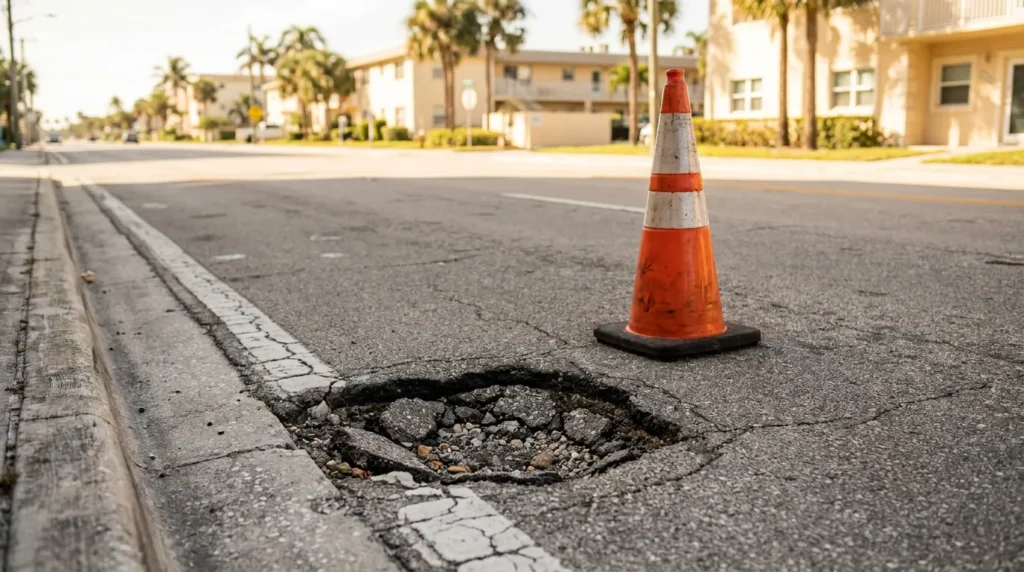
How Florida’s Sovereign Immunity Cap Affects Palm Bay Pothole Crashes
Key Takeaways: Under section 768.28(5)(a), Florida Statutes, the most a city like Palm Bay generally has to pay one person for a pothole crash is $200,000, and all claims from the same incident are capped at $300,000 combined. In 2026, the Legislature passed HB 145, which would have raised these caps to $350,000 per person and $500,000 per incident and changed some deadlines, but Gov. DeSantis vetoed the bill in June 2026, so it did not become law. Under the current statute, written notice generally must go to the agency within 3 years, the agency has 6 months to review the claim, and the lawsuit generally must be filed within 4 years. Negligence claims against private parties generally have a 2-year deadline. A court can enter a judgment above the cap, but the excess can generally only be paid through a claim bill the Legislature may not pass, or a voluntary settlement within the government’s insurance coverage. Punitive damages and prejudgment interest are generally barred against the government.
If a pothole on a city street caused your motorcycle crash in Palm Bay, Florida law generally limits what the city must pay you to $200,000 under the current statute. A 2026 bill that would have raised that limit was vetoed. That limit comes from Florida’s sovereign immunity statute, section 768.28, Florida Statutes, which covers negligence claims against the state and its agencies and subdivisions, including cities such as Palm Bay. For riders with serious injuries such as a traumatic brain injury, spinal cord injury, or amputation, medical bills and lost income can go well past that amount. Understanding the cap, the deadlines, and the claim bill process may help you protect the recovery still available.
If you were hurt on a damaged Palm Bay road, Norden Leacox can review your claim with you and explain your options. Call 407-801-3000 or contact us now to schedule a free consultation.
What the $200,000 Cap Means for Injured Riders
Section 768.28(5)(a), Florida Statutes, says the state and its agencies or subdivisions will not pay a claim or judgment by any one person that exceeds $200,000. The same subsection sets a combined limit of $300,000 for all claims arising from the same incident. In 2026, the Legislature approved HB 145, which would have raised these limits to $350,000 per person and $500,000 per incident, but Gov. DeSantis vetoed the bill in June 2026, so the existing limits remain in place, including for claims against the City of Palm Bay. Florida has waived sovereign immunity for tort claims, so a city can be liable "in the same manner and to the same extent as a private individual under like circumstances." That waiver has limits, and the caps are the most important of them.
Why Palm Bay and Brevard County Fall Under the Cap
The caps apply to Palm Bay because section 768.28(2), Florida Statutes, defines "state agencies or subdivisions" to include counties and municipalities. A crash caused by a neglected pothole on a city road, county road, or state highway generally falls under the same framework. Which entity is responsible depends on who owns and maintains the road, and identifying it early can shape the whole claim.
The Per-Incident Limit When Multiple People Are Hurt
When several people are hurt in one event, section 768.28(5)(a) caps total payments to all of them at $300,000. If a rider and a passenger are both seriously injured, their combined recovery from the government may not exceed that amount.
Building a Pothole Motorcycle Accident Claim in Florida
A pothole motorcycle accident claim in Florida generally requires proof of the same negligence elements that apply to any injury case. You must generally show:
- Duty: The government entity was responsible for maintaining the road.
- Breach: The entity knew, or reasonably should have known, about the pothole and did not repair it or warn drivers within a reasonable time.
- Causation: The road defect caused the crash and your injuries.
- Damages: You suffered documented losses, such as medical expenses, lost wages, pain and suffering, and motorcycle damage.
Claims against governments involve issues that private claims do not. Courts may look at whether the defect involved routine operational maintenance, which can support liability, or a planning-level decision, which is generally immune. Photos of the pothole, prior complaints, repair records, and accident reconstruction can help prove notice and causation.
Why Medical Evidence Carries So Much Weight
Thorough medical documentation is often the foundation of a strong claim, especially when damages may exceed the cap. Emergency records, imaging, surgical reports, and opinions from treating physicians help establish the severity of your injuries and long-term needs. This record may later support a request to the Legislature for the excess amount.
💡 Pro Tip: Photograph the pothole from several angles with an object for scale, such as a shoe or a coin, before the city repairs it. Once a defect is fixed, that evidence can disappear quickly.
How Comparative Fault Can Reduce Recovery
For negligence actions filed after March 24, 2023, Florida follows a modified comparative negligence system under section 768.81(6), Florida Statutes. A claimant found more than 50 percent at fault generally cannot recover damages, and a claimant found 50 percent or less at fault has their award reduced by their share of responsibility. Government defendants may argue that the rider was speeding or should have seen the hazard, so evidence about road conditions, lighting, and visibility can matter.
Deadlines and Notice Rules You Cannot Overlook
Claims against government entities carry procedural requirements that differ from ordinary injury claims. Under section 768.28(6), Florida Statutes, you generally must present a written claim to the responsible agency within 3 years after the claim accrues. The statute exempts claims against municipalities and counties from the separate requirement of notice to the Department of Financial Services. Written notice and a denial are generally conditions precedent to filing suit, and an agency that does not make a final disposition within 6 months is treated as having denied the claim.
Government claims also have their own filing deadline for the lawsuit. Section 768.28(14), Florida Statutes, bars a negligence claim against the state or its subdivisions unless suit is filed within 4 years after the claim accrues. HB 145 (2026) would have changed the limitations periods for some tort actions against government entities, but it was vetoed and did not become law. Section 95.11, Florida Statutes, generally requires a negligence action against a private party to be filed within two years if the cause of action accrued after March 24, 2023. If another driver or a private contractor shares responsibility, the shorter deadline may apply to that part of the case.
| Requirement | Governing Authority | General Time Frame |
|---|---|---|
| Written notice to government agency | § 768.28(6), Fla. Stat. | Within 3 years of accrual |
| Agency review period | § 768.28(6), Fla. Stat. | 6 months, then deemed denied |
| Lawsuit against government entity | § 768.28(14), Fla. Stat. | Within 4 years of accrual |
| Negligence suit against private party | § 95.11, Fla. Stat. | Generally within 2 years |
Exceptions that pause or extend these deadlines are narrow, and courts generally interpret them strictly. Missing either the notice window or the lawsuit deadline can put your recovery at risk.
💡 Pro Tip: Mark the 6-month agency review period on your calendar as soon as your notice is delivered. The waiting period affects when a lawsuit can be filed, so it needs to fit inside your overall filing deadline.
Recovering More Than the Cap Through a Claim Bill
A court can enter a judgment above the cap, but the government generally cannot pay the excess without legislative approval. Section 768.28(5), Florida Statutes, allows a judgment above the caps to be reported to the Legislature, and payment of the excess requires "further act of the Legislature." That process is called a claim bill. For riders with catastrophic injuries, it may be the only way to seek full compensation from the government.
Claim bills are discretionary, and no one can guarantee that one will pass. Many bills take years or never pass at all. A well-documented judgment may strengthen a request, but the outcome remains uncertain.
Insurance Settlements Above the Cap
Section 768.28(5) also lets a government entity agree to settle a claim within the limits of its insurance coverage without further legislative action. However, buying insurance does not waive sovereign immunity or raise liability limits. Any settlement above the cap is voluntary, so riders should keep their expectations realistic.
Other Limits That Can Shrink a Government Recovery
Beyond the dollar caps, section 768.28(5) bars punitive damages and prejudgment interest against the government. Because these limits can reduce net recovery, it is important to identify every possible source of compensation, such as your own uninsured motorist coverage or a negligent private contractor.
The waiver framework also works in the other direction. Under section 768.14, Florida Statutes, when a government entity files a tort lawsuit, it waives sovereign immunity to the extent that the defendant can counterclaim for damages from the same transaction or occurrence. You can review the full text of Florida’s sovereign immunity statutes to see how these provisions fit together.
Working with a pothole motorcycle accident claim Florida lawyer can help you keep track of these overlapping rules. An attorney may identify the correct government defendant, prepare a proper notice, and look for additional insurance or third-party claims outside the cap. You can learn more about how a pothole motorcycle accident claim Florida lawyer approaches these cases.
Practical Steps After a Pothole Crash in Palm Bay
The steps you take in the first days after a crash can help preserve your claim. Get medical care right away, even if your injuries seem minor, because some conditions, such as brain injuries, can show up later. Keep every bill, receipt, and record of missed work. Avoid giving recorded statements to government representatives or insurers before you understand your rights.
Reviewing the general limitations periods is also a good idea. Florida’s statute of limitations chapter sets out time limits for many civil actions. For more educational resources, visit our motorcycle injury legal guides page.
💡 Pro Tip: Ask the city for records of prior complaints or repair requests about the specific stretch of road. These records can help show the government knew about the hazard.
Frequently Asked Questions
1. Does the $200,000 cap apply to all pothole claims in Palm Bay?
Generally, yes, if the road belongs to a government entity. A 2026 bill that would have raised the cap to $350,000 was vetoed and did not become law. Claims against private contractors or other drivers are generally not subject to this cap.
2. Can I get more than $200,000 if my injuries are catastrophic?
A court may enter a judgment above the cap, but generally only the Legislature can authorize payment of the excess through a claim bill. A government entity may also voluntarily settle within its insurance coverage. Neither outcome is guaranteed.
3. How long do I have to notify the city?
Section 768.28(6), Florida Statutes, generally requires written notice to the agency within 3 years after the claim accrues. This is separate from the deadline for filing suit under section 768.28(14), which is currently 4 years.
4. Can my own fault reduce my recovery?
Yes, under Florida’s modified comparative negligence rule in section 768.81(6), Florida Statutes. A rider found more than 50 percent at fault generally cannot recover, and a lower share of fault reduces the award.
5. Can I seek punitive damages against the city?
Generally, no. Section 768.28(5) bars punitive damages and prejudgment interest against government entities.
Protecting Your Recovery Under Florida’s Caps
Florida’s sovereign immunity statute limits most pothole crash recoveries against Palm Bay and other governments to $200,000 per person and $300,000 per incident. The 2026 amendments that would have raised those limits to $350,000 and $500,000 were vetoed and did not become law. Strict notice rules, a 6-month agency review period, and separate filing deadlines add complexity. Claim bills and insurance settlements may offer a path beyond the cap, but they are discretionary. An early legal review can help you preserve every option available to you.
If a road defect caused your motorcycle crash, Norden Leacox is ready to talk with you about what comes next. Call 407-801-3000 or schedule your free consultation today.
Disclaimer: This content is for informational purposes only and is not legal advice. Every case is unique, and results may vary. Consult an attorney about your specific circumstances.