


Norden Leacox Accident & Injury Law | November 6, 2026 | Personal Injury
How Crash Reconstruction Can Shape a Cocoa Motorcycle Injury Claim
Key Takeaways: A motorcycle accident reconstruction expert in Cocoa, FL, uses physics, engineering, and scene evidence to explain how a crash happened, how fast each vehicle was going, and which choices caused the collision. They examine skid marks, vehicle damage, resting positions, event data recorders, video footage, and safety gear damage, adjusting their methods for motorcycle dynamics. Their findings can help prove breach and causation and may affect fault percentages under Florida’s modified comparative negligence rule, which generally bars recovery for a rider found more than 50 percent at fault, with limited exceptions. Florida law generally keeps the police crash report out of trial evidence, so independent reconstruction testimony, if admitted, can help show fault. Reconstruction may also uncover other responsible parties, each with its own deadlines and liability rules. Physical evidence fades quickly, so preserving gear, photos, and video early can help protect a rider’s claim.
A motorcycle accident reconstruction expert studies the physical evidence from a crash to explain how it happened, how fast each vehicle was moving, and which choices led to the collision. In Cocoa FL, insurers often argue that the rider was speeding or careless. Under Florida’s comparative fault rules, those arguments can lower a recovery or, if the rider is found more than 50 percent at fault, generally bar it. Reconstruction turns skid marks, vehicle damage, and scene measurements into a scientific account of what caused the crash.
If you or a loved one was hurt in a motorcycle crash, Norden Leacox can review how the collision happened and what evidence may support your claim. Call 407-801-3000 or contact us now for a free consultation.

What a Motorcycle Accident Reconstruction Expert Actually Examines
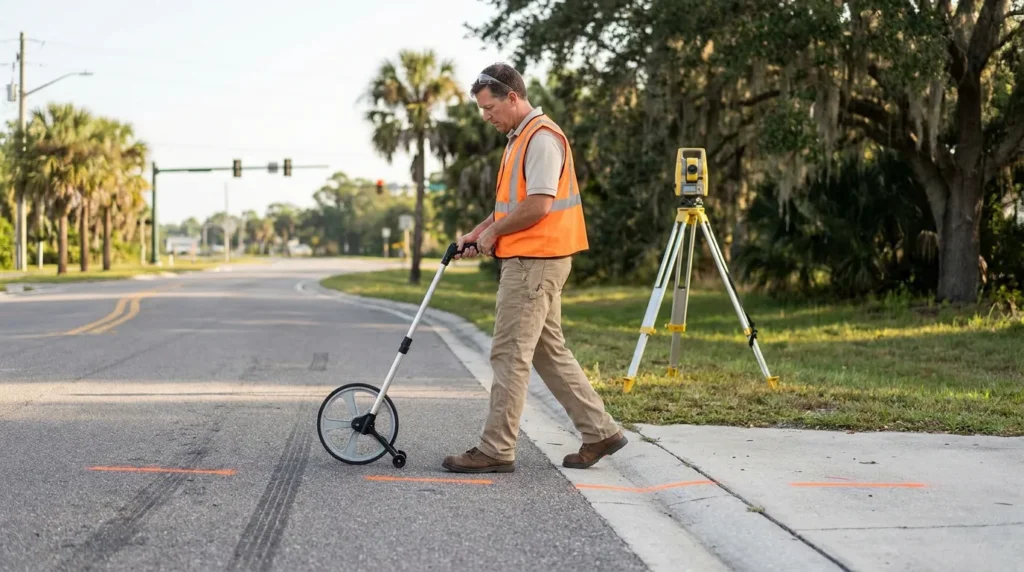
A reconstructionist uses physics, engineering, and scene data to rebuild the moments before, during, and after impact. The goal is to answer disputed questions with measurable evidence instead of competing memories. The analysis may include:
- Skid marks, yaw marks, and gouges in the pavement
- Resting positions of the motorcycle, the other vehicle, and the rider
- Crush damage and paint transfer on each vehicle
- Event data recorder downloads, surveillance video, and dashcam footage
- Sight lines, signal timing, road design, and lighting conditions
- Helmet and protective gear damage that may show how injuries occurred
Each piece of data helps estimate speed, angle of impact, and reaction time. For example, a reconstructionist may calculate whether a left-turning driver had enough time and distance to see an approaching motorcycle, which may become central to proving breach of a duty of care. To learn how this evidence fits with medical records and witness statements, see our guide on what evidence strengthens a claim after a Cocoa crash.
Why Motorcycles Require a Different Kind of Crash Reconstruction
Motorcycles move and crash differently from cars, so methods built for four-wheeled vehicles often need adjustment. A motorcycle depends on lean angle, balance, and rider input to stay upright. An analyst who ignores these dynamics may reach the wrong conclusion about speed or fault.
Countersteering and Evasive Maneuvers
Riders turn by countersteering, which means briefly pushing the handlebar in the opposite direction to start a lean. According to the dynamics overview of the motorcycle as a single-track vehicle, steering and stability rely heavily on this technique. Insurers sometimes claim a rider "should have swerved." A careful reconstruction can test whether an evasive move was physically possible in the available time and space.
Braking, Load Transfer, and Wheel Lockup
Motorcycle braking involves separate front and rear systems, and hard braking shifts weight forward. A locked rear wheel can leave a skid mark that looks different from a car’s, and a front-wheel lockup may cause a fall before impact. Reconstructionists analyze these marks to estimate pre-crash speed and determine whether the rider responded reasonably to a sudden hazard.
Safety Gear and Anti-Lock Brakes
Helmets, protective clothing, and anti-lock braking systems can affect both injury outcomes and the evidence left behind. ABS may reduce or eliminate skid marks, which changes how speed is calculated. Helmet damage patterns, together with medical testimony, can also help link crash forces to a specific injury, such as a traumatic brain injury.
💡 Pro Tip: Keep your helmet, riding jacket, gloves, and boots in the condition they were in after the crash. Do not clean, repair, or discard them, because they may serve as physical evidence of impact forces.
How Reconstruction Evidence Connects to Florida Negligence Law
Reconstruction findings can help prove key elements of negligence: duty, breach, causation, and damages. Drivers generally owe others on the road a duty of reasonable care. A reconstruction may help show breach, such as running a red light, and causation. Medical records and treating physician opinions may then support causation of injuries and damages.
Modified Comparative Negligence
Florida uses a modified comparative negligence system, so the fault percentage assigned to the rider can decide whether any recovery is available. Under Fla. Stat. § 768.81(6), a party found greater than 50 percent at fault for their own harm generally may not recover damages in a negligence action, although this bar does not apply to medical negligence claims. A rider found 50 percent or less at fault generally has damages reduced in proportion to their fault. You can review these provisions in Florida’s comparative fault statutes. Reconstruction evidence on speed, lane position, and right-of-way may therefore shift fault percentages significantly.
Alcohol and Drug Allegations
Impairment allegations can also threaten recovery under Florida law. Under Fla. Stat. § 768.36, a plaintiff whose blood or breath alcohol level was 0.08 or higher, or whose normal faculties were impaired by alcohol or drugs, and who as a result was more than 50 percent at fault for their own harm, may not recover damages. When impairment is alleged, reconstruction is often paired with toxicology evidence to test whether impairment actually caused the crash.
Why a Police Report Alone Is Often Not Enough
Florida law generally prevents the official crash report from being used as evidence at trial. Under Fla. Stat. § 324.051(1)(a), officers must forward reports of reportable crashes within 10 days after completing their investigation. Under § 324.051(1)(b), no such report may be used as evidence in any trial arising out of a crash, although an officer may testify about statements made by a party, subject to the applicable rules of evidence.
This gap is one of the main reasons an independent reconstruction expert may be needed. Officers at the scene may have limited time, and their conclusions sometimes reflect assumptions about riders. An independent analysis may fill the gap with expert testimony grounded in measurable data, provided it meets Florida’s standard for admitting expert opinions.
Deadlines and Special Liability Rules That Reconstruction Can Uncover
Reconstruction sometimes reveals additional responsible parties, and each may carry different legal rules. The table below summarizes several Florida provisions that may apply.
| Situation | Florida Statute | Key Rule |
|---|---|---|
| Government vehicle or road design defect | Fla. Stat. § 768.28(6), (14) | Negligence claims generally require written pre-suit notice to the agency (and, in many cases, the Department of Financial Services) and must generally be filed within the statutory period; damages are capped by statute. Recent amendments may change these periods for newer claims, so confirm the current deadline |
| Borrowed vehicle driven by a permissive user | Fla. Stat. § 324.021(9)(b)(3) | A natural-person owner’s vicarious liability is generally capped at $100,000 per person, $300,000 per incident, and $50,000 property damage, plus up to an additional $500,000 in economic damages if the permissive user has no insurance or less than $500,000 in combined coverage |
| Defendant absent from Florida or concealed | Fla. Stat. § 95.051(1) | Limitations period may be tolled only in limited, listed circumstances |
| Fatal crash | Fla. Stat. §§ 768.16, 768.26 | The personal representative may bring a wrongful death claim under § 768.19 for the benefit of survivors and the estate, with damages defined in § 768.21 |
Government claims follow their own timeline, separate from the general negligence limitations period. Claims against the state, its agencies, or local governments involve written notice steps and waiting periods that must be completed before a lawsuit can be filed. Missing any step may jeopardize the claim.
Tolling under Fla. Stat. § 95.051(1) is not automatic, and courts generally interpret its exceptions narrowly. Riders should assume the clock is running and act promptly, since Florida’s general negligence limitations period is two years for causes of action accruing after March 24, 2023.
💡 Pro Tip: If your crash involved a pothole, missing signage, or a poorly designed intersection, write down the exact location and take photos quickly. Road conditions can be repaired within weeks, which may erase evidence of a government entity’s role.
Linking Liability Evidence to Your Damages
Reconstruction addresses how the crash happened, while medical evidence addresses what it cost you. Fla. Stat. § 768.0427 governs the evidence that may be offered to prove past and future medical expenses. For example, evidence of past bills is generally limited to amounts actually paid or owed, and treatment under letters of protection triggers extra disclosure requirements. Together, strong liability and damages evidence can support claims for medical costs, lost wages, pain and suffering, and property damage.
Working with a knowledgeable motorcycle accident attorney can help coordinate these two sides of a case. Counsel may be able to preserve the motorcycle, request video before it is overwritten, and retain qualified reconstruction professionals early.
Frequently Asked Questions
1. When should a motorcycle accident reconstruction expert be brought into my case?
In many cases, earlier is better because physical evidence fades quickly. Skid marks can wear away, vehicles may get repaired, and surveillance footage may be deleted.
2. Can reconstruction help if the insurer says I was speeding?
Yes, reconstruction may test speed claims using measurable evidence. Analysts can estimate speed from skid marks, crush damage, and data recorders. Because Fla. Stat. § 768.81(6) generally bars recovery for a party more than 50 percent at fault, disputing an inflated fault percentage can be critical.
3. What if the motorcycle crash was fatal?
Surviving family members may be able to recover damages under the Florida Wrongful Death Act, Fla. Stat. §§ 768.16, 768.26, through a claim brought by the decedent’s personal representative. Reconstruction can help establish causation and fault.
4. Does the police report decide who was at fault?
No. The police report generally cannot be used as trial evidence under Fla. Stat. § 324.051(1)(b). It may still guide an investigation and insurance discussions. Independent reconstruction testimony, if admitted, may help prove fault.
Putting the Evidence to Work for Your Recovery
Crash reconstruction may help turn a disputed motorcycle collision into a clear, evidence-based account of what happened. In Cocoa FL, that analysis may affect fault percentages, reveal additional responsible parties, and address impairment or speeding allegations. Acting promptly helps protect your options.
The team at Norden Leacox is ready to discuss how reconstruction evidence may apply to your motorcycle crash. Call 407-801-3000 or schedule your free consultation today.
Disclaimer: This content is for informational purposes only and is not legal advice. Every case is unique, and results may vary. Consult an attorney about your specific circumstances.