


Norden Leacox Accident & Injury Law | November 7, 2026 | Truck Accidents
Proving a Tailgating Bobtail Truck Caused Your Orlando Crash
Key Takeaways: To prove a bobtailing trucker was following too closely, you generally need hard evidence of the gap between the vehicles, the truck’s speed, and the road conditions. That evidence can include dashcam footage, engine control module data, ELD logs, witness statements, and carrier safety records. A semi-tractor without a trailer can take longer to stop than drivers expect, so a short gap can lead to a rear-end crash. Florida’s Fla. Stat. § 316.0895 bars following more closely than is reasonable and prudent. It also sets a 300-foot minimum for trucks following other trucks or towing vehicles outside business or residence districts. Statements a trucker gives police to complete a crash report are generally privileged and can’t be used in a civil trial, so independent evidence matters even more. The trucking company may also share liability for hiring, training, or safety failures. Florida generally allows two years to file negligence and wrongful death lawsuits, and key evidence can disappear quickly, so act early.
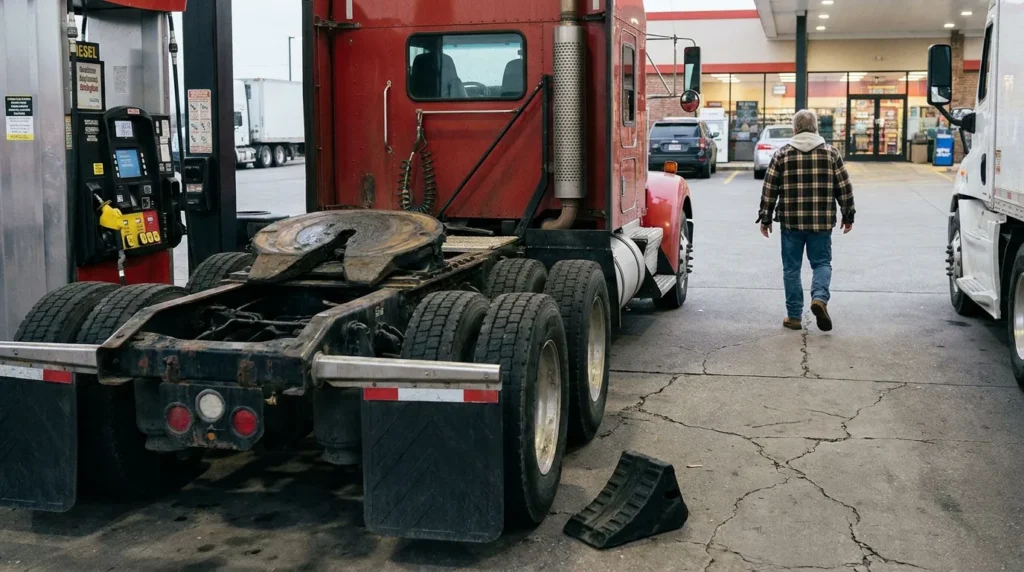
To prove a bobtailing trucker was following too closely, you generally need evidence that shows the gap between the vehicles, the truck’s speed, and the road conditions at the moment of impact. Bobtailing means driving a semi-tractor without a trailer attached. Many people assume an unloaded tractor stops faster, but it can take longer to stop than drivers expect. When a bobtailing trucker rear-ends you on I-4, the 408, or a rural road outside Orlando, strong cases usually rest on dashcam video, electronic data, witness accounts, and the trucking company’s own safety records.
If a tailgating truck hit you or someone you love, the attorneys at Norden Leacox can help you preserve evidence before the trucking company’s insurer shapes the story. Call 407-801-3000 or contact us now to talk through what happened and what to do next.
Why Bobtail Truck Crashes Raise Unique Fault Questions
A bobtail tractor handles differently from a loaded tractor-trailer. A tractor’s brakes are designed to work with a trailer’s weight pressing down on the rear axles. Without that weight, the rear wheels may have less grip, and stopping can take longer than the driver expects. A trucker who keeps a short gap may cause a rear-end crash.
These crashes often lead to disputes over who caused the collision. In Florida rear-end crashes, the law generally presumes the rear driver was negligent. But the trucking company can try to rebut that presumption, for example by arguing that you stopped suddenly for no reason or cut in front of the truck. With your lawyer’s help, you generally need to show that the trucker failed to leave a safe following distance, and that this failure caused your injuries and losses.
The Florida Laws That Define Following Too Closely
Florida’s traffic code sets both a general standard and a specific number for trucks. Both rules appear in Fla. Stat. § 316.0895, part of the state’s Florida Uniform Traffic Control laws.
The "Reasonable and Prudent" Standard
Under Fla. Stat. § 316.0895(1), no driver may follow another vehicle more closely than is reasonable and prudent. Courts judge this by the speed of the vehicles, the traffic, and the condition of the road. The rule applies to every driver, including a trucker without a trailer. Because it has no fixed number, evidence about speed, rain, traffic, and braking distance often becomes central.
The 300-Foot Rule for Trucks
Fla. Stat. § 316.0895(2) sets a fixed minimum gap in certain situations. Outside business or residence districts, the driver of a motor truck, a truck pulling another vehicle, or a vehicle towing a trailer may not follow within 300 feet of another vehicle in those same groups. The rule does not stop a truck from passing, and it does not apply in lanes set aside for trucks or slow-moving vehicles. If you were in a regular passenger car, the reasonable-and-prudent standard applies instead.
What a Traffic Ticket Means for Your Claim
Under Fla. Stat. § 316.0895(4), following too closely is a noncriminal traffic infraction, punished as a moving violation under chapter 318. Under Fla. Stat. § 316.650(9), the ticket itself generally can’t be used as evidence at trial, except in limited circumstances involving falsification or forensic examination of the citation. Separately, under Fla. Stat. § 318.14(4), the trucker’s payment of that ticket, treated as an admission of the infraction, also generally can’t be used as evidence in a later civil proceeding. Still, proof that the trucker broke the following-distance law can serve as evidence of negligence, and you would prove that with independent facts, not the ticket.
Truck Accident Evidence That Can Prove Fault
The strongest proof in a bobtail crash usually comes from objective sources rather than memories. Here is the evidence that often matters most:
- Dashcam video: Forward-facing and driver-facing cameras may show the gap, speed, and distraction.
- Electronic logging device (ELD) data: Logs can reveal hours-of-service problems that point to fatigue.
- Engine control module data: This "black box" may record speed, braking, and throttle before impact.
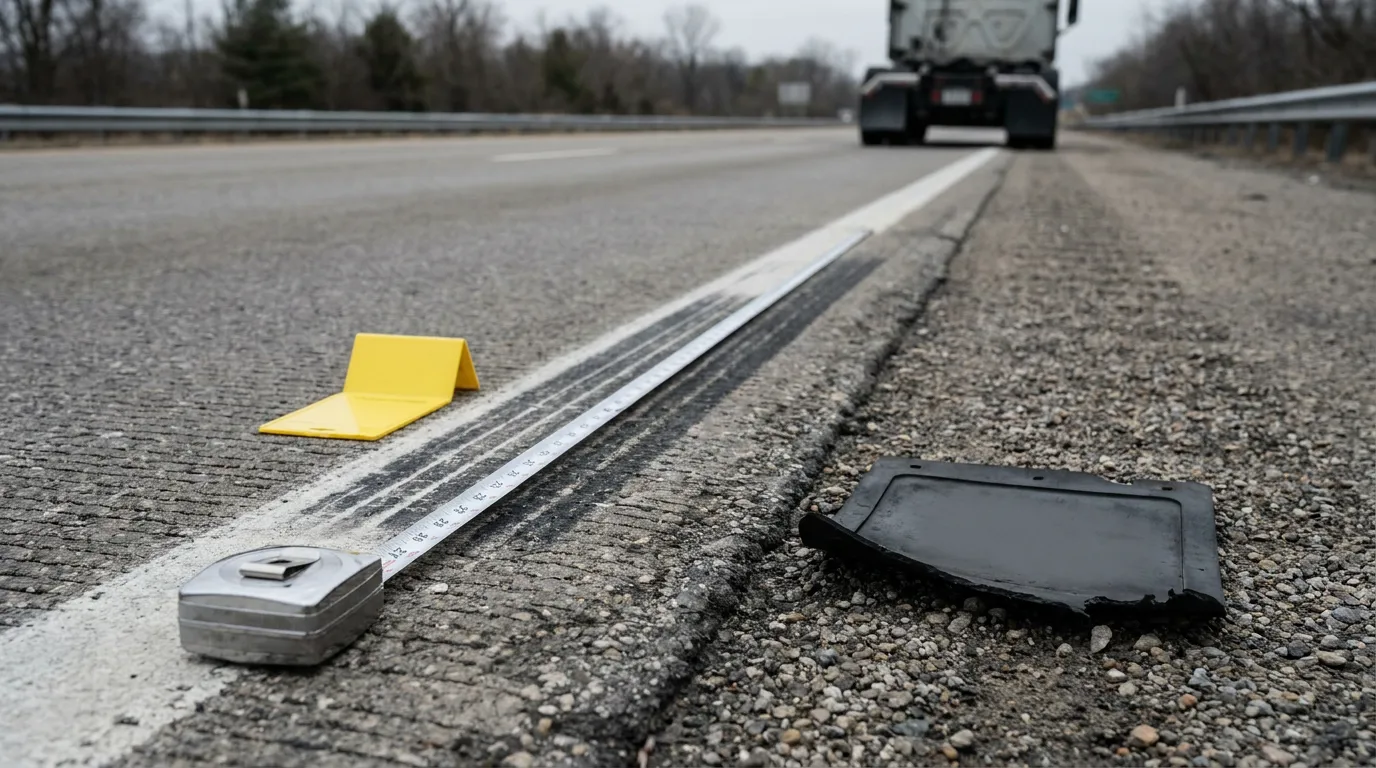
- Scene photos and skid marks: These can help rebuild the stopping distance.
- Witness statements: Other drivers may have seen the truck riding close behind you.
- Carrier safety files: Hiring, training, and discipline records may show a pattern.
Much of this evidence can be lost if no one acts quickly. Some dashcam systems record over old footage within days. An attorney can send a letter demanding that the carrier keep this data. Learn more in our guide on truck accident evidence.
💡 Pro Tip: Check whether nearby businesses, homes, or your own vehicle captured video. Ask soon, since private systems often delete footage within days or weeks.
Why the Police Report Has Limits
Under Fla. Stat. § 316.066(4), crash reports and statements a driver gives police to complete the report are privileged. They generally can’t be used as evidence in a civil trial. So if the trucker admitted tailgating to an officer for the report, you generally can’t use that admission in your injury case. The privilege has limits. Statements made after an officer shifts to a criminal investigation, statements made to other people at the scene, and breath, urine, and blood test results may be admissible. Because of this privilege, independent proof such as video, witnesses, and electronic data carries great weight.
Holding the Trucking Company Accountable
The driver is often only part of the story. The motor carrier may be liable for the driver’s conduct on the job. It may also bear its own blame for how it hired, trained, supervised, or scheduled the driver. Others, such as a repair shop or a parts maker, may share fault if faulty brakes played a role.
Florida regulators keep records that may reveal a carrier’s safety history. Under Fla. Stat. § 316.302, the Department of Highway Safety and Motor Vehicles may adopt rules for the safe operation of commercial trucks and may review carriers for compliance. Records from those reviews, or the carrier’s own safety files, may show a pattern of unsafe driving.
Out-of-service orders can matter a great deal. Under Fla. Stat. § 316.3026, carriers that break safety rules may receive out-of-service orders and may not operate on Florida roads until cleared. If its trucks keep running, a carrier may face a $10,000 civil penalty. Knowingly operating a commercial vehicle in violation of such an order is a third-degree felony. If the bobtail tractor was on the road in violation of an order, that could support a negligence claim against the carrier, though you would still need to show that its safety failures helped cause the crash.
| Evidence Source | What It May Show | Who Usually Has It |
|---|---|---|
| Dashcam video | Following gap, speed, distraction | Trucking company |
| ECM/black box data | Speed and braking before impact | Trucking company |
| ELD logs | Fatigue and hours violations | Trucking company |
| Compliance reviews | Carrier safety history | State regulators |
| Witness accounts | Driving before the crash | Third parties |
Deadlines Every Florida Truck Accident Victim Should Know
Florida generally gives you two years to file a negligence lawsuit under Fla. Stat. § 95.11. This deadline applies to claims arising after March 24, 2023. Families who lost a loved one generally face the same deadline, because § 95.11 also sets two years for wrongful death actions, as shown in Florida’s statutes of limitations.
Exceptions that pause or extend these deadlines are rare, and courts often read them narrowly. Claims involving a government-owned vehicle have separate notice rules you must meet before suing under Fla. Stat. § 768.28. Your own share of fault can also reduce what you recover. Under Florida’s modified comparative negligence rule, if you are found more than 50% at fault, you generally recover nothing. That makes early, careful evidence gathering even more important.
💡 Pro Tip: Keep every medical bill, pay stub, and note about missed work or daily limits. Records made soon after the crash are often the most believable.
Frequently Asked Questions
-
What does bobtailing mean in trucking?
Bobtailing means driving a semi-tractor without a trailer attached. Drivers often bobtail on the way to pick up a load or after a delivery.
-
Does the 300-foot rule apply if a truck tailgated my car?
Generally, no. The 300-foot rule in Fla. Stat. § 316.0895(2) applies only when the vehicle ahead is also a truck or towing vehicle outside business or residence districts. Your claim would usually rely on the reasonable-and-prudent standard in § 316.0895(1).
-
Can I use what the trucker told police at the scene?
Statements made to police to complete a crash report are privileged under Fla. Stat. § 316.066(4) and generally can’t be used in a civil trial. A few exceptions exist, but independent evidence becomes especially important.
-
Is the trucking company responsible, or just the driver?
Depending on the facts, the carrier may share liability for the driver’s conduct or for its own hiring, training, and safety failures.
-
How long do I have to file a claim?
Florida generally allows two years for negligence and wrongful death lawsuits under Fla. Stat. § 95.11. Narrow exceptions and separate notice rules for government defendants may apply, so act early.
Building a Clear Case Against a Tailgating Trucker
Proving a bobtail crash claim usually means pairing Florida’s following-distance laws with hard evidence. Dashcam video, engine data, logs, witness accounts, and carrier safety records can each help show that the trucker failed to leave a safe gap. Because crash-report statements and traffic tickets are generally inadmissible and key data may disappear quickly, acting early often makes a real difference. Every case turns on its own facts, and no outcome is guaranteed.
If a bobtailing truck injured you or took a loved one, Norden Leacox can help you understand your options. An experienced bobtailing trucking lawyer on our team can review your situation. Call 407-801-3000 or schedule your consultation today.
Disclaimer: This content is for informational purposes only and is not legal advice. Every case is unique, and results may vary. Consult an attorney about your specific circumstances.