


Norden Leacox Accident & Injury Law | September 7, 2026 | Car Accidents
When the Belt That Saved You Also Hurt You
Key Takeaways: Seat belt syndrome refers to chest, abdominal, and spinal injuries caused when a safety belt restrains the body during a crash, often leaving a visible "seat belt sign" bruise that may signal deeper harm such as bowel perforation, internal bleeding, lumbar Chance fractures, or organ damage. Because these injuries are frequently internal and delayed in onset, prompt medical evaluation matters even when you feel fine after a Lakeland collision. Florida’s PIP system generally pays first for covered persons but caps medical and disability benefits at $10,000 under Fla. Stat. § 627.736(1), reimburses only eighty percent of reasonable medical expenses and sixty percent of lost income, and requires initial care within 14 days. Florida law requires most front-seat occupants to be belted, and under FL Sec. 316.614(10) belt non-use may be considered as evidence of comparative negligence. Under FL Sec. 768.81(6) a party found more than 50 percent at fault for their own harm generally may not recover damages. Most negligence claims accruing on or after March 24, 2023 must be filed within two years under FL Sec. 95.11(4)(a).
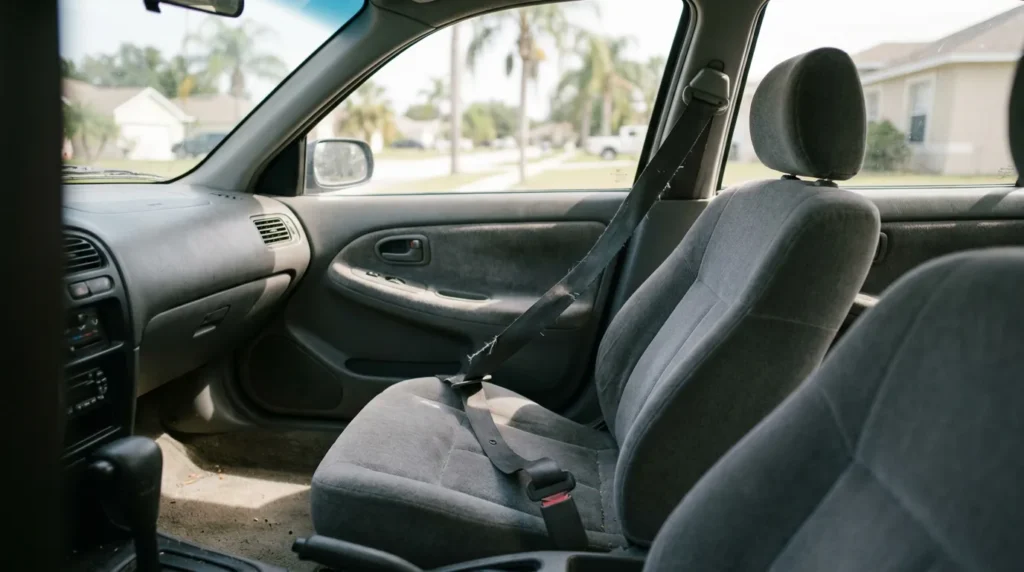
Seat belt syndrome describes chest, abdominal, and spinal injuries that occur when a safety belt restrains an occupant during a crash. Concentrated pressure across the lap and shoulder can bruise skin, tear intestines, fracture ribs, or damage the lumbar spine. That visible line of bruising across your torso is often the first sign of deeper injury.
If you are dealing with seat belt bruising, unexplained abdominal pain, or a confusing insurance claim after a crash, the team at Norden Leacox is available to review your situation. Call 407-801-3000 or reach out to our team online to discuss your options.
Why Seat Belt Syndrome Car Accident Injuries Are Easy to Miss
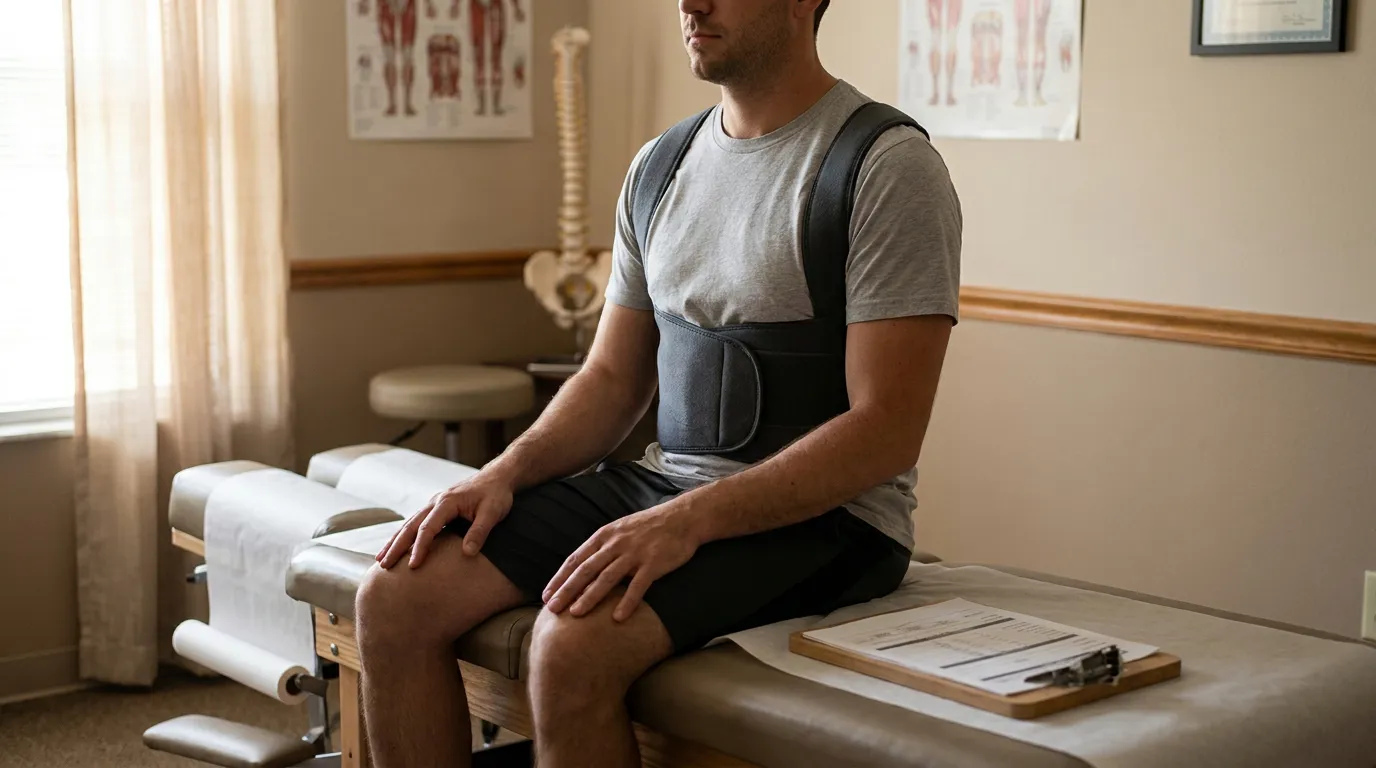
Seat belt syndrome injuries are frequently internal, which means they may not announce themselves at the crash scene. A person walking away from a collision may feel sore and assume the bruise is the extent of the damage. Justia’s overview of motor vehicle accident claims advises getting a medical evaluation even if you feel fine.
Emergency physicians refer to the visible bruise pattern as the "seat belt sign." When that sign appears, clinicians order imaging to look for bowel perforation, internal bleeding, or hollow organ injury. Symptoms such as swelling, fever, or worsening abdominal tenderness may emerge hours or days later.
Common Injury Patterns Associated With Seat Belt Trauma
- Abdominal seat belt injury involving the small bowel, colon, or mesentery
- Lumbar spine fractures, sometimes described as Chance fractures
- Rib and sternal fractures from shoulder belt loading
- Solid organ injury to the liver, spleen, or pancreas
- Soft tissue bruising and hematoma along the belt line
💡 Pro Tip: Photograph the bruising the day of the crash and again over the following days. Bruise patterns fade quickly, and dated photos can help document the mechanism of injury alongside your medical records.
How Florida’s No-Fault System Handles Your Initial Medical Bills
Florida’s Personal Injury Protection system generally pays first for covered persons, regardless of fault, but carries meaningful limits. Under Fla. Stat. § 627.736(1) (2024), PIP applies to a limit of $10,000 in medical and disability benefits. For serious abdominal, spinal, or internal organ trauma, that ceiling often falls short of actual treatment costs.
The percentages matter just as much as the cap. Fla. Stat. § 627.736(1)(a),(b) (2024) provides for eighty percent of reasonable expenses for medically necessary care and sixty percent of lost gross income, subject to the overall $10,000 limit. Those gaps are why injured people in Polk County often pursue a liability claim against the at-fault driver.
The 14-Day Rule and the Emergency Medical Condition Threshold
Timing is a threshold condition, not a suggestion. Fla. Stat. § 627.736(1)(a) (2024) requires initial services and care within 14 days after the motor vehicle accident to be eligible for PIP medical benefits. For seat belt syndrome, where bruising can mask delayed-onset internal injuries, waiting can quietly forfeit coverage.
The full benefit amount depends on clinical determination. Under Fla. Stat. § 627.736(1)(a)3.-4. (2024), reimbursement up to $10,000 may be available when a qualified provider determines the injured person had an emergency medical condition; without that determination, reimbursement is generally limited to $2,500.
| Florida PIP Feature | Statutory Provision |
|---|---|
| Medical and disability cap | $10,000 under § 627.736(1) |
| Death benefits | $5,000 under § 627.736(1) |
| Medical expense reimbursement rate | 80% under § 627.736(1)(a) |
| Lost gross income rate | 60% under § 627.736(1)(b) |
| Deadline for initial care | 14 days under § 627.736(1)(a) |
| Non-EMC reimbursement limit | $2,500 under § 627.736(1)(a)4. |
Belt Use, Belt Non-Use, and What Florida Law Actually Says
Florida requires most front-seat occupants to be belted. FL Sec. 316.614(5) makes it unlawful for any person 18 years or older to be a passenger in the front seat unless restrained by a safety belt when the vehicle is in motion, with parallel requirements for operators and passengers under 18.
Florida law sets specific rules for how belt-related evidence may be used. FL Sec. 316.614(10) provides that a violation of the safety belt statute is not negligence per se and may not be used as prima facie evidence of negligence, but it may be considered as evidence of comparative negligence in any civil action. Florida case law generally requires the defendant to prove that belt non-use actually caused or substantially contributed to the injuries claimed.
Children receive stronger statutory protection. FL Sec. 316.613(3) provides that failure to provide and use a child passenger restraint shall not be considered comparative negligence, nor shall such failure be admissible as evidence in the trial of any civil action with regard to negligence.
Comparative Fault and the 50 Percent Barrier
Insurers frequently argue that the injured occupant shares some of the blame, and in Florida that argument carries real consequences. Comparative negligence reduces damages according to the degree of negligence each party contributed. Cornell’s Legal Information Institute notes there are two types of comparative negligence rules in the United States.
Florida now follows a modified rule with a hard cutoff. FL Sec. 768.81(6) states that any party found to be greater than 50 percent at fault for his or her own harm may not recover any damages, except in medical negligence actions under chapter 766. This rule took effect March 24, 2023 and generally applies to causes of action accruing on or after that date.
How Fault Gets Divided Among Multiple Parties
Florida allocates negligence damages proportionally. FL Sec. 768.81(3) requires the court to enter judgment against each liable party based on that party’s percentage of fault and not on joint and several liability, subject to exceptions the statute identifies. The same provision requires a defendant who wants to shift blame to someone who was never sued to affirmatively plead the nonparty’s fault and prove it at trial.
Evidence development is central to the outcome. Crash reconstruction, vehicle damage analysis, black box data, and treating physician testimony often shape how a jury apportions responsibility. Understanding what evidence strengthens a car accident claim can help injured people preserve the right materials early.
💡 Pro Tip: Avoid giving a recorded statement about how the crash "felt" before you have a complete diagnosis. Early statements describing minor soreness are sometimes used later to question whether internal injuries came from the collision.
The Deadline That Can End a Claim Before It Starts
A Lakeland crash victim generally has a limited window to file a negligence lawsuit. FL Sec. 95.11(4)(a) provides that an action founded on negligence must be brought within two years, a change that applies to causes of action accruing after March 24, 2023. Missing the applicable window can bar recovery entirely.
Exceptions and tolling doctrines exist, but Florida courts generally interpret them narrowly. Claims involving governmental entities also carry separate presuit notice requirements under FL Sec. 768.28 that operate independently of the civil limitations period.
Delayed-onset injuries create practical tension. Internal damage from seat belt trauma may not surface for days or weeks, yet the clock generally runs from when the cause of action accrues. Documenting symptoms as they appear and seeking prompt diagnosis can help protect both your health and the evidentiary record.
Practical Steps After Seat Belt Syndrome Car Accident Injuries
What you do in the first two weeks may shape what happens two years later.
- Seek evaluation within 14 days, and tell providers exactly where the belt crossed your body
- Ask whether abdominal imaging is warranted if you have belt-line bruising
- Keep every bill, explanation of benefits, and work absence record
- Preserve the vehicle and the belt itself if litigation is anticipated
- Report new or worsening symptoms to your provider in writing
Outcomes depend heavily on individual facts. Anyone facing significant Lakeland crash injuries may benefit from speaking with a seat belt syndrome car accident injuries lawyer about how these rules may apply to their circumstances.
Frequently Asked Questions
1. Is seat belt bruising alone enough to prove I was seriously injured?
Bruising may be evidence of belt loading, but it is not a diagnosis. Imaging and clinical evaluation typically establish whether underlying abdominal or spinal injury exists.
2. Can the insurance company blame me for wearing my seat belt wrong?
Insurers may raise comparative fault arguments. Under FL Sec. 316.614(10) belt non-use may be considered as evidence of comparative negligence when the defense proves it contributed to the injuries. Under FL Sec. 768.81(6), a party found greater than 50 percent at fault generally may not recover damages.
3. Does PIP cover surgery for an internal seat belt injury?
PIP may cover a portion, subject to the statutory cap. Fla. Stat. § 627.736(1) (2024) limits medical and disability benefits to $10,000, with reimbursement at eighty percent of reasonable, medically necessary expenses. Costs exceeding those limits generally require pursuing other avenues.
4. What if my child was injured by a car seat or belt in the crash?
FL Sec. 316.613(3) states that failure to provide and use a child passenger restraint shall not be considered comparative negligence and is not admissible as evidence of negligence in a civil trial.
5. How long do I have to file after a Lakeland car accident?
FL Sec. 95.11(4)(a) generally requires negligence actions accruing on or after March 24, 2023 to be brought within two years. Limited exceptions may apply, but courts construe them narrowly.
Protecting Your Health and Your Claim After a Crash
Seat belt syndrome sits at an awkward intersection: the restraint that may have saved your life could have caused injuries that are invisible, delayed, and expensive. Florida’s framework adds layers, from the 14-day PIP care requirement and the $10,000 benefit cap under Fla. Stat. § 627.736(1), to the modified comparative fault bar in FL Sec. 768.81(6) and the two-year negligence deadline in FL Sec. 95.11(4)(a).
If you or a family member suffered seat belt trauma in a collision, Norden Leacox is prepared to review the medical documentation, fault allocation issues, and coverage questions involved. Call 407-801-3000, request a case review, or learn more about how our firm handles Florida car accident injury matters.
Disclaimer: This content is for informational purposes only and is not legal advice. Every case is unique, and results may vary. Consult an attorney about your specific circumstances.