


zleacox@nordenleacox.com | June 11, 2026 | Personal Injury
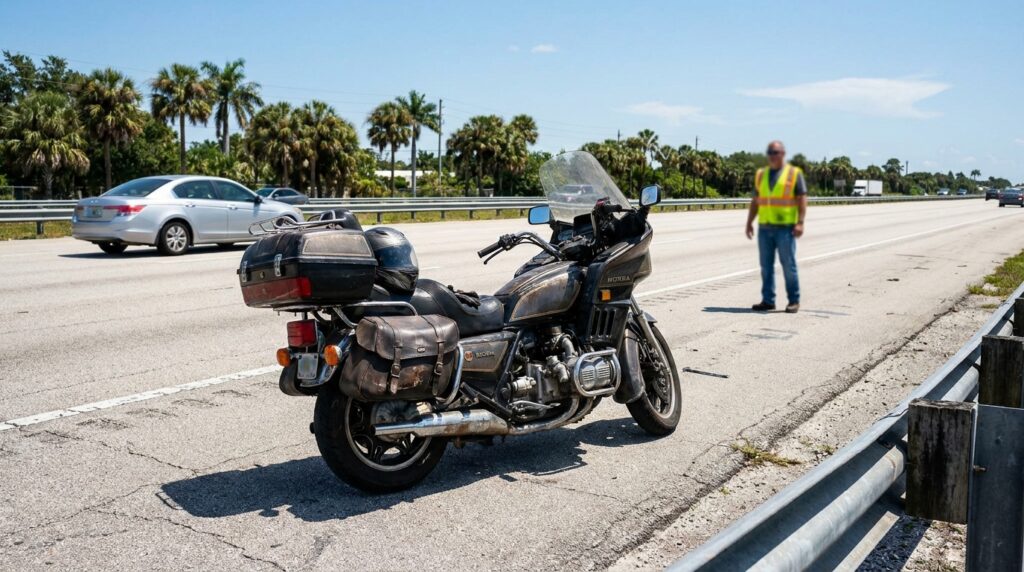
Florida’s Motorcycle Crash Crisis and What It Means for Orlando Riders
Key Takeaways: Florida records over 9,000 motorcycle crashes annually, with Orange County ranking among the highest-risk areas. Florida’s PIP coverage does not apply to motorcycle accidents, leaving riders dependent on at-fault drivers’ liability insurance or their own UM/UIM coverage. Under Florida’s modified comparative negligence law, riders found more than 50% at fault cannot recover damages. Mandatory crash reporting and FLHSMV data help attorneys build strong claims. Understanding these laws can determine whether you recover fair compensation or nothing at all.
More than 9,000 motorcycle crashes occur across Florida each year, with a disproportionate share happening in Central Florida. Orange County consistently reports some of the highest motorcycle crash rates statewide. Heavy tourist traffic, sprawling highways, and year-round riding weather create dangerous conditions for motorcyclists. Florida’s insurance framework, comparative fault rules, and helmet laws dramatically affect motorcycle injury claim values.
If you or a loved one suffered injuries in a motorcycle crash, Norden Leacox is ready to help. Call 407-801-3000 for a free consultation or reach out online today.
Why Orlando Faces Such High Motorcycle Crash Risk
Orlando sits at the intersection of factors that make it one of the most dangerous metro areas for motorcyclists. High-speed corridors like I-4, Colonial Drive, and the 417 carry enormous volumes of distracted and unfamiliar drivers alongside exposed riders.
The numbers confirm what riders sense on the road. The FLHSMV Crash Dashboard allows anyone to filter crash data by vehicle type, county, and year. These official records form the backbone of any injury claim and consistently show Central Florida motorcycle safety remains a serious concern. For deeper analysis, see our breakdown of Orange County’s crash-per-bike ratio.
💡 Pro Tip: After any motorcycle crash in Orlando, request the official crash report from the responding law enforcement agency. Under FL § 316.065(1), drivers involved in crashes causing injury, death, or at least $500 in property damage must immediately notify law enforcement. That report becomes critical evidence for your claim.
The Insurance Gap That Catches Florida Riders Off Guard
Florida operates under a no-fault insurance system, but motorcyclists face a critical gap. Florida’s required PIP coverage generally does not apply to injuries sustained while operating or riding on a motorcycle. Injured riders typically cannot rely on PIP the way occupants of covered four-wheel vehicles can.
This leaves motorcyclists dependent on other recovery avenues. Injured riders must often pursue claims directly against the at-fault driver’s liability insurance. Because Florida does not require most private passenger drivers to carry bodily injury liability coverage, many drivers are uninsured. UM/UIM coverage on the rider’s own policy may provide crucial protection, but only if purchased before the crash.
| Insurance Factor | How It Affects Orlando Motorcyclists |
|---|---|
| Florida PIP ($10,000) | Generally does not cover motorcycle crash injuries |
| Florida PDL ($10,000) | Only covers property damage to others |
| Uninsured driver rate (~20%) | High chance at-fault driver has no coverage |
| UM/UIM coverage | Optional but critical for rider protection |
| Helmet exemption insurance ($10,000 medical) | Required to ride without a helmet over age 21 |
💡 Pro Tip: Review your motorcycle insurance policy now. Adding UM/UIM coverage generally costs a modest amount but can mean the difference between full compensation and an uncollectable judgment against an uninsured driver.
How Florida’s Comparative Fault Rule Can Reduce or Eliminate Your Recovery
Florida’s modified comparative negligence statute, FL § 768.81(6), imposes a hard cutoff every motorcyclist must understand. In most negligence actions, a claimant found to be greater than 50% at fault may not recover any damages. If a jury assigns you 51% of the blame, your recovery drops to zero.
Insurance adjusters frequently try to shift blame onto the rider. They may argue the motorcyclist was speeding, lane splitting, or failed to wear proper safety gear. Building a strong evidence file from the beginning is essential. Medical records, witness statements, photos, and the official crash report all help establish the other driver breached their duty of care.
Proving the Four Elements of Negligence
A successful Orlando motorcycle claim requires proving duty, breach, causation, and damages. The at-fault driver owed a duty to operate safely. They breached that duty through careless or reckless behavior. That breach directly caused the crash. The crash resulted in measurable damages such as medical bills, lost wages, and pain and suffering.
💡 Pro Tip: Florida courts may award punitive damages under FL § 768.72(2)(b) when a defendant’s conduct constitutes gross negligence, conduct so reckless or wanting in care that it constitutes a conscious disregard or indifference to the life, safety, or rights of others, or intentional misconduct under § 768.72(2)(a). Punitive damages have strict procedural requirements, including a reasonable evidentiary showing and the requirement that the claim be proven by clear and convincing evidence at trial. If the driver who hit you was intoxicated or engaged in extreme recklessness, this may open an additional compensation avenue.
Helmet Laws, Eye Protection, and Injury Severity in Orlando
Florida has a partial motorcycle helmet law that affects crash injury severity. Under FL § 316.211(1), motorcycle operators and passengers in Florida must wear DOT-compliant protective headgear (Federal Motorcycle Vehicle Safety Standard 218); however, under FL § 316.211(3)(b), riders over age 21 are exempt from this requirement if they carry an insurance policy providing at least $10,000 in medical benefits for crash-related injuries.
Eye Protection Requirements
Florida law requires every motorcycle operator to wear an approved eye-protective device while riding. FL § 316.211(2) mandates this protection; the statute does not contain a windscreen exception. The only exceptions under FL § 316.211(3)(a) apply to persons riding within an enclosed cab, or to any person 16 years of age or older who is operating or riding upon a motorcycle powered by a motor with a displacement of 50 cubic centimeters or less (or rated not in excess of 2 brake horsepower) and which is not capable of propelling the motorcycle at a speed greater than 30 miles per hour on level ground. A rider’s failure to wear eye protection could be used against them in a comparative fault analysis.
- Helmets are required for riders under 21 and riders over 21 without qualifying insurance
- Eye-protective devices are required for all riders at all times under FL § 316.211(2)
- Failure to comply with safety equipment laws may be raised as evidence of comparative fault
💡 Pro Tip: Even if you legally qualify for the helmet exemption, wearing a DOT-compliant helmet significantly reduces catastrophic head injury risk and removes one argument defense attorneys commonly use to reduce your compensation.
Rider Licensing and Florida’s Safety Education Requirements
Florida mandates motorcycle training for younger riders. Under FL § 322.0255, every first-time applicant under 21 must complete a motorcycle education course including a minimum of 12 hours of instruction, with at least 6 hours of actual motorcycle operation.
Why Training Records Matter After a Crash
A rider’s training and licensing history can become relevant evidence. If the at-fault driver’s attorney argues the rider lacked skill to handle their motorcycle safely, proof of completed safety courses and a valid motorcycle endorsement helps counter that narrative.
How a Motorcycle Accident Lawyer in Orlando Protects Your Claim
The days and weeks immediately following a motorcycle crash are critical to preserving your right to fair compensation. Evidence disappears, witnesses forget details, and insurance companies begin building their defense strategy before you leave the hospital. An Orlando motorcycle accident lawyer can step in to preserve evidence, communicate with insurers, and ensure your claim accounts for the full scope of your injuries, including future medical needs and lost earning capacity.
Florida law also imposes strict deadlines on personal injury claims. Missing the applicable statute of limitations can permanently bar your right to file suit, regardless of case strength.
💡 Pro Tip: Keep a detailed journal of your symptoms, medical appointments, and how injuries affect daily life starting from the crash day. This documentation supports pain and suffering damages claims, often the largest component of motorcycle injury recovery.
Frequently Asked Questions
1. Does Florida PIP insurance cover motorcycle accident injuries?
No. Florida’s required PIP coverage generally does not apply to injuries sustained while operating or riding on a motorcycle. Injured riders must pursue compensation through the at-fault driver’s liability insurance or their own UM/UIM coverage.
2. Can I still recover damages if I was partially at fault for my motorcycle crash in Orlando?
You may recover damages as long as you are not found greater than 50% at fault. Under FL § 768.81(6), a claimant who bears greater than 50% of the fault may not recover any damages. Your compensation is reduced by your percentage of fault up to that threshold.
3. Do I have to wear a helmet when riding a motorcycle in Florida?
Florida requires DOT-compliant helmets for motorcycle operators and passengers under FL § 316.211(1) (Federal Motorcycle Vehicle Safety Standard 218). However, riders over 21 are exempt from the helmet requirement if they carry at least $10,000 in medical benefits coverage under a motorcycle insurance policy, per FL § 316.211(3)(b).
4. What should I do immediately after a motorcycle crash in Orlando?
Call 911 and ensure law enforcement responds. Under FL § 316.065(1), crashes involving injury, death, or an apparent $500 or more in property damage must be reported to law enforcement. Seek medical attention promptly, document the scene with photos, collect witness contact information, and avoid giving recorded statements to the other driver’s insurance company before consulting an attorney.
5. What types of damages can I pursue after a motorcycle crash in Florida?
Injured motorcyclists may pursue compensation for medical expenses, lost wages, diminished earning capacity, pain and suffering, property damage, and in certain cases, punitive damages under FL § 768.72(2)(b) when the defendant’s conduct constitutes gross negligence or intentional misconduct and procedural requirements are met.
Protecting Your Rights After an Orlando Motorcycle Crash
Florida’s motorcycle crash statistics paint a sobering picture, but understanding the legal landscape gives injured riders a real advantage. From insurance gaps that leave motorcyclists uniquely exposed to comparative fault rules that can eliminate your recovery entirely, the stakes are too high to navigate alone. Building a strong claim requires prompt action, thorough documentation, and clear understanding of how Florida’s statutes apply to your circumstances.
Contact Norden Leacox today to discuss your motorcycle accident case in a free consultation. Call 407-801-3000 or send us a message to get started.