


Norden Leacox Accident & Injury Law | July 23, 2026 | Car Accidents
Understanding Who Covers Your Injuries After a Crash
Key Takeaways: After an Orlando car accident, Florida’s no-fault system means your Personal Injury Protection (PIP) coverage pays medical bills first, regardless of fault, covering you, passengers, and household relatives up to $10,000 after your deductible. When injuries exceed PIP limits, you may pursue the at-fault driver’s bodily injury liability insurance. If multiple victims compete for limited policy limits, Florida law allows interpleader or binding arbitration to allocate funds. Your uninsured/underinsured motorist (UM) coverage fills gaps when the responsible driver lacks adequate insurance. Even if partly at fault, you can recover a reduced amount unless you are more than 50 percent responsible under Florida’s modified comparative negligence rule. Because these overlapping layers carry distinct limits, exclusions, and deadlines, documenting injuries and acting promptly are essential.
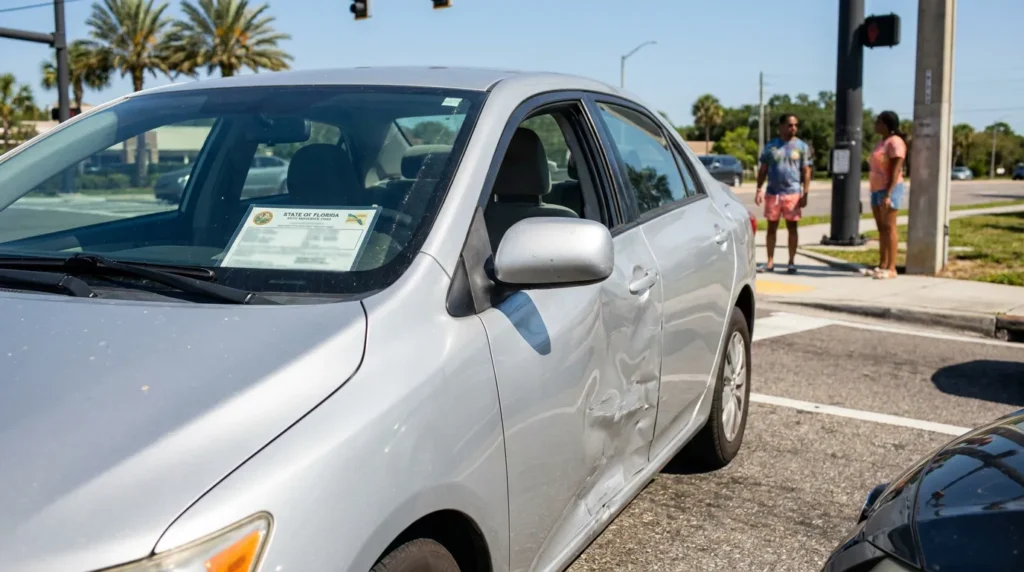
After an Orlando car accident, whose insurance pays for your medical bills usually has a layered answer beginning with your own policy. Florida operates under a no-fault framework, meaning your Personal Injury Protection coverage generally pays first, regardless of who caused the collision. Additional sources may apply depending on injury severity, available policy limits, and each driver’s fault.
If you are facing mounting medical bills and confusing insurance demands, the team at Norden Leacox is ready to help. You can reach our office at 407-801-3000 or send us your questions online to discuss your situation.
Florida’s No-Fault System Starts With Your Own PIP
In Florida, your own insurer is typically the first payer of medical expenses after a crash, no matter who was at fault.
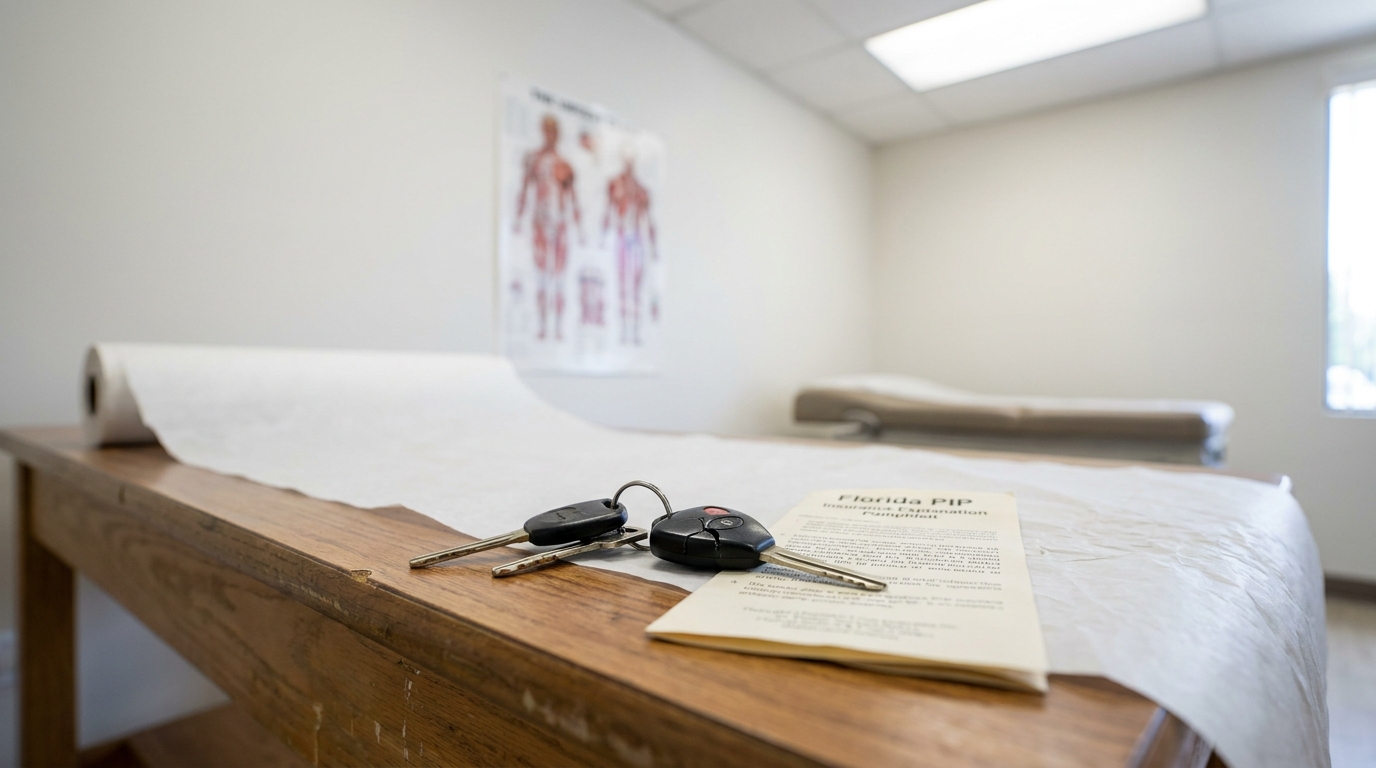
Florida law requires all motor vehicle owners to maintain Personal Injury Protection insurance, which pays medical bills first after a car accident, covering the policyholder, passengers, and household relatives injured in a crash, regardless of fault.
This is the foundation of the state’s no-fault model. You can learn more by reviewing our overview of Florida no-fault insurance for Orlando drivers.
This no-fault requirement has been a continuous fixture of Florida law for many years.
Florida’s Motor Vehicle No-Fault Law was temporarily repealed in late 2007 but reinstated effective January 1, 2008, and PIP has been continuously required since then.
Failure to maintain PIP coverage carries serious consequences, including license and vehicle registration suspension.
💡 Pro Tip: Report your crash to your own insurer promptly.
Your insurer must notify you of your PIP rights within 21 days of receiving notice, including covered medical services, disability and death benefits, exclusions, and payment deadlines.
What PIP Covers and Who It Protects
PIP coverage extends beyond the named insured to a defined group of protected individuals. It generally reaches passengers and household relatives who are injured, which is why two people in the same vehicle may look to different policies. Coverage applies regardless of fault, but is subject to specific limits and exclusions.
How PIP Deductibles and Benefit Limits Work
Your PIP benefits begin only after you satisfy your selected deductible, and they are capped at a statutory maximum.
Insurers must offer PIP deductible options of $250, $500, and $1,000, which apply to 100 percent of covered medical expenses, meaning injured Orlando drivers pay out of pocket up to their chosen deductible before PIP benefits begin.
After the deductible is met, each insured is eligible for up to $10,000 in total PIP benefits
under Fla. Stat. § 627.739(2). You can review the full statutory language through the Florida Senate’s published PIP deductible statute.
Your policy choices can also limit what categories of loss PIP will reimburse.
Policyholders can choose to apply a deductible to themselves alone or to themselves plus dependent relatives in the same household, but cannot impose it on other covered persons
under Fla. Stat. § 627.739(1). In addition,
policyholders can elect to exclude coverage for lost income and earning capacity, affecting what their PIP will pay following an Orlando crash
under Fla. Stat. § 627.739(3).
Choosing Your Deductible
A higher deductible lowers your premium but increases out-of-pocket costs after a crash. Because PIP medical bills in Orlando can accumulate quickly, your deductible selection directly affects when benefits become available. Reviewing your declarations page now helps avoid surprises during an active Florida PIP claim.
| Coverage Feature | General Rule Under Florida Law |
|---|---|
| First payer of medical bills | Your own PIP, regardless of fault |
| Deductible options | $250, $500, or $1,000 |
| Total PIP benefit cap | Up to $10,000 after deductible |
| Optional exclusion | Lost wages and earning capacity |
Whose Insurance Pays for Car Accident in Florida When Injuries Are Severe
When your injuries exceed PIP’s $10,000 ceiling, whose insurance pays for car accident in Florida shifts toward the at-fault driver’s liability coverage. PIP is designed as a first layer, not a complete remedy. An injured person may pursue a claim against the negligent driver’s bodily injury liability insurer for damages beyond what no-fault covers.
💡 Pro Tip: Keep every medical record, bill, and receipt. Documenting your full treatment establishes the value of damages beyond PIP and supports any claim against an at-fault driver’s liability policy.
Liability claims, unlike PIP, turn on proving negligence and resulting damages. That involves showing duty, breach, causation, and economic and non-economic losses. Because these claims are fact-intensive, working with an experienced Orlando car accident attorney can help you organize evidence and pursue available compensation.
When Multiple Victims Compete for Limited Coverage
If several people are hurt and claims exceed the at-fault driver’s policy limits, Florida law provides a structured process for dividing funds.
When an Orlando car accident injures multiple people and total claims exceed the at-fault driver’s liability limits, the insurer can, within 90 days of receiving notice of competing claims, either file an interpleader action or, if claimants agree, make policy limits available through binding arbitration, allowing prorated allocation of policy limits among claimants, with comparative fault considered
under Fla. Stat. § 624.155(6).
These situations highlight why understanding all available coverage sources matters. When one policy cannot cover everyone, identifying additional layers of protection becomes essential.
Uninsured and Underinsured Motorist Coverage Can Fill the Gap
Your own UM coverage may step in when the at-fault driver has too little insurance or none at all.
Every Florida motor vehicle liability policy that includes bodily injury coverage must also offer Uninsured Motorist coverage, and if you are hit by an uninsured or underinsured driver in Orlando, your UM coverage can pay medical bills and other damages that exceed what PIP covers, up to your UM policy limits.
UM coverage is intended to supplement, not duplicate, other available benefits.
Florida’s UM coverage fills the gap, covering the difference between what other available benefits such as PIP, workers’ compensation, or the at-fault driver’s liability insurance pay and actual damages sustained, up to the UM policy maximum.
Filling the Coverage Gap
Drivers often overlook UM coverage until they need it most. Because PIP caps at $10,000 and some at-fault drivers carry minimal liability limits, UM can be the difference between partial and meaningful Orlando crash medical coverage.
- Confirm your PIP and deductible amounts so you know your out-of-pocket exposure.
- Verify whether you carry UM or underinsured motorist coverage and at what limits.
- Review any lost-wage exclusions that could affect a future Florida PIP claim.
How Comparative Fault Affects What You Recover
Even if you were partly at fault, you may still recover, though your award can be reduced.
When a victim is partially at fault but below the threshold, their recovery is reduced proportionally rather than barred, influencing how much an at-fault driver’s liability insurance ultimately pays
under Fla. Stat. § 768.81(2). However,
Florida applies a modified comparative negligence standard under § 768.81, meaning any party more than 50 percent at fault for their own harm cannot recover damages
(this 50 percent bar does not apply to medical negligence actions). You can review the statute through the Florida House’s published comparative fault standard.
Florida also apportions liability among multiple at-fault parties.
Florida courts apportion liability by each party’s percentage of fault rather than under joint and several liability, meaning each at-fault party’s insurer pays only its share of damages
under Fla. Stat. § 768.81(3).
💡 Pro Tip: Be cautious about giving recorded statements to an insurer before you understand your rights. Insurers may use comparative fault arguments to reduce what they pay.
Frequently Asked Questions
1. Does my own insurance really pay first even if I did not cause the crash?
Yes, in most cases your PIP pays first regardless of fault. Florida’s no-fault system requires PIP to cover initial medical expenses for the policyholder, passengers, and household relatives, subject to your deductible and the $10,000 cap.
2. What happens if my medical bills exceed $10,000?
Bills above the PIP cap may be pursued through other coverage sources. You may have a claim against the at-fault driver’s liability insurer or your own underinsured motorist coverage, depending on injury severity and available policy limits.
3. Can I still recover if the crash was partly my fault?
Yes, as long as you are not more than 50 percent at fault. Your recovery would be reduced in proportion to your share of fault, and being more than half responsible bars recovery under the modified comparative negligence rule.
4. What if the other driver had no insurance?
Your uninsured motorist coverage may provide a remedy. UM coverage is designed to cover damages that exceed PIP when the responsible driver is uninsured or underinsured, up to your policy limits.
5. How long do I have to act after an Orlando crash?
Florida sets deadlines for filing injury claims. Tolling or delayed-discovery arguments may apply only in limited circumstances, so confirm your specific deadline with an attorney promptly.
Protecting Your Right to Full Compensation
Determining whose insurance pays for car accident in Florida often involves several overlapping layers, from your own PIP to liability and UM coverage. Because each source carries its own limits, exclusions, and fault-based rules, the right answer depends on the facts. Understanding these layers, documenting your injuries, and acting within applicable deadlines all help protect your ability to pursue full recovery.
If you are navigating car accidents in Orlando FL and feel overwhelmed by competing insurance claims, Norden Leacox is here to guide you forward. Call us at 407-801-3000 or reach out through our contact page to discuss how Florida law applies to your case. Taking that first step can help protect both your health and your financial future.
