

[email protected] | July 13, 2026 | Car Accidents

Why Severe Orlando Crashes Often Lead to Six-Figure Recoveries
Key Takeaways: Catastrophic crash settlements in Orlando frequently exceed $250,000 because Florida law permits recovery across economic, non-economic, and punitive damages, with severity of injury, evidence strength, and available insurance driving final value. While the state’s no-fault PIP system controls initial claims, seriously injured victims who meet the tort threshold may sue the at-fault driver for full pain and suffering. Economic damages cover lost income, medical costs, and future care, though a 2023 reform caps recoverable medical expenses at amounts actually paid, owed, or reasonably necessary. Additional coverage sources can expand the compensation pool, but comparative fault rules, sovereign immunity limits, and a strict two-year deadline can reduce recovery. Because every case turns on its own facts, thorough documentation and prompt action are essential.
When a collision leaves you with life-altering injuries, many victims wonder whether their case could exceed $250,000. Catastrophic crash claims in Central Florida frequently reach that range because the law allows recovery for a wide spectrum of losses. While outcomes depend heavily on specific facts, the severity of injury, evidence strength, and available insurance all influence the final number.
If you or a loved one suffered a serious injury in a wreck, the team at Norden Leacox is ready to review your situation. Reach our office at 407-801-3000 or through our secure contact page.
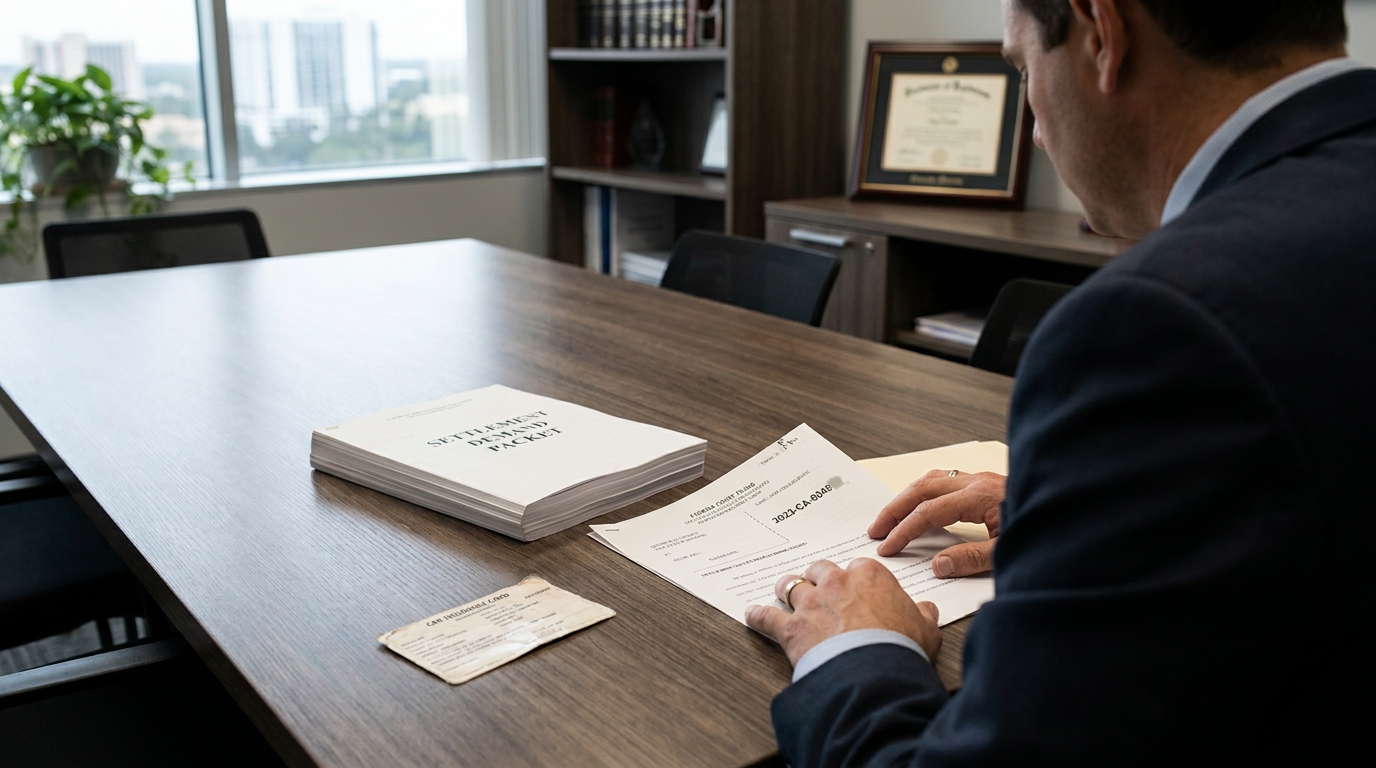
What Pushes an Orlando Crash Settlement Past $250,000
Catastrophic injuries generate losses that routinely move claims into high-value territory. Spinal cord injuries, traumatic brain injuries, severe burns, or permanent disabilities involve long-term care, lost earning capacity, and profound personal suffering. These factors frequently produce a catastrophic car accident settlement in Orlando exceeding $250,000.
Florida’s no-fault system controls how a claim begins, but not always how it ends. The state operates under a no-fault framework governed by ss. 627.730 through 627.7405, meaning each driver’s own Personal Injury Protection coverage pays initial medical bills regardless of fault. However, seriously injured victims can step outside that system. Under FL § 627.737(2), victims may recover non-economic damages from the at-fault driver when the injury consists of significant and permanent loss of an important bodily function, permanent injury within a reasonable degree of medical probability, significant and permanent scarring or disfigurement, or death. Review Florida’s serious injury threshold to understand when you can cross that line.
💡 Pro Tip: Keep every medical record, billing statement, and out-of-pocket receipt organized from day one. Documentation of actual and projected costs is often the backbone of a high-value Orlando crash settlement.
How Florida’s Damage Rules Shape Your Recovery
Florida law divides recoverable losses into distinct categories, each adding meaningful value to catastrophic claims. The framework lives in Chapter 768 of the Florida Statutes, which controls negligence, personal injury, and wrongful death claims. Knowing which damages apply is essential to building an accurate demand.
Economic Damages and the Medical Expense Cap
Economic damages cover tangible, calculable losses. Under Section 768.81, economic damages include past and future lost income reduced to present value, medical and funeral expenses, lost support and services, replacement value of lost personal property, loss of appraised fair market value of real property, costs of construction repairs (including labor, overhead, and profit), and any other economic loss that would not have occurred but for the injury giving rise to the cause of action. In catastrophic cases, future medical costs and diminished earning capacity often dominate the calculation. Review Florida’s negligence statutes for full definitions.
A 2023 reform changed how medical expenses are valued. Under FL § 768.0427(4), recoverable damages for medical care may not exceed amounts actually paid, amounts due and owing, or amounts reasonably necessary for future treatment. This limits inflated billing and makes careful documentation more important than ever.
Non-Economic and Wrongful Death Damages
Non-economic damages compensate for the human cost of catastrophic injury. These include pain, suffering, mental anguish, and loss of enjoyment of life. Florida law also recognizes derivative claims. Under FL § 768.0415, defendants causing significant permanent injury to a parent resulting in permanent total disability may be liable to the dependent for permanent loss of services, comfort, companionship, and society.
Wrongful death claims carry broad recoverable losses. When a crash is fatal, surviving spouses may recover for loss of companionship and protection and for mental pain and suffering, minor children may recover for lost parental companionship and guidance, and the personal representative may recover lost earnings under FL § 768.21. This wide range is why wrongful death settlements in Orlando can far surpass $250,000.
💡 Pro Tip: In a fatal crash, the wrongful death claim belongs to the estate’s personal representative, not to individual family members filing separately. Confirming who holds the right to sue early prevents costly procedural delays.
Understanding the Average Car Accident Settlement in Florida
There is no single, reliable figure for the average car accident settlement in Florida because every case turns on its own facts. Settlement value depends on injury severity, liability strength, available insurance, and documentation. A minor soft-tissue claim and a catastrophic spinal injury occupy entirely different ranges, so broad averages can be misleading.
Additional coverage sources can raise the ceiling on catastrophic injury claims. When a vehicle is loaned or rented for less than one year and the operator is uninsured or carries less than $500,000 in coverage, the owner or lessor may face added exposure. Under FL § 324.021(9)(b)(2) and (3), short-term lessors and natural persons loaning vehicles can be liable up to $100,000 per person and $300,000 per incident for bodily injury, plus an additional $500,000 in economic damages. Identifying every potential payer often separates a modest recovery from a high value car accident settlement.
| Damage Type | Examples | Statutory Source |
|---|---|---|
| Economic | Medical bills, lost income, lost services | § 768.81 |
| Non-economic | Pain, suffering, loss of companionship | § 768.21 |
| Medical expense limit | Amounts paid, owed, or reasonably necessary | § 768.0427(4) |
| Secondary coverage | Owner/lessor liability | § 324.021(9) |
Comparative Fault and Other Limits on Recovery
Florida’s comparative fault rules can reduce or eliminate recovery, making liability investigation critical. Under FL § 768.81(6), any party found greater than 50 percent at fault for their own harm may not recover damages. Defense attorneys often try to shift blame onto the injured party, so preserving evidence early is essential.
Even when multiple drivers share blame, each defendant pays only their proportional share. Section 768.81(3) directs courts to enter judgment against each party on the basis of their percentage of fault, not under joint and several liability. In multi-vehicle crashes, this affects how much you ultimately collect from any single defendant.
Punitive damages may apply in limited circumstances, but the bar is high. Under Section 768.72(2), defendants may be liable for punitive damages only if the trier of fact finds intentional misconduct or gross negligence based on clear and convincing evidence. Section 768.73(1)(a) caps punitive damages at the greater of three times compensatory damages or $500,000. These awards are the exception.
Claims against government entities face stricter limits. Under Fla. Stat. 768.28, the state waives sovereign immunity only to the extent specified. Section 768.28(5) provides that portions exceeding $200,000 or $300,000 may be paid only by further act of the Legislature. If a government vehicle was involved, additional steps may be required.
Protecting Your Claim After a Catastrophic Crash
Acting promptly protects both your evidence and legal deadlines. Florida imposes strict time limits on injury and wrongful death claims.
- Under FL § 95.11(5)(a), negligence actions must generally be commenced within two years.
- FL § 95.11(5)(e) applies the same two-year period to wrongful death actions.
- Civil deadlines differ from government administrative claim requirements.
Review Florida’s limitations statutes to confirm how they apply.
Strong preparation drives stronger outcomes in catastrophic cases. Building a credible high-value claim involves preserving crash evidence, securing medical documentation, and quantifying current and future losses. Working with a dedicated Orlando car accident attorney helps ensure nothing critical is overlooked.
💡 Pro Tip: Photograph the scene, gather witness contact information, and request the crash report as soon as possible. Evidence disappears quickly, and early preservation can make the difference in comparative fault disputes.
Frequently Asked Questions
-
How long do I have to file a car accident lawsuit in Florida?
In most cases, you have two years from the crash date. Under FL § 95.11(5)(a), negligence claims must generally be filed within that window. Courts interpret exceptions narrowly, so don’t assume any extension applies.
-
Can I still sue if I share some blame for the crash?
Possibly, depending on your percentage of fault. Under FL § 768.81(6), you may recover damages only if you are 50 percent or less at fault. If a jury assigns you more than half the responsibility, you may be barred from recovery.
-
What makes a crash claim worth more than $250,000?
Severity of injury and breadth of recoverable damages are the main drivers. Catastrophic injuries produce significant economic and non-economic losses, and additional coverage sources can expand available compensation.
-
Does Florida’s no-fault system prevent me from suing the at-fault driver?
Not in serious injury cases. Florida’s no-fault framework directs initial medical bills to your own PIP coverage, but victims whose injuries meet the statutory tort threshold may pursue the at-fault driver for full damages under § 627.737(2).
-
Are punitive damages available in catastrophic crash cases?
Only in limited circumstances. Section 768.72(2) requires clear and convincing evidence of intentional misconduct or gross negligence, and § 768.73 caps most awards.
Bringing the Pieces Together for Your Recovery
Catastrophic crash claims in Orlando can exceed $250,000 because Florida law allows recovery across economic, non-economic, and in rare cases punitive damages, while additional coverage sources can expand available compensation. Comparative fault rules, the medical expense cap, sovereign immunity limits, and a strict two-year deadline can all affect what you ultimately recover. Each case depends on its own facts, so careful documentation and timely action remain essential.
If you are facing mounting bills after a severe crash, the attorneys at Norden Leacox are prepared to help. Call our office at 407-801-3000 or reach out through our online contact form to take the next step.
