

[email protected] | July 7, 2026 | Car Accidents
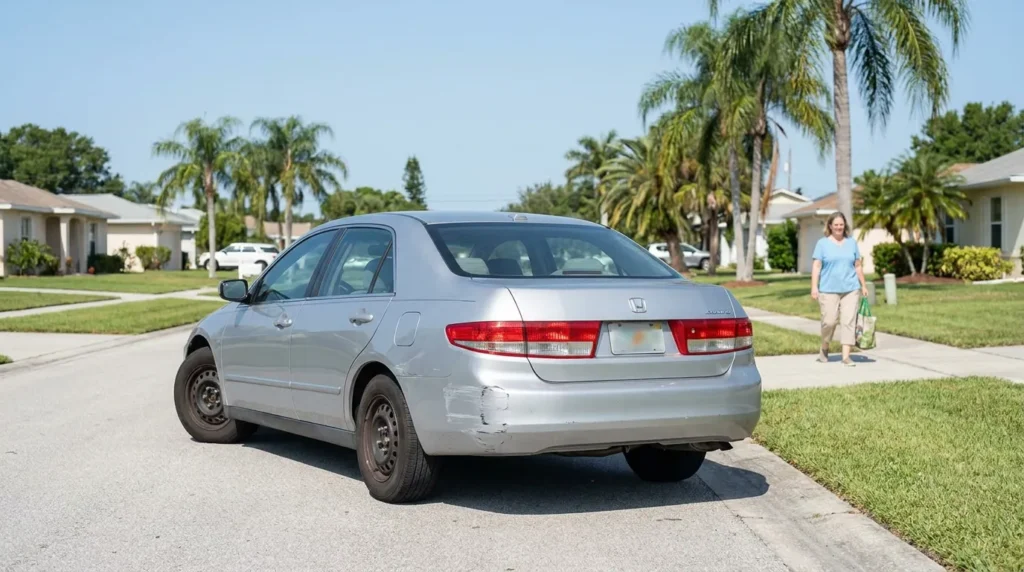
Understanding Your Rights After a Rear-End Crash in Palm Bay
Key Takeaways: Yes, a Palm Bay car accident lawyer can help after a rear-end collision by guiding you through Florida’s no-fault PIP system, preserving evidence, and pursuing the at-fault driver when injuries exceed initial benefits. Your PIP coverage pays first regardless of fault, but serious injuries often require filing a tort claim for broader damages. Proving fault typically begins with Florida’s following-distance rule, though liability depends on facts and Florida’s modified comparative fault system can reduce or bar recovery if you are more than 50 percent at fault. Strict deadlines apply, including a two-year statute of limitations, with separate notice requirements for government vehicle claims.
Yes, a Palm Bay car accident lawyer can help after a rear-end collision by guiding you through Florida’s no-fault rules, preserving evidence, and pursuing compensation beyond initial insurance benefits. Rear-end crashes are among the most common collisions on Florida roads, often leaving victims with whiplash, back injuries, and mounting bills. Understanding Florida law on fault, deadlines, and damages can protect your recovery.
If you face medical expenses and insurer pressure after a rear-end crash, Norden Leacox is ready to help. Call 407-801-3000 or contact us through our online page to discuss your situation.

How Florida’s No-Fault System Affects a Rear-End Injury Claim
Florida operates under a no-fault insurance system that shapes every rear-end collision claim in Palm Bay. Under Fla. Stat. § 627.736(1), Florida law requires motor vehicle owners to carry Personal Injury Protection coverage that "must provide personal injury protection to the named insured, relatives residing in the same household." Your own PIP policy is generally the first source of medical and disability benefits after a crash, regardless of who caused it.
PIP coverage pays initial losses quickly but has limits. Under Fla. Stat. § 627.7407(5)(a), PIP pays covered medical expenses for injuries sustained by the policyholder, passengers, and household relatives. Because benefits are capped, victims with serious injuries often need to look beyond PIP to recover full losses.
💡 Pro Tip: Keep every medical record, mileage log, and receipt connected to your treatment. Thorough documentation strengthens both your PIP claim and any later tort claim against the at-fault driver.
Pursuing the At-Fault Driver Beyond PIP Limits
When injuries are significant, Florida law allows victims to pursue the at-fault driver directly. Under Fla. Stat. § 627.736(3), an injured party may prove all special damages. Under Fla. Stat. § 627.737(2), a victim may recover noneconomic damages such as pain and suffering only if the injury meets a statutory threshold, such as permanent injury or significant scarring. A car crash lawyer in Palm Bay can evaluate whether your injuries meet the threshold to pursue a tort claim.
A negligence claim opens the door to broader recoverable losses. Under Fla. Stat. § 768.81, "economic damages" include past and future lost income, medical and funeral expenses, lost support and services, and replacement value of lost property. Identifying and quantifying these damages is central to building a rear-end injury claim.
| Coverage Source | What It Generally Pays | When It Applies |
|---|---|---|
| Personal Injury Protection | A portion of medical bills and lost wages | First, regardless of fault |
| At-fault driver’s liability | Damages beyond PIP, including pain and suffering | After meeting injury threshold |
| Government entity | Negligence by a public employee | Subject to sovereign immunity rules |
Proving Fault in a Rear-End Crash Liability Dispute
Establishing fault often starts with Florida’s following-distance rule. Under Fla. Stat. § 316.0895(1), "the driver of a motor vehicle shall not follow another vehicle more closely than is reasonable and prudent, having due regard for the speed of such vehicles and the traffic upon, and the condition of, the highway." A violation serves as strong evidence of negligence, and you can review the broader safe following distance law for context.
A citation alone does not decide a case but can carry weight. Under Fla. Stat. § 316.0895(4), "a violation of this section is a noncriminal traffic infraction, punishable as a moving violation." While rear drivers are frequently found at fault, liability depends on specific facts, and courts may consider whether the lead driver contributed to the collision.
Comparative Fault and Why It Matters to Your Recovery
Florida uses a modified comparative fault system that can reduce or eliminate recovery depending on your share of blame. Under Fla. Stat. § 768.81(2), contributory fault "diminishes proportionately the amount awarded as economic and noneconomic damages." This modified standard applies to negligence claims accruing on or after March 24, 2023. Insurers often try to shift blame onto victims to reduce payouts.
However, a critical threshold exists. Under Fla. Stat. § 768.81(6), "any party found to be greater than 50 percent at fault for his or her own harm may not recover any damages." Minimizing your assigned fault percentage matters, which is why many victims work with a Palm Bay car accident lawyer who can counter comparative-fault arguments with evidence.
💡 Pro Tip: Avoid giving recorded statements to an insurer before understanding your rights. Casual remarks can later be used to argue you share fault for the crash.
When a Government Vehicle Causes the Crash
A rear-end collision involving a government vehicle follows different rules. Under Fla. Stat. § 768.28, the state "waives sovereign immunity for liability for torts, but only to the extent specified," and a government entity may be liable for negligent acts of employees acting within employment scope. These claims involve additional procedural requirements, including presuit written notice under Fla. Stat. § 768.28(6), so prompt legal guidance is especially important.
Deadlines That Can Make or Break a Palm Bay Car Accident Claim
Florida law gives car accident victims a limited window to file a lawsuit, and missing it can bar recovery entirely. Under Fla. Stat. § 95.11(5)(a), "an action founded on negligence" must be brought "within two years." This deadline applies to causes of action accruing on or after March 24, 2023; claims that accrued earlier are generally subject to the prior four-year period. You can review the full two-year filing deadline statute for detail.
In limited circumstances, the deadline may be paused, but courts interpret exceptions narrowly. Under Fla. Stat. § 95.051(1)(a)-(c), the limitations period may be tolled by absence from the state, use of a false name, or concealment. Tolling does not apply automatically, and even where it may apply for minority or incapacity, "the action must be begun within 7 years after the act, event, or occurrence giving rise to the cause of action."
Civil deadlines differ from government claim requirements. A civil statute of limitations governs lawsuits between private parties, while claims against public entities involve separate notice steps. The presuit notice period for government claims can be longer than the two-year limitations period, so both deadlines must be tracked independently.
💡 Pro Tip: Treat the two-year period as a firm planning horizon. Evidence fades and witnesses move, so acting promptly protects both your deadline and your proof.
How a Car Accident Lawyer Strengthens Your Rear-End Collision Case
A lawyer adds value at several stages, from evidence gathering to negotiation. Early steps often shape the outcome, which is why knowing what to do in the first 24 hours after a crash is important. A focused legal strategy generally addresses:
- Preserving photographs, dashcam footage, and crash-scene evidence
- Documenting injuries and connecting them to the collision
- Identifying all applicable insurance coverage and damages categories
- Responding to comparative-fault arguments raised by insurers
Procedural pitfalls can quietly undermine a claim. Under Fla. Stat. § 627.736, if a person "unreasonably refuses to submit to or fails to appear at an examination, the personal injury protection carrier is no longer liable for subsequent personal injury protection benefits." A lawyer helps clients avoid missteps that could reduce available benefits.
For victims across Central Florida, experienced representation helps level the playing field with insurers. Our team handles these matters as a dedicated Palm Bay car accident attorney resource for injured drivers and passengers.
Frequently Asked Questions
-
Is the rear driver always at fault in a rear-end collision?
Not automatically, though rear drivers are frequently found at fault. Following too closely under Fla. Stat. § 316.0895(1) can be strong evidence of negligence, but liability depends on facts, and the lead driver’s conduct may be considered.
-
Can I recover damages if I was partly at fault?
In many cases, yes, but your recovery may be reduced. Under Fla. Stat. § 768.81(2), damages are diminished proportionally, and under § 768.81(6), being more than 50 percent at fault bars recovery entirely.
-
How long do I have to file a claim after a Palm Bay crash?
Generally two years from the crash date. Under Fla. Stat. § 95.11(5)(a), negligence actions must be filed within two years, subject to narrow tolling exceptions courts interpret strictly.
-
Does PIP cover all of my medical bills?
Often not entirely, because PIP benefits are limited. Under Fla. Stat. § 627.736, PIP pays covered medical expenses regardless of fault, but serious injuries may require pursuing the at-fault driver for additional damages.
-
What if a government vehicle hit me?
You may still have a claim, but special rules apply. Under Fla. Stat. § 768.28, the state waives sovereign immunity only to the extent specified, and these claims involve added procedural steps.
Protecting Your Recovery After a Rear-End Collision
A rear-end collision in Palm Bay involves overlapping rules on no-fault coverage, fault allocation, and strict deadlines that can be difficult to navigate alone. Florida’s PIP system, comparative fault framework, and two-year limitations period each shape what you can recover and when you must act. Understanding these principles early helps preserve evidence, protect your rights, and avoid procedural pitfalls insurers may use against you.
If you have been injured in a rear-end crash, the attorneys at Norden Leacox are prepared to review your situation and explain how Florida law applies. Call 407-801-3000 or visit our contact page to take the next step toward protecting your recovery.
