


Norden Leacox Accident & Injury Law | April 20, 2026 | Truck Accidents
What Should Titusville Victims Know About Truck Blind Spot Crashes?
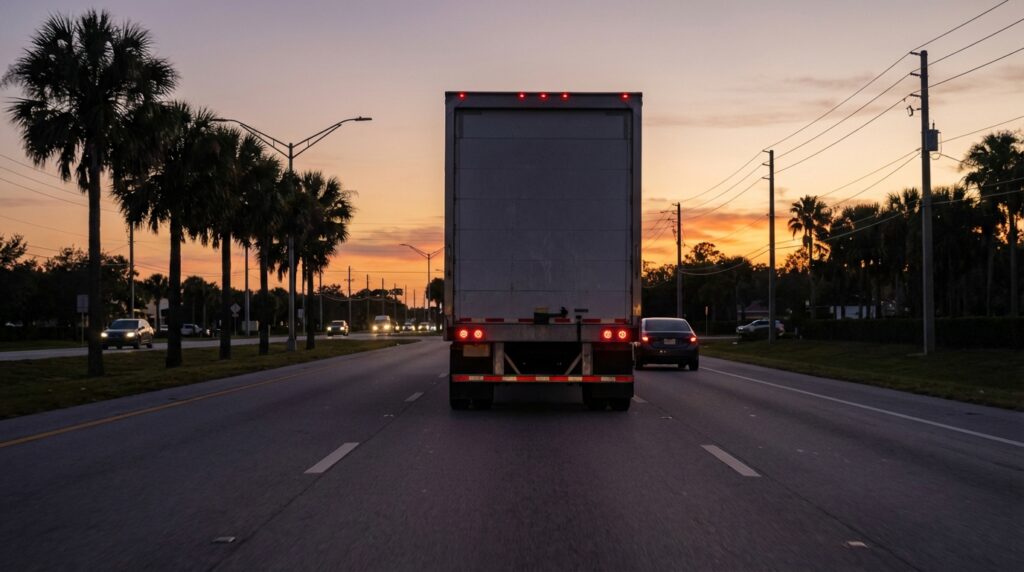
Truck blind spot crashes, often called "no-zone" accidents, are among the most dangerous collisions on Titusville roads. Large commercial trucks have massive blind spots on all four sides, and when a passenger vehicle, cyclist, or pedestrian enters these zones, the truck driver may change lanes or turn without seeing them. Thousands are killed yearly in large truck accidents, and survivors often face severe injuries bringing crushing medical bills and lost income. If you or a loved one was hurt in a blind spot truck collision in Florida, understanding your legal rights is critical to recovery.
If you need guidance after a truck crash in Brevard County, Norden Leacox is ready to help. Call 407-801-3000 or reach out online to discuss your case today.
Why Truck Blind Spot Crashes Are So Dangerous in Titusville
Titusville’s mix of highways, intersections near the Space Coast, and heavy commercial truck traffic creates conditions where blind spot collisions happen regularly. Semi-trucks have no-zones extending roughly 20 feet in front, 30 feet behind, one lane to the left, and two lanes to the right. Drivers caught in these areas may have no time to react when a truck shifts direction. The size and weight difference means injuries tend to be catastrophic, including traumatic brain injuries, spinal cord damage, crushed limbs, and internal organ trauma.
Heavy truck traffic along U.S. Route 1 and Interstate 95 near Titusville increases collision risk. Victims often don’t realize they were in a blind spot until impact. Gathering evidence early, including dashcam footage, witness statements, and electronic logging device data, is critical to building a strong claim.
💡 Pro Tip: Write down everything you remember about the crash immediately, including the truck’s lane position, turn signal use, and whether the driver checked mirrors. These details fade quickly and can strengthen your case.
Who Can Be Held Liable for a Truck No-Zone Accident in Titusville?
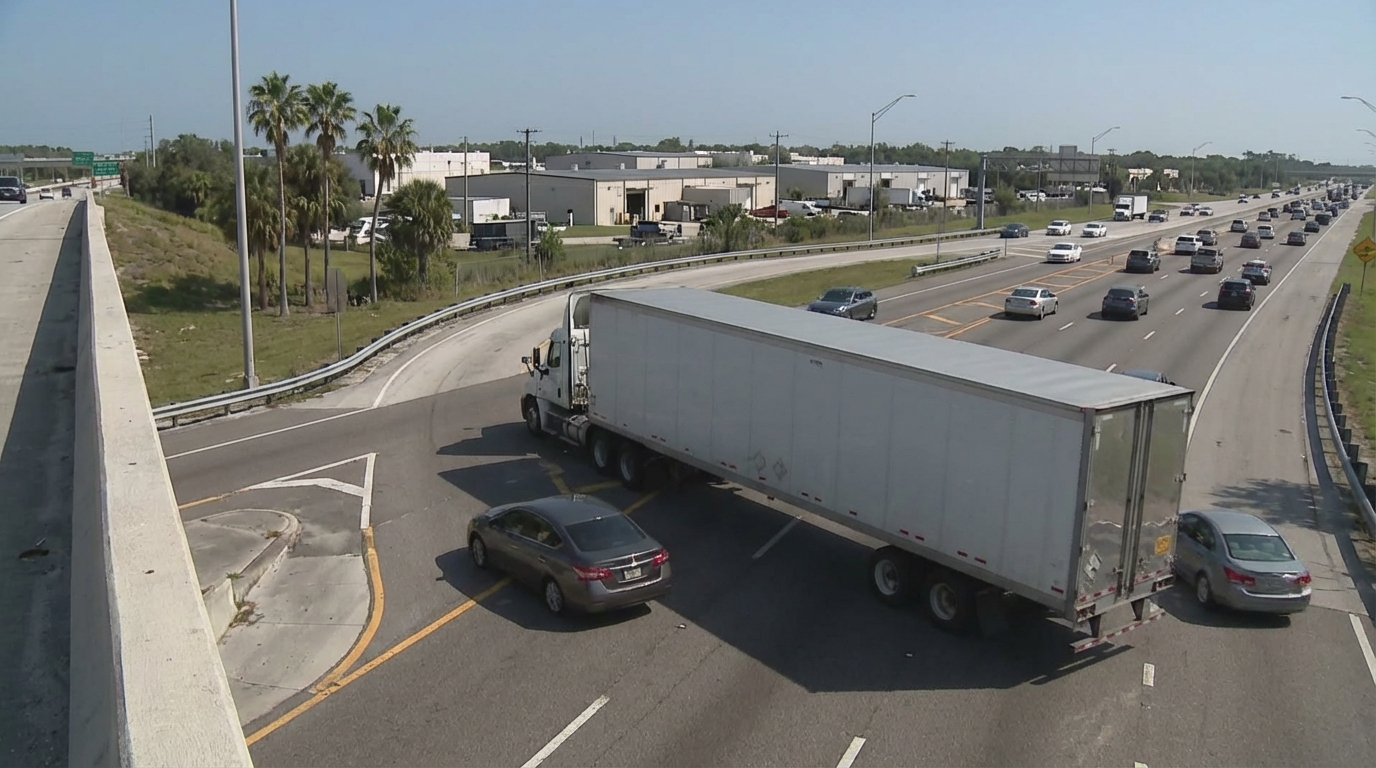
Multiple parties may share liability in a truck blind spot crash. Unlike typical car accidents, commercial truck cases often involve a web of responsible parties. The truck driver may be liable for failing to check mirrors or signal properly. The trucking company may bear responsibility for negligent hiring, inadequate training, or pressuring drivers to meet unrealistic schedules. Parts manufacturers could be liable if defective mirrors or blind spot detection systems contributed to the crash. Cargo loaders may share fault if improperly loaded freight affected visibility or vehicle handling.
Identifying All Responsible Parties
Investigating every possible source of liability can significantly affect available compensation. A thorough investigation may reveal the trucking company failed to maintain required safety equipment or the driver violated federal hours of service limits. Truckers driving after being awake for at least 12 hours were 86% more likely to crash than those awake fewer than eight hours, according to IIHS research.
💡 Pro Tip: Request that your attorney preserve electronic data from the truck immediately. ELD records, GPS data, and maintenance logs can disappear if not secured quickly through a spoliation letter.
How Florida’s Comparative Negligence Rules Affect Your Titusville FL Truck Injury Claim
Florida follows a modified comparative negligence system that directly impacts what blind spot crash victims can recover. Your compensation is reduced by your percentage of fault. If you were 20% at fault for lingering in a truck’s blind spot, your damages would be reduced by 20%. However, if you are found more than 50% at fault, you are barred from recovery entirely under Florida’s 2023 tort reform changes.
Why Insurance Companies Use Comparative Fault Against You
Insurance adjusters frequently argue victims shared fault in blind spot crashes. They may claim you rode too long in the no-zone, failed to pass promptly, or weren’t maintaining safe following distance. Understanding how comparative negligence laws work helps you anticipate these arguments and prepare evidence to counter them. Even with partial blame, you may still recover meaningful compensation if your fault doesn’t exceed 50%.
💡 Pro Tip: Don’t give a recorded statement to the trucking company’s insurer without first consulting an attorney. Adjusters may use your words to inflate your fault percentage and reduce your payout.
What Damages Can a Truck Accident Lawyer in Titusville Help You Pursue?
Truck accident damages are primarily compensatory, covering economic and non-economic losses. Economic damages include medical bills, future medical care, lost wages, diminished earning capacity, and property damage. Non-economic damages account for pain and suffering, emotional distress, and lost enjoyment of life. In cases involving particularly reckless conduct, punitive damages may also be available.
| Damage Category | Examples |
|---|---|
| Economic Damages | Medical expenses, lost income, rehabilitation costs, property repair or replacement |
| Non-Economic Damages | Pain and suffering, emotional distress, loss of enjoyment of life |
| Family Member Damages | Loss of consortium for a spouse, loss of guidance for minor children |
| Punitive Damages (rare) | Available in cases involving gross negligence, recklessness, or intentional misconduct |
Family members may also have separate claims. A spouse may recover loss of consortium damages, and minor children may pursue loss of parental guidance. If the crash results in fatality, Florida law provides for a wrongful death action with its own two-year statute of limitations. Under Florida Statute § 768.73, punitive damages generally may not exceed the greater of three times compensatory damages or $500,000, though higher caps or no cap may apply depending on the defendant’s conduct.
Proving Negligence in a Truck Blind Spot Crash
To recover compensation, you must prove the truck driver or another party breached a duty of care and this breach caused your injuries. Common causes include speeding, driver fatigue, distracted driving, poor maintenance, equipment failure, and improper cargo loading. In blind spot crashes, focus often falls on whether the driver checked mirrors before changing lanes, whether the truck had functioning blind spot detection technology, and whether the driver was fatigued or distracted.
Regulatory Violations as Evidence of Negligence
Violating a trucking regulation can create a strong basis for proving negligence. If a driver exceeded FMCSA hours of service limits or the trucking company failed to conduct required vehicle inspections, that violation may serve as powerful evidence. In Florida, violating a safety regulation intended to protect people like you may create a presumption of negligence supporting your claim.
💡 Pro Tip: Keep copies of every medical record, bill, and correspondence related to your crash. Organized documentation strengthens your claim and speeds up calculating your full damages.
Florida’s Statute of Limitations and Why Timing Matters
In Florida, the statute of limitations for negligence-based personal injury claims, including truck accidents, is two years from the incident date. Missing this deadline generally means losing your right to file a lawsuit. If the truck crash results in wrongful death, a separate two-year limitation also applies. Courts interpret tolling exceptions narrowly, so don’t assume additional time is available without confirming your circumstances with an attorney.
Acting quickly also preserves critical evidence. Trucking companies may overwrite electronic data, repair damaged vehicles, or reassign drivers. Surveillance footage from nearby businesses can be deleted within days or weeks. The sooner you begin the legal process, the stronger your position. If you were hurt on a local roadway, learning about how a Titusville truck crash lawyer handles these claims can help you understand what to expect.
💡 Pro Tip: Mark the exact accident date on a calendar and set a reminder well before the two-year deadline. Missing the filing window can permanently close the door on your claim.
Steps to Protect Your Rights After a Titusville Truck Blind Spot Crash
Taking the right steps immediately after a no-zone accident protects both your health and legal options. Consider these actions:
- Seek medical attention immediately, even if you feel fine. Some injuries have delayed symptoms.
- Document the scene with photos of vehicle damage, skid marks, road conditions, and the truck’s mirrors.
- Collect the truck driver’s name, employer, license plate, USDOT number, and insurance information.
- Obtain witness contact information.
- Avoid discussing fault at the scene or on social media.
- Contact an attorney experienced in truck accident cases before speaking with any insurance adjuster.
Each step builds the foundation of a strong claim. Evidence collected at the scene is often most persuasive because it captures conditions exactly as they were.
Frequently Asked Questions
1. What is a truck "no-zone," and why does it matter for my Titusville accident claim?
A no-zone refers to the large blind spots around a commercial truck where the driver has limited or no visibility. These zones exist in front, behind, and on both sides. If you were struck while in a no-zone, establishing that the truck driver failed to check blind spots or signal properly can be central to proving negligence.
2. Can I still recover compensation if I was partially at fault for being in the truck’s blind spot?
Under Florida’s modified comparative negligence system, you may still recover damages if partly at fault, as long as your fault doesn’t exceed 50%. Your compensation is reduced by your percentage of responsibility. If you were 30% at fault, you could recover 70% of your total damages.
3. How long do I have to file a truck accident injury claim in Titusville?
Florida law provides a two-year statute of limitations for negligence-based personal injury claims from the accident date. Wrongful death claims also carry a two-year deadline. Because exceptions are interpreted narrowly, consulting an attorney promptly protects your right to file.
4. What evidence should I gather after a truck blind spot crash?
Key evidence includes photos of the scene and vehicle damage, the truck driver’s information and employer details, witness contact information, medical records, dashcam or surveillance footage, and electronic data from the truck such as ELD records and maintenance logs. Preserving this evidence quickly is essential.
5. Who pays for my damages if multiple parties caused the truck accident?
Multiple parties, including the driver, trucking company, parts manufacturer, and cargo loader, may share liability. Each responsible party’s insurer may contribute to your compensation based on their share of fault. A semi truck blind spot accident lawyer can investigate all potential sources of recovery to maximize your claim.
Take Action to Protect Your Future After a Titusville Truck Crash
Truck blind spot crashes can leave Titusville victims facing painful injuries, financial uncertainty, and a complex legal process involving multiple liable parties. Understanding Florida’s comparative negligence rules, the two-year statute of limitations, and the importance of preserving evidence early gives you a stronger foundation for pursuing the compensation you may deserve.
Norden Leacox is prepared to help Titusville truck accident victims navigate these claims. Call 407-801-3000 or contact us today to discuss your options in a consultation.