

[email protected] | April 27, 2026 | Truck Accidents
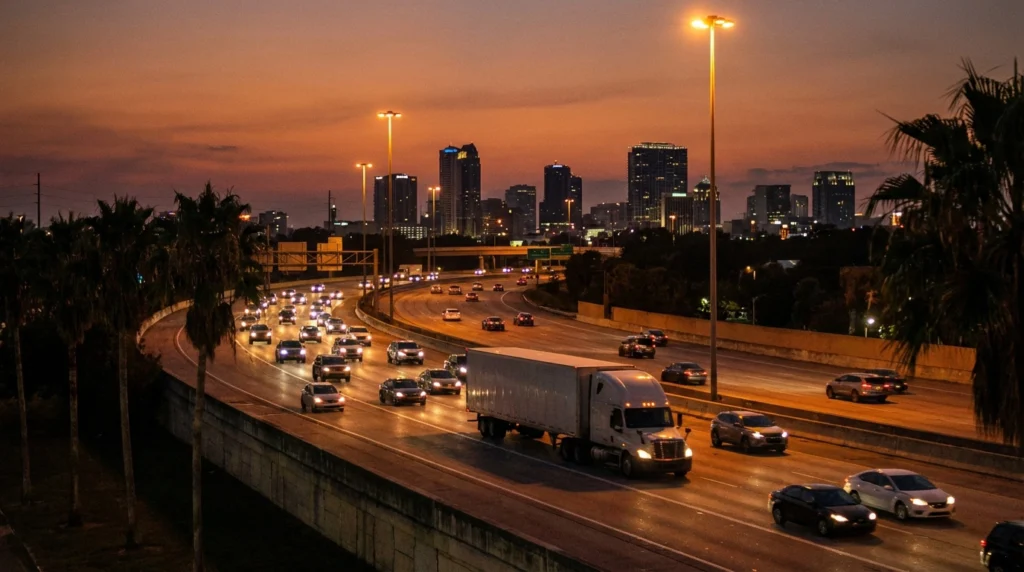
When a commercial truck crash causes serious injuries, more than one party may share responsibility for your harm. Florida law allows truck accident victims to pursue compensation from every person or entity whose negligence contributed to the collision. That can include the truck driver, the trucking company, a maintenance provider, a cargo loader, a truck manufacturer, or even a government agency. Identifying all liable parties is critical because it directly affects how much compensation you may recover and from whom.
If you or a loved one suffered injuries in a commercial truck collision, Norden Leacox can help you understand your legal options. Call 407-801-3000 or reach out to our team online to discuss your case today.
The Truck Driver: The Most Common At-Fault Party
The truck driver is most frequently the party at fault in a truck accident case. Drivers operate under strict federal and state regulations governing hours of service, speed limits, and vehicle inspections. When a driver violates those rules or engages in dangerous conduct such as distracted driving, impaired driving, or speeding, they may bear direct liability for the resulting injuries. To establish liability, you must show the driver owed a duty of care, breached that duty, and caused your damages.
Truck driver liability in Florida often hinges on evidence gathered soon after the crash. Electronic logging device (ELD) data, dashcam footage, drug and alcohol test results, and inspection reports can all reveal whether the driver acted negligently. Because trucking companies may overwrite or destroy this evidence quickly, preserving it early is essential.
💡 Pro Tip: Request that your attorney send a spoliation letter to the trucking company as soon as possible after the crash. This letter puts the company on legal notice to preserve all electronic data, logbooks, and maintenance records.
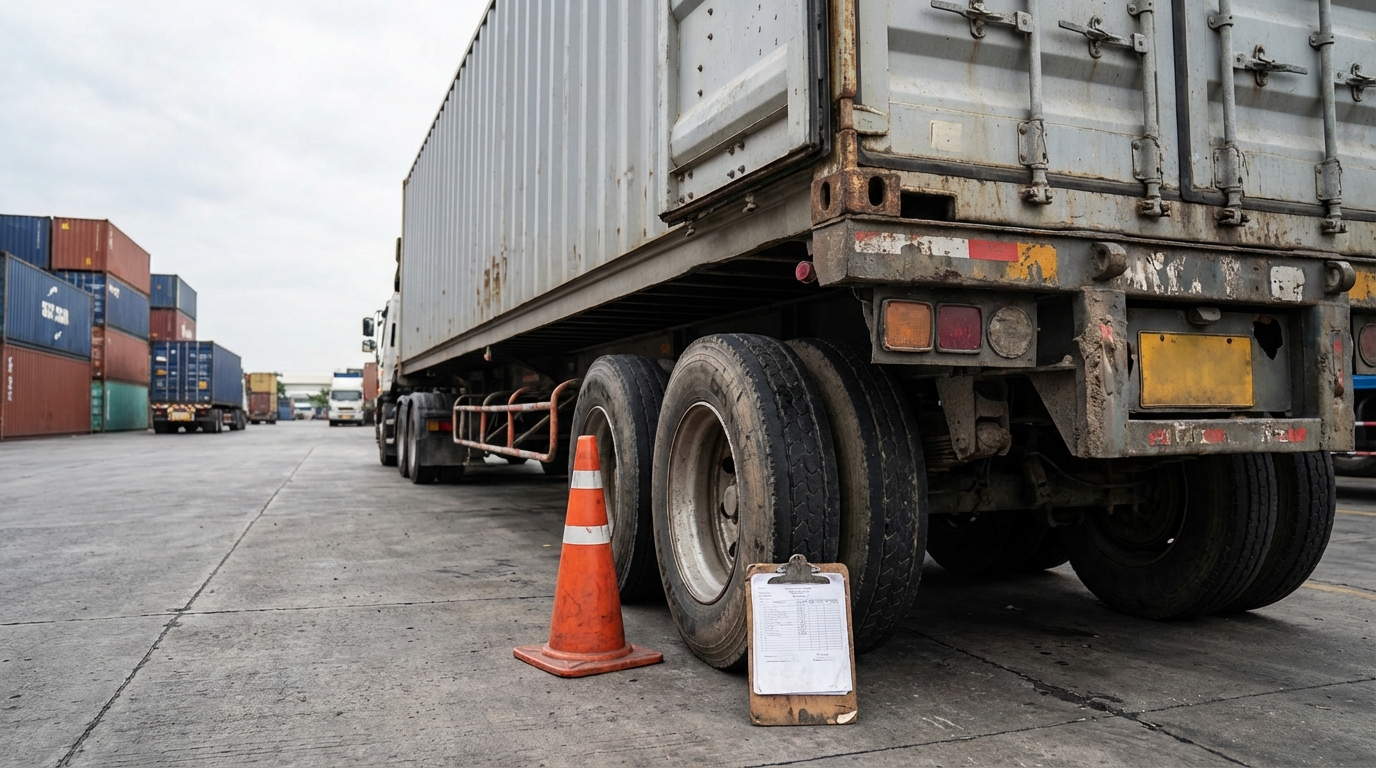
Trucking Company Negligence in Orlando Cases
A trucking company can face liability through two distinct legal theories: vicarious liability and direct liability. Under vicarious liability, the carrier is accountable for its employee driver’s actions when those actions occurred within the scope of employment. Under direct liability, the company itself may have been negligent in how it hired, supervised, or retained drivers, or in how it maintained its fleet.
Vicarious Liability for Driver Actions
If the truck driver was an employee acting within the scope of their job duties at the time of the crash, the trucking company generally shares liability for the driver’s negligence. This doctrine means that even if the company did nothing wrong on its own, it can still be responsible for the harm its driver caused.
Direct Liability for Company Failures
Trucking companies also face direct liability when their own operational failures contribute to a crash. Examples include hiring an unqualified driver, failing to conduct proper background checks, ignoring known safety violations, or neglecting required vehicle maintenance. If you suspect carrier liability in your Orlando FL case, gathering the company’s hiring records, training logs, and FMCSA minimum insurance coverage information can strengthen your position.
💡 Pro Tip: Ask your attorney to subpoena the trucking company’s driver qualification file. Federal regulations require carriers to maintain these files, and they often reveal whether the company cut corners on hiring or training.
Truck Manufacturers and Strict Liability Claims
When a defective truck or component causes or contributes to an accident, the manufacturer may face a strict liability claim under Florida law. In a strict liability claim, you do not need to show the manufacturer failed to use reasonable care. You must show the truck part was defective and unreasonably dangerous, that the defect existed when the product left the manufacturer’s control, and that the defect caused your injuries.
Defective brakes, tires, steering systems, coupling devices, and lighting components are among the most common product defects in truck accident cases. Florida’s comparative fault statute governs how fault is apportioned in these claims under Florida Statute §768.81.
💡 Pro Tip: If you suspect a mechanical failure played a role in your crash, ask that the truck and its components be preserved and inspected by a qualified accident reconstructionist before any repairs are made.
Other Potentially Liable Parties in a Truck Crash
Multiple parties beyond the driver and the trucking company may bear responsibility for a truck accident. Identifying every at-fault party can be the difference between partial recovery and full compensation.
Maintenance Companies
A maintenance company that performs negligent repairs can be held liable when its work allows a safety hazard to persist. If a repair shop failed to properly fix a truck’s braking system and that failure contributed to the crash, the shop may owe damages to the injured victim.
Cargo Loaders
Improperly loaded or unsecured cargo can cause a truck to roll over, jackknife, or lose its load on the highway. When a third-party cargo loading company overloaded a trailer or failed to secure freight according to federal regulations, that company may share liability for injuries caused by the resulting accident.
Government Entities
A government agency responsible for road design or maintenance may be liable if a road defect contributed to the crash. However, claims against government entities in Florida are subject to shorter notice-of-claim deadlines than ordinary civil lawsuits. Missing that deadline can bar your claim entirely.
|
Potentially Liable Party |
Basis for Liability |
Key Evidence to Gather |
|---|---|---|
|
Truck Driver |
Negligence, regulatory violations |
ELD data, drug tests, dashcam footage |
|
Trucking Company |
Vicarious liability, negligent hiring/supervision |
Driver qualification files, training logs |
|
Truck Manufacturer |
Strict liability for defective parts |
Inspection reports, recall notices |
|
Maintenance Company |
Negligent repairs |
Repair invoices, maintenance records |
|
Cargo Loader |
Improper loading or securing of freight |
Load manifests, weight tickets |
|
Government Agency |
Road defect or design flaw |
Road maintenance records, prior complaints |
💡 Pro Tip: Florida law allows defendants to allocate fault to nonparties at trial. A trucking company might try to shift blame to a maintenance provider or cargo loader to reduce its own share. Identifying all potentially liable parties early helps you anticipate and counter these strategies.
How Florida’s Comparative Fault System Affects Your Truck Accident Claim in Orlando
Florida follows a modified comparative fault system, meaning your own contributory fault reduces your recovery proportionately and may bar it entirely if you are found more than 50 percent at fault. Under §768.81(2), any contributory fault chargeable to you diminishes damages proportionately. Under §768.81(6), if you are found greater than 50 percent at fault, you may not recover any damages. The court enters judgment against each liable party based on that party’s percentage of fault.
This system makes it essential to build the strongest possible case against every at-fault party. If a jury determines you were 20 percent at fault and the total damages are $500,000, your recovery would be reduced to $400,000. Each defendant pays only their proportionate share. Working with an Orlando truck accident lawyer who understands how to present evidence of multiple defendants’ fault can directly affect your total recovery.
Why Identifying All Liable Parties Matters for a Truck Accident Attorney in Orlando
Pursuing claims against multiple defendants increases the pool of available insurance coverage and assets from which you may recover. A truck driver’s personal policy alone may not cover catastrophic injuries. But when you also pursue valid claims against the trucking company, a parts manufacturer, and a negligent maintenance provider, you gain access to additional policies and resources. Each liable party may carry separate insurance, and those combined limits can make a meaningful difference.
Defendants in truck accident cases frequently attempt to shift fault to reduce their own exposure. Under Florida law, a defendant must affirmatively plead the fault of a nonparty and prove that fault at trial. An experienced truck accident attorney in Orlando can anticipate these tactics and investigate every potential source of liability in truck crashes before trial.
💡 Pro Tip: Keep a detailed record of all medical treatment, lost wages, and out-of-pocket expenses from the day of the crash forward. Thorough documentation supports your damage claims and makes it harder for defendants to minimize your losses.
Frequently Asked Questions
1. Can I sue both the truck driver and the trucking company after an Orlando truck accident?
Yes, in many cases you can pursue claims against both. The driver may be directly liable for negligent conduct, while the trucking company may be vicariously liable for the driver’s actions or directly liable for its own failures in hiring, training, or fleet maintenance.
2. What if a defective truck part caused my crash?
You may have a strict liability claim against the manufacturer. You need to show the part was defective and unreasonably dangerous, that the defect existed when the product left the manufacturer’s control, and that the defect caused your injuries.
3. Does Florida’s comparative fault rule mean I cannot recover if I was partly at fault?
Partial fault reduces your recovery, and being found more than 50 percent at fault bars it entirely. Under Florida’s modified comparative fault statute, your damages are diminished proportionately based on your percentage of fault.
4. How long do I have to file a claim against a government agency for a road defect?
Claims against government entities are subject to shorter notice-of-claim deadlines than standard civil lawsuits. These deadlines can be significantly shorter than the general statute of limitations, so consulting an attorney promptly is important if you believe a road defect contributed to your crash.
5. Why is evidence preservation so important in truck accident cases?
Critical evidence such as ELD data, maintenance logs, and dashcam footage can be overwritten or destroyed in a short timeframe. Early preservation efforts, including spoliation letters and formal discovery requests, help ensure this evidence remains available to support your claim.
Protecting Your Rights After an Orlando Commercial Truck Crash
Truck accident cases in Orlando often involve multiple liable parties, overlapping insurance policies, and aggressive defense tactics designed to minimize payouts. Understanding who may be held responsible, from the driver and trucking company to manufacturers, maintenance providers, cargo loaders, and government agencies, puts you in a stronger position to pursue full compensation. Florida’s modified comparative fault framework means that every percentage point of fault matters, making thorough investigation and early evidence preservation essential.
The team at Norden Leacox is ready to help you navigate the complexities of your truck accident claim. Call 407-801-3000 or contact us today to schedule a consultation and take the first step toward the recovery you deserve.
