

Norden Leacox Accident & Injury Law | April 24, 2026 | Car Accidents
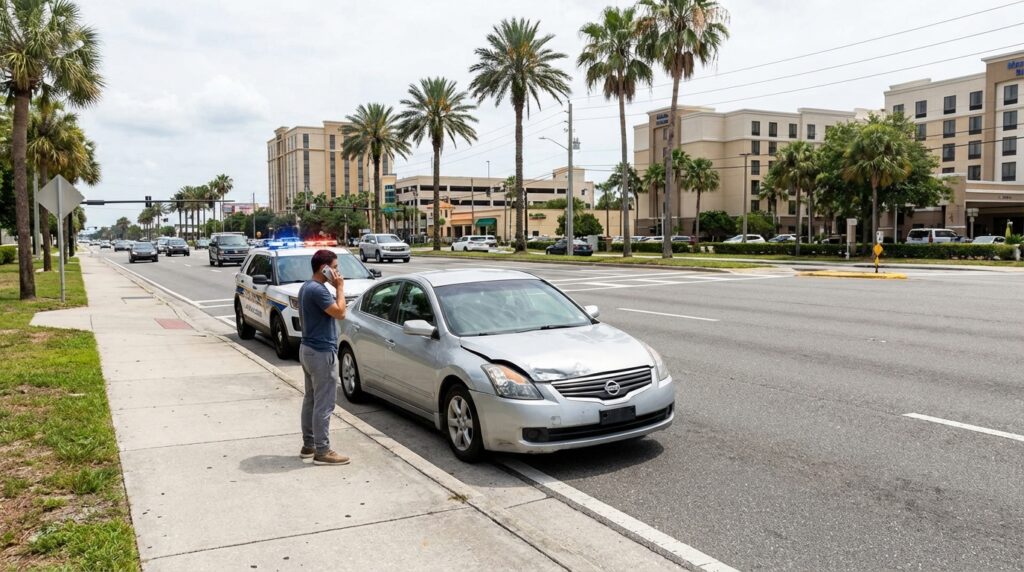
Florida’s serious injury threshold is the legal standard determining whether a car accident victim can pursue a lawsuit for pain and suffering damages beyond no-fault insurance coverage. Under Florida’s no-fault system, your Personal Injury Protection (PIP) coverage handles immediate economic losses like medical bills and lost wages, but caps benefits at $10,000 for emergency medical conditions and $2,500 for non-emergency conditions. To file a claim for non-economic damages, your injuries must meet specific criteria defined in state law. Understanding this threshold is essential for protecting your legal rights.
If you or a loved one suffered serious injuries in an Orlando car crash, Norden Leacox can help you understand your options. Call 407-801-3000 or reach out to our team today to discuss your case.
How Florida’s No-Fault Insurance System Works in Orlando
Florida operates under a no-fault car insurance system, meaning your own insurance policy pays for certain losses regardless of who caused the accident. Every registered vehicle owner must carry PIP coverage providing up to $10,000 for medical expenses, lost wages, and related costs, though benefits are limited to $2,500 if a physician does not determine you have an emergency medical condition. You must seek initial medical treatment within 14 days of the accident to qualify for PIP benefits.
The trade-off for this guaranteed coverage is a limitation on your right to sue. Under Florida Statute § 627.737(1), motor vehicle owners and operators receive a tort exemption, meaning injured parties generally cannot file a lawsuit for pain and suffering unless they meet the serious injury threshold.
💡 Pro Tip: Even if you believe your injuries are minor, seek medical attention immediately after any Orlando car accident. Early documentation strengthens your ability to meet the threshold if your injuries worsen.

What Qualifies as a Serious Injury Under Florida Law
The serious injury threshold is codified in Florida Statute § 627.737, which lists four categories of injuries allowing a plaintiff to recover damages for pain, suffering, mental anguish, and inconvenience. Your injury must fall into at least one of the following categories:
-
Significant and permanent loss of an important bodily function
-
Permanent injury within a reasonable degree of medical probability (other than scarring or disfigurement)
-
Significant and permanent scarring or disfigurement
-
Death
These categories use a verbal threshold rather than a monetary one. A verbal threshold defines injury seriousness by the type and nature of the harm, not by medical bill amounts. However, because terms like “significant” and “permanent” carry ambiguity, insurance companies frequently dispute whether injuries truly meet this standard.
How Courts Evaluate the Threshold Before Trial
Defendants may challenge whether a plaintiff meets the serious injury threshold by filing a motion with the court. Under § 627.737(3), when a defendant files such a motion, the court must determine, on a one-time basis only, 30 days before the date set for the trial or the pretrial hearing, whichever is first, whether the plaintiff will be able to submit some evidence supporting the threshold claim. This procedural step can significantly affect your case, making thorough medical documentation critical from the start.
The Difference Between Verbal and Monetary Thresholds
Not all no-fault states use the same type of threshold. A verbal threshold, like Florida’s, defines qualifying injuries by their nature and severity. A monetary threshold, used in some other states, requires a minimum dollar amount in medical expenses before a lawsuit for no-fault car insurance non-economic damages is permitted. Florida’s verbal approach gives courts more flexibility but introduces more room for dispute.
💡 Pro Tip: Keep a detailed journal of how your injuries affect your daily life, including pain levels, activities you can no longer perform, and emotional impacts. This personal record can support your claim that your injury is both significant and permanent.
Why PIP Coverage Alone May Not Be Enough for Orlando Car Accident Victims
PIP coverage limits in Orlando max out at $10,000 for emergency medical conditions, which often falls short of covering serious car accident costs. Hospital stays, surgeries, physical therapy, and ongoing treatment can quickly exceed that amount. PIP also does not compensate you for pain and suffering, emotional distress, or reduced quality of life. Additionally, PIP only covers 80 percent of reasonable medical expenses and 60 percent of lost wages.
When your injuries meet the serious injury threshold, you gain the right to pursue a car accident lawsuit in Florida against the at-fault driver. This opens the door to recovering compensation for both economic damages (such as future medical costs and lost earning capacity) and non-economic damages (such as pain, suffering, and mental anguish). However, Florida’s modified comparative negligence rule bars recovery if you are found 51 percent or more at fault for the accident.
|
Damage Type |
Covered by PIP |
Available Through Lawsuit |
|---|---|---|
|
Medical expenses (up to $10,000) |
Yes |
Yes |
|
Lost wages (up to $10,000) |
Yes |
Yes |
|
Future medical costs |
No |
Yes |
|
Pain and suffering |
No |
Yes |
|
Mental anguish |
No |
Yes |
|
Lost earning capacity |
No |
Yes |
💡 Pro Tip: Do not accept a quick settlement from an insurance company before understanding the full extent of your injuries. Some permanent conditions take weeks or months to diagnose, and settling too early could prevent you from recovering what you deserve.
How Insurance Companies Fight Orlando Car Accident Claims
Insurance companies regularly dispute whether a plaintiff’s injuries meet the serious injury threshold. Since terms like “significant” and “serious” carry ambiguity, insurers may argue that your injury is temporary, pre-existing, or does not rise to the level of permanent impairment.
Gathering strong medical evidence is critical to counter these challenges. Medical records, diagnostic imaging, physician opinions regarding permanence, and documentation of functional limitations all play a role. Working with a car accident attorney in Orlando who understands the threshold requirements can help ensure your evidence is properly organized and presented.
Punitive Damages and Auto Liability Insurers
Florida law places specific limits on damages you can seek from auto liability insurers. Under § 627.737(4), no claim for punitive damages is allowed against an automobile liability insurer for damages exceeding policy limits. A separate punitive damages claim against an at-fault driver personally may still be available in cases involving egregious conduct, subject to the requirements of Florida Statute § 768.72.
Statute of Limitations for Orlando Car Accident Lawsuits
Time limits apply to filing a car accident lawsuit in Florida, and missing the deadline can permanently bar your claim. Under Florida’s 2023 tort reform law (HB 837), the statute of limitations for negligence-based actions, including most car accident personal injury claims, was reduced from four years to two years. This shortened deadline, codified in Florida Statute § 95.11, applies to claims arising on or after March 24, 2023.
Separate deadlines may apply depending on the type of claim involved. For example, insurance policy dispute actions carry a five-year statute of limitations under § 95.11(2)(e), with the period running from the date of loss, not under § 95.11(2)(b), which is the general written contract provision that § 95.11(2)(e) expressly supersedes for property insurance contract actions.
💡 Pro Tip: Florida’s two-year deadline can pass quickly, especially while you are focused on medical treatment. Mark the date of your accident on your calendar and consult with a legal professional well before the deadline approaches.
Steps to Strengthen Your Car Accident Compensation Claim in Orlando
Building a strong case starts immediately after the accident and requires consistent effort throughout the process. Here are key steps that may improve your ability to meet the serious injury threshold and recover fair compensation:
-
Seek immediate and ongoing medical treatment, following all recommended care plans
-
Preserve all medical records, bills, and communications with your insurance company
-
Document the accident scene with photos, witness information, and a police report
-
Avoid giving recorded statements to the at-fault driver’s insurer without legal guidance
-
Learn how attorneys prove the serious injury threshold in Florida car accident cases
Each piece of evidence contributes to demonstrating the permanence and severity of your injuries under Florida law. Courts and insurance adjusters will scrutinize every detail, so thoroughness from the beginning can make a meaningful difference.
💡 Pro Tip: If your doctor refers you to additional treatment or a follow-up appointment, attend every one. Gaps in treatment are one of the most common reasons insurance companies argue that injuries are not as serious as claimed.
Frequently Asked Questions
1. What does the Florida serious injury threshold require for a car accident lawsuit?
Florida’s serious injury threshold requires that your injuries meet at least one of four criteria defined in § 627.737(2): significant and permanent loss of an important bodily function, permanent injury other than scarring or disfigurement, significant and permanent scarring or disfigurement, or death. Without meeting one of these categories, you generally cannot pursue pain and suffering damages beyond PIP.
2. How long do I have to file a car accident lawsuit in Orlando?
Following the 2023 enactment of HB 837, Florida law provides a two-year statute of limitations for negligence-based personal injury claims, including most car accident cases. This period begins on the date of the accident and applies to claims arising on or after March 24, 2023.
3. Can I sue for pain and suffering after a minor car accident in Florida?
Florida’s no-fault system prevents lawsuits for pain and suffering after minor accidents. You must demonstrate that your injuries meet the serious injury threshold before pursuing non-economic damages against the at-fault driver.
4. Why would an insurance company deny that my injury is serious enough?
Insurance companies dispute injury severity because the threshold uses terms like “significant” and “permanent,” which involve interpretation. Insurers may argue your injury is temporary, pre-existing, or not as limiting as you claim to avoid paying a larger settlement.
5. Does PIP cover all my car accident expenses in Orlando?
PIP provides up to $10,000 in coverage for medical bills and lost wages if you have an emergency medical condition, or up to $2,500 for non-emergency conditions, regardless of fault. PIP covers 80 percent of medical expenses and 60 percent of lost wages within those limits. However, these amounts frequently fall short for serious injuries, and PIP does not cover pain and suffering or other non-economic losses.
Protecting Your Rights After an Orlando Car Accident
Florida’s serious injury threshold creates a critical legal boundary for car accident victims in Orlando. Meeting this standard determines whether you can pursue full compensation for pain, suffering, and long-term impacts that PIP benefits alone cannot address. The process involves strict statutory criteria, tight deadlines, and aggressive challenges from insurance companies. Understanding Florida car accident law and taking early action to document your injuries can significantly affect the strength of your claim.
If you were injured in an Orlando car accident and need guidance on whether your injuries meet the serious injury threshold, Norden Leacox is ready to help. Call 407-801-3000 or contact us today for a case evaluation.
