

[email protected] | April 16, 2026 | Truck Accidents
What Causes Most Truck Accidents on Melbourne, FL Roads?
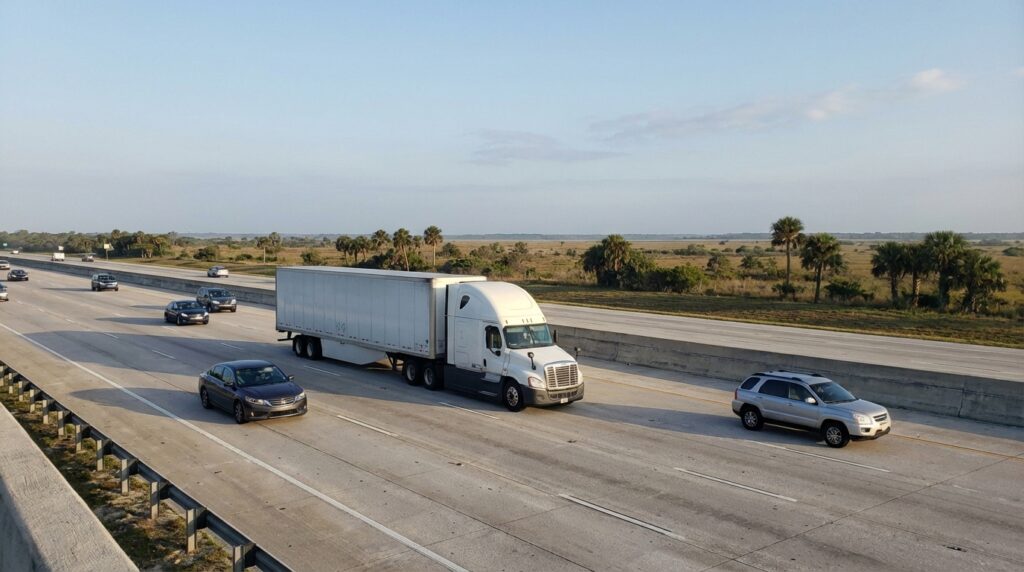
Increased traffic on Melbourne’s highways leads to rising truck accidents, and liability complexities are frequently overlooked. Florida ranks third nationally for truck-related fatalities, behind only Texas and California; nationally, large truck crashes resulted in approximately 5,472 deaths in 2023, a figure that has climbed roughly 40-43% over the past decade, while Florida itself accounts for several hundred truck-related deaths annually. For Melbourne residents sharing the road with 18-wheelers, tankers, and delivery vehicles daily, understanding collision causes is essential for protecting your rights and your family’s future.
If you or someone you love has been hurt in a commercial truck crash in Melbourne, Norden Leacox is ready to help you explore your legal options. Call 407-801-3000 or reach out to our team online today.
Why Melbourne, FL Sees So Many Truck Collisions
Melbourne sits along Interstate 95 and U.S. Route 1, two of Florida’s busiest freight routes, making Brevard County a high-traffic zone for commercial vehicles. Distribution centers, port activity, and population growth push more trucks onto local roads, directly increasing crash likelihood.
Truck wrecks in Brevard County often result from multiple factors rather than a single cause. Driver error, mechanical breakdowns, regulatory violations, and road design can converge to create dangerous conditions. Identifying the specific cause determines which parties bear legal responsibility and what evidence you need to preserve.
💡 Pro Tip: If involved in a truck crash, photograph the truck’s license plate, USDOT number on the cab door, and any visible damage or debris. This information helps your legal team identify the carrier, insurer, and maintenance history quickly.
Driver Fatigue and Hours-of-Service Violations
Fatigued driving remains one of the most dangerous and preventable causes of commercial truck crashes in Melbourne. A drowsy driver operating a fully loaded tractor-trailer has slower reaction times and impaired judgment, turning an 80,000-pound vehicle into a greater threat.
How Florida Limits Driver Hours
Florida law sets clear boundaries on how long intrastate commercial drivers may remain behind the wheel. Under Florida Statute 316.302, an intrastate commercial driver not transporting placarded hazardous materials may not drive after being on duty more than 70 hours in 7 consecutive days, or 80 hours in 8 consecutive days if the carrier operates daily. A 34-consecutive-hour off-duty period resets the clock. Interstate drivers must also comply with federal commercial vehicle safety regulations adopted under Florida Statute 316.302(1)(a), incorporating 49 C.F.R. parts 382-386 and 390-397.
Violations occur more often than many realize. Pressure from dispatchers, tight delivery windows, and per-mile pay can incentivize drivers to push past legal limits or falsify electronic logging device (ELD) records. When logbook data reveals hours-of-service violations, that evidence can be critical to proving negligence.
💡 Pro Tip: ELD data and logbooks can be overwritten or lost quickly. If you suspect fatigue played a role, acting fast to send a spoliation letter, a formal notice requiring the trucking company to preserve all records, may protect vital evidence.
Truck Defects and Inadequate Maintenance
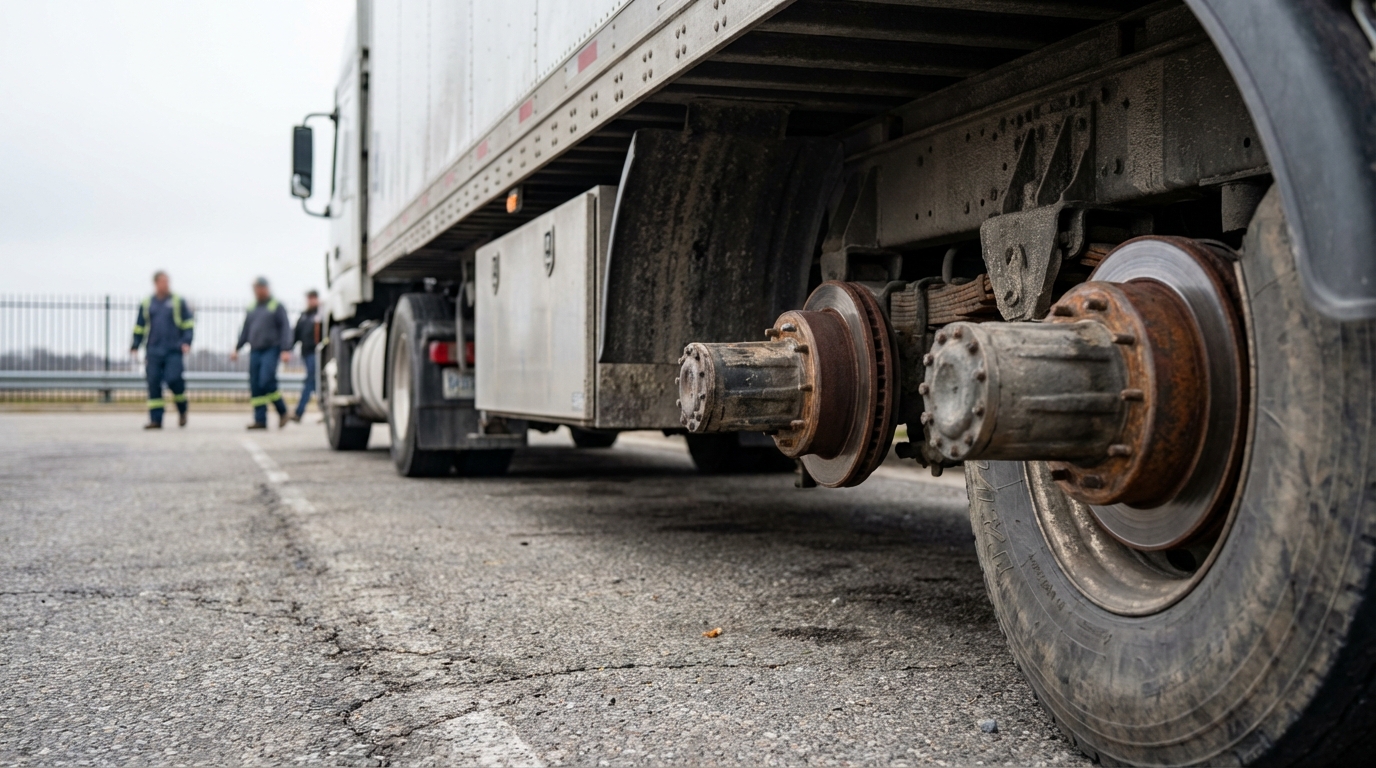
Mechanical failures are a well-documented cause of semi truck accidents in Melbourne and throughout Florida. When a trucking company or owner-operator fails to maintain a vehicle properly, highway consequences can be catastrophic.
Common Mechanical Failures That Lead to Crashes
Brake failures, tire blowouts, defective lighting, steering malfunctions, and coupling device breakdowns all appear regularly in crash investigations. Any defect can cause control loss, particularly at highway speeds or during sudden stops in heavy traffic.
- Brake failures: Worn pads, overheated drums, or improperly adjusted air brakes reduce stopping ability.
- Tire blowouts: Underinflated, bald, or recalled tires can shred without warning, sending debris across lanes.
- Defective lighting: Non-functional tail lights or turn signals make large trucks nearly invisible at night.
- Coupling device failures: A failed kingpin or fifth-wheel connection can cause trailer separation from the cab.
When a defective part contributes to a crash, liability may extend beyond the driver and carrier to include the vehicle manufacturer, parts supplier, or third-party maintenance provider. Identifying every responsible party requires thorough investigation of maintenance logs, inspection reports, and recall records.
💡 Pro Tip: Florida law enforcement officers believing a commercial vehicle is operating unsafely have authority under F.S. 316.302(9)(a) to conduct roadside inspections. If you witnessed a truck being pulled over before a crash or noticed obvious defects, report those details to your attorney immediately.
Who Can Be Held Liable After a Melbourne Truck Accident
Truck accident claims in Melbourne often involve multiple potentially liable parties, not just the driver. Understanding Florida’s legal framework for commercial vehicle liability can significantly affect recoverable compensation.
The Dangerous Instrumentality Doctrine
Under Florida’s dangerous instrumentality doctrine, the vehicle owner is vicariously liable for injuries caused by that vehicle’s negligent operation, even when someone else is driving with the owner’s consent. This doctrine, rooted in Southern Cotton Oil Co. v. Anderson, 86 So. 629 (Fla. 1920), means a trucking company owning the rig generally cannot avoid responsibility simply because an employee or independent contractor was driving. As the Florida Bar Journal has noted, the employer as vehicle owner is already responsible for operating its dangerous instrumentality, reinforcing carrier liability.
Florida also follows modified comparative negligence under Florida Statute 768.81. If you bear some fault percentage for the crash, your recovery is reduced proportionally, and if you are more than 50 percent at fault, recovery is barred entirely. An experienced truck accident attorney can help minimize any fault attributed to you.
| Potentially Liable Party | Basis of Liability |
|---|---|
| Truck driver | Direct negligence (fatigue, distraction, impairment) |
| Trucking company/carrier | Vicarious liability, negligent hiring, negligent maintenance |
| Vehicle or parts manufacturer | Product liability for defective components |
| Cargo loader | Improper loading or securement causing shift or spill |
| Maintenance provider | Negligent repairs or inspections |
Insurance Minimums May Not Cover Your Losses
Trucking companies carrying general freight across state lines must maintain only $750,000 in liability insurance, a federal minimum established under the Motor Carrier Act of 1980 and never adjusted for inflation. Given that a catastrophic truck crash can generate millions in medical bills, lost wages, and long-term care costs, this minimum can be exhausted quickly, leaving victims seeking additional recovery sources.
Florida’s financial responsibility laws under F.S. 324.021 define "motor vehicle" broadly to include trailers and semitrailers. However, coverage adequacy in serious crashes is questionable. Identifying every available insurance policy, including excess or umbrella coverage, is critical for building a Melbourne truck accident claim.
💡 Pro Tip: Do not accept a quick settlement offer from a trucking company’s insurer without understanding the full scope of your injuries and future medical needs. Early offers rarely reflect the true long-term cost of serious truck crash injuries.
Florida’s Shortened Filing Deadline Changes Everything
In 2023, Florida reduced the statute of limitations for personal injury cases from four years to two years. This means truck crash victims in Melbourne now have a significantly shorter window to file a lawsuit. Missing this deadline can permanently bar your claim, regardless of evidence strength.
This compressed timeline makes early action essential. Preserving ELD data, obtaining police reports, securing witness statements, and getting medical documentation started early can make or break a case. The rising volume of trauma cases in Melbourne underscores how urgent this issue has become for local residents.
💡 Pro Tip: Courts generally interpret tolling exceptions and deadline extensions narrowly. Do not assume the discovery rule or other tolling provisions will automatically extend your two-year window. Consult with a truck accident attorney in Melbourne as soon as possible after a crash.
How a Truck Accident Attorney in Melbourne Protects Your Claim
An experienced truck accident attorney in Melbourne FL understands the unique challenges these cases present, from navigating federal safety regulations to identifying all liable parties. Truck crash litigation differs substantially from standard car accident claims due to multiple defendants, evidence complexity, and aggressive insurer tactics.
Your attorney may pursue evidence that the trucking company or driver violated federal or state regulations, failed to maintain the vehicle, or pressured the driver to exceed safe limits. Key evidence typically includes ELD and EDR downloads, driver qualification files, drug and alcohol test results, vehicle maintenance and inspection records, dispatch communications, freight bills, and surveillance or dashcam footage.
Building a complete evidentiary record early strengthens your negotiating position and prepares your case for trial if the insurer refuses a fair resolution. Every day that passes increases the risk that critical data will be lost or overwritten.
Frequently Asked Questions
1. What are the most common causes of truck accidents in Melbourne, FL?
The most frequent causes include driver fatigue, hours-of-service violations, mechanical defects such as brake failures and tire blowouts, distracted driving, improper cargo loading, and inadequate vehicle maintenance. Multiple factors often combine to cause a single crash.
2. Can I sue the trucking company if the driver caused my accident?
In many cases, yes. Under Florida’s dangerous instrumentality doctrine, the vehicle’s owner, often the trucking company, may be held vicariously liable for injuries caused by the driver’s negligence. Liability may also arise under respondeat superior if the driver was acting within employment scope.
3. How long do I have to file a truck accident lawsuit in Melbourne?
Florida’s current statute of limitations for personal injury claims is two years from the injury date. Courts interpret exceptions narrowly, so consult with an attorney promptly to avoid forfeiting your filing right.
4. What evidence should I preserve after a truck crash?
Key evidence includes photographs of the scene, the truck’s USDOT number, police reports, medical records, ELD and EDR data, maintenance logs, and witness contact information. Act quickly because electronic truck data can be overwritten in days.
5. Is the $750,000 trucking insurance minimum enough to cover serious injuries?
Often, it is not. Catastrophic injuries from commercial truck crashes can result in medical expenses and lost income far exceeding that amount. Your attorney can investigate whether additional insurance policies, including excess or umbrella coverage, may apply.
Take Action to Protect Your Rights After a Melbourne Truck Crash
Truck accidents in Melbourne happen for many reasons, from driver fatigue and regulatory violations to defective brakes and inadequate insurance coverage. Understanding these causes and the legal doctrines governing Florida liability empowers you to make informed claim decisions. The two-year filing deadline leaves little room for delay, and critical evidence can disappear quickly without prompt action.
If you have been injured in a truck collision in Melbourne or anywhere in Brevard County, Norden Leacox can help you understand your options and pursue the compensation you may deserve. Call 407-801-3000 or contact us today to discuss your case.
